France – A Culinary Celebration of the Seasons
French cuisine has a long tradition of celebrating fresh, seasonal ingredients and regional produce. As autumn arrives, walnuts, root vegetables, lentils and warming, earthy flavours take centre stage. From countryside kitchens to neighbourhood bistros, simple salads made with pulses, vegetables and aromatic vinaigrettes reflect the French appreciation for quality ingredients and thoughtful preparation.
Salade d’Automne aux Lentilles et Noix – A French Autumn Classic
French lentil salads are traditionally prepared with firm, flavourful lentils, often the famous green Lentilles Vertes du Puy, and dressed with mustard vinaigrette. This autumn-inspired interpretation uses black Beluga lentils, which retain their shape beautifully and offer a delicate, earthy flavour. Toasted walnuts, crunchy vegetables and a slightly sweet walnut oil vinaigrette create a wonderful balance of textures and seasonal aromas.
▣ Ingredients (2 servings)
- 100 g dried black Beluga lentils
- 1 red onion
- 1 carrot
- 1 stalk celery
- 1 clove garlic
- 40 g walnuts
- 1 tsp Dijon mustard
- 1 bunch parsley
- 1 tbsp extra virgin olive oil
- 1 tbsp walnut oil
- 1 tbsp maple syrup
- 1 1/2 tbsp apple cider vinegar
- to taste salt & freshly ground black pepper
♨ Preparation
- – Prepare the Vegetables and Lentils
Rinse the Beluga lentils thoroughly under cold running water. Finely dice the red onion and celery, prepare the carrot and grate the garlic. Wash and chop the fresh parsley. - Cook the Beluga Lentils
Place the lentils in a saucepan with plenty of unsalted water. Bring to a boil, reduce the heat and simmer gently for approximately 20–25 minutes until tender but still pleasantly firm. Drain thoroughly and briefly rinse with cold water if necessary to stop the cooking process. For the best flavour, keep the lentils slightly warm when adding the dressing. - Toast the Walnuts
While the lentils are cooking, toast the roughly chopped walnuts in a dry frying pan over medium heat until fragrant and lightly golden. Stir frequently to prevent burning. Remove from the heat and set aside. - Prepare the Walnut Dijon Vinaigrette
In a large mixing bowl, whisk together the Dijon mustard, apple cider vinegar, maple syrup, grated garlic, salt and black pepper. Gradually add the olive oil and walnut oil, whisking until the dressing becomes smooth and lightly emulsified. Stir in the finely diced red onion and allow it to sit briefly in the dressing to mellow its sharpness. - Combine the Salad
Add the cooked Beluga lentils, carrot and celery to the vinaigrette. Toss gently until everything is evenly coated. The slightly warm lentils will absorb the aromatic dressing particularly well. - Finish and Serve
Fold in the toasted walnuts and chopped parsley. Taste and adjust the seasoning if necessary. Serve slightly warm or at room temperature, allowing the earthy lentils, crunchy vegetables and nutty vinaigrette to shine.
Food Story
Not Exactly a Beauty Queen!
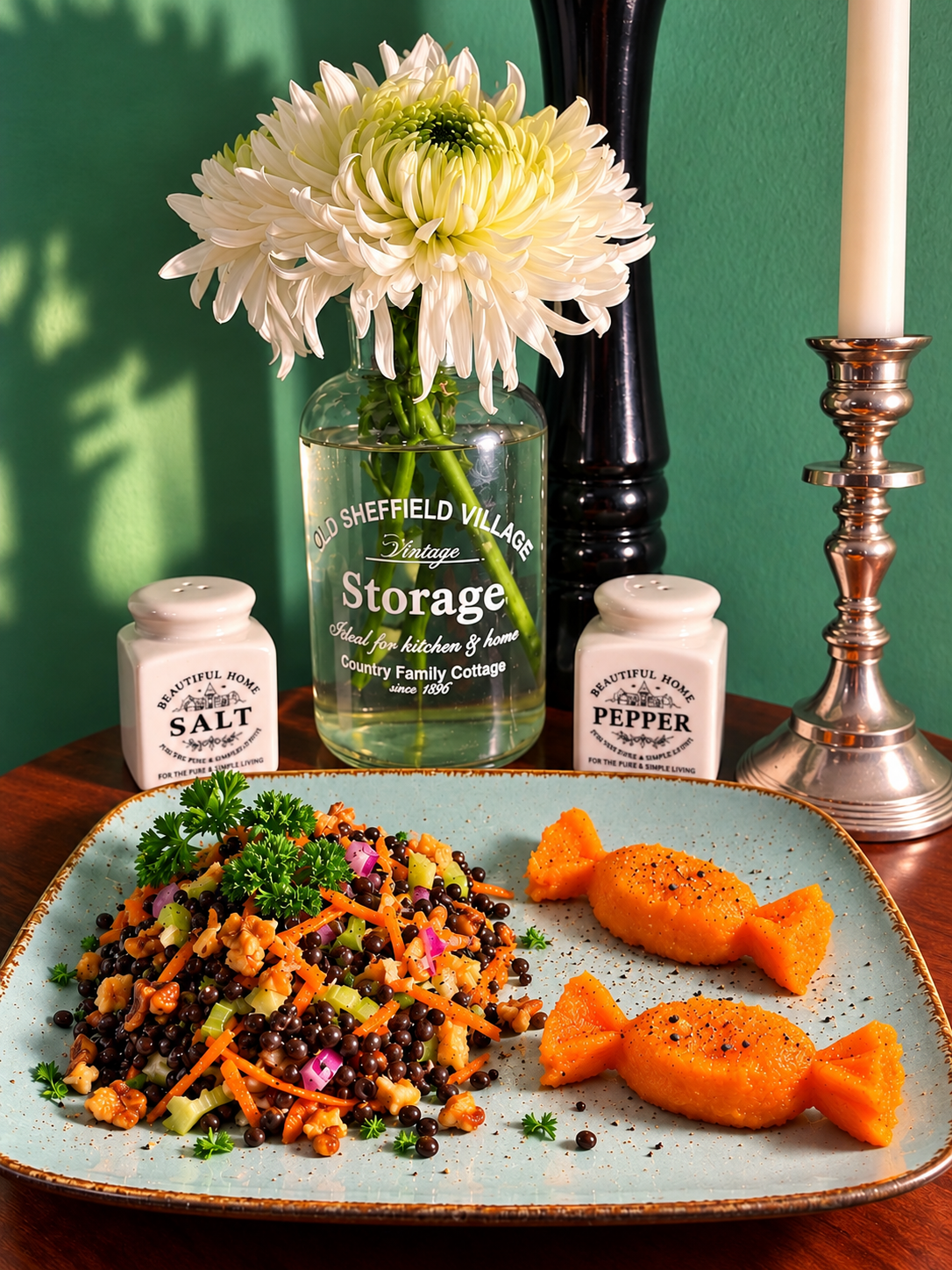
Some dishes are born to win beauty contests. This French autumn lentil salad probably isn’t one of them! Let’s just say it might not receive the highest score for presentation. But trust me: this is exactly what autumn tastes like to me. Earthy, comforting, full of flavour and absolutely delicious. Sometimes the most unassuming dishes turn out to be the most satisfying.
A Little Nutty Autumn Harmony
What makes this salad so special is the beautiful interplay of flavours and textures. The Beluga lentils are pleasantly firm and earthy, the celery and carrot bring freshness and crunch, and the red onion adds a gentle bite. Then come the toasted walnuts, with their wonderfully deep, roasted aroma. The walnut oil enhances that nuttiness, while Dijon mustard, apple cider vinegar and maple syrup create a dressing that balances tanginess, sweetness and savoury depth.
And Two Little Pumpkin Bonbons!
Since I still had some Muscat pumpkin purée left over from lunch, I shaped it into two little bonbons and served them alongside the salad. A spontaneous zero-waste addition that brought a lovely splash of autumn orange to the plate! A little unexpected, perhaps, but that’s exactly how I love cooking: making the most of what I already have, experimenting with flavours and letting seasonal ingredients inspire me. No beauty award required – just a big thumbs-up for flavour!
♨ Nutrition per serving
Nutritional values are approximate and may vary depending on the ingredients and products used.
Good to Know
What Are Beluga Lentils?
Beluga lentils are small, shiny black lentils named for their resemblance to Beluga caviar. They have a delicate earthy flavour, a pleasantly firm texture and retain their shape exceptionally well when cooked correctly. This makes them ideal for salads, grain bowls and dishes where individual lentils should remain visible.
Beluga Lentils vs. French Puy Lentils
Traditional French lentil salads often use Lentilles Vertes du Puy, prized for their peppery, slightly nutty flavour and firm texture. Beluga lentils are an excellent alternative because they also remain intact during cooking. Their dark colour creates a beautiful contrast with orange carrots, green parsley and golden walnuts.
Why Lentils Are Such a Valuable Plant-Based Ingredient
Lentils are naturally rich in plant-based protein, dietary fibre and complex carbohydrates. They also provide minerals such as iron, magnesium and potassium, making them a satisfying foundation for vegan meals. Pairing them with fresh vegetables adds variety and valuable micronutrients.
Walnut Oil – A Delicate Autumn Treasure
Walnut oil is produced from walnuts and has a distinctive, gently roasted, nutty flavour. It is particularly popular in cold preparations such as vinaigrettes, where its aroma can shine. It also contains unsaturated fats, including plant-based omega-3 alpha-linolenic acid (ALA). Because its delicate flavour and fats are sensitive to heat and oxidation, walnut oil is best used without high-temperature cooking and stored tightly closed in a cool, dark place, following the bottle's storage instructions.
Why Toasting Walnuts Makes Such a Difference
Gently toasting walnuts develops deeper, warmer aromas and enhances their natural crunch. The roasting process creates flavour compounds that make the nuts taste richer and more complex. However, walnuts can burn quickly, so a dry pan, moderate heat and frequent stirring are essential.
The Secret Behind a Balanced Vinaigrette
A successful vinaigrette balances acidity, fat, sweetness and seasoning. In this recipe, apple cider vinegar brings freshness, Dijon mustard provides a savoury sharpness and helps emulsify the dressing, while maple syrup softens the acidity. Olive oil adds body and walnut oil contributes an unmistakably nutty finish.
Why Dijon Mustard Works So Well
Named after the French city of Dijon, this mustard is known for its smooth texture and assertive flavour. In a vinaigrette, it contributes more than just seasoning: mustard also helps oil and vinegar form a more stable mixture, allowing the dressing to cling beautifully to the lentils and vegetables.
Warm or Cold – Which Is Better?
Both versions are delicious! Served slightly warm, the lentils absorb the vinaigrette beautifully and the walnut aroma becomes particularly noticeable. Served cold, the flavours have more time to mingle, making this salad ideal for meal preparation. For the freshest texture, add the parsley and toasted walnuts shortly before eating.
A Naturally Vegan French-Inspired Dish