
Portugal – The Rustic Culinary Heritage of Alentejo
Portugal's Alentejo region stretches across the country's sun-drenched south, where rolling plains, olive groves and traditional villages have shaped a cuisine rooted in simplicity and resourcefulness. Bread, olive oil, garlic and fresh coriander are central to many regional dishes. Rather than relying on elaborate ingredients, Alentejan cooking transforms everyday staples into deeply comforting meals. This tradition reflects generations of rural households where wasting food was rarely an option and yesterday's bread was far too valuable to throw away.
Açorda à Alentejana – A Portuguese Bread Soup with History
Açorda à Alentejana is one of Portugal's most distinctive traditional bread soups. Unlike thicker versions of açorda found elsewhere in the country, the Alentejan preparation typically consists of rustic bread served in a fragrant broth seasoned with garlic, coriander, olive oil and salt. A poached egg is a common traditional addition. The dish's name is often linked to Arabic culinary influences, reflecting the historical presence of Moorish culture on the Iberian Peninsula. This Via Veggie Vegan interpretation replaces the egg with smoky vegan bacon and adds fresh spring onion, while preserving the essential combination of bread, coriander, garlic and aromatic broth.
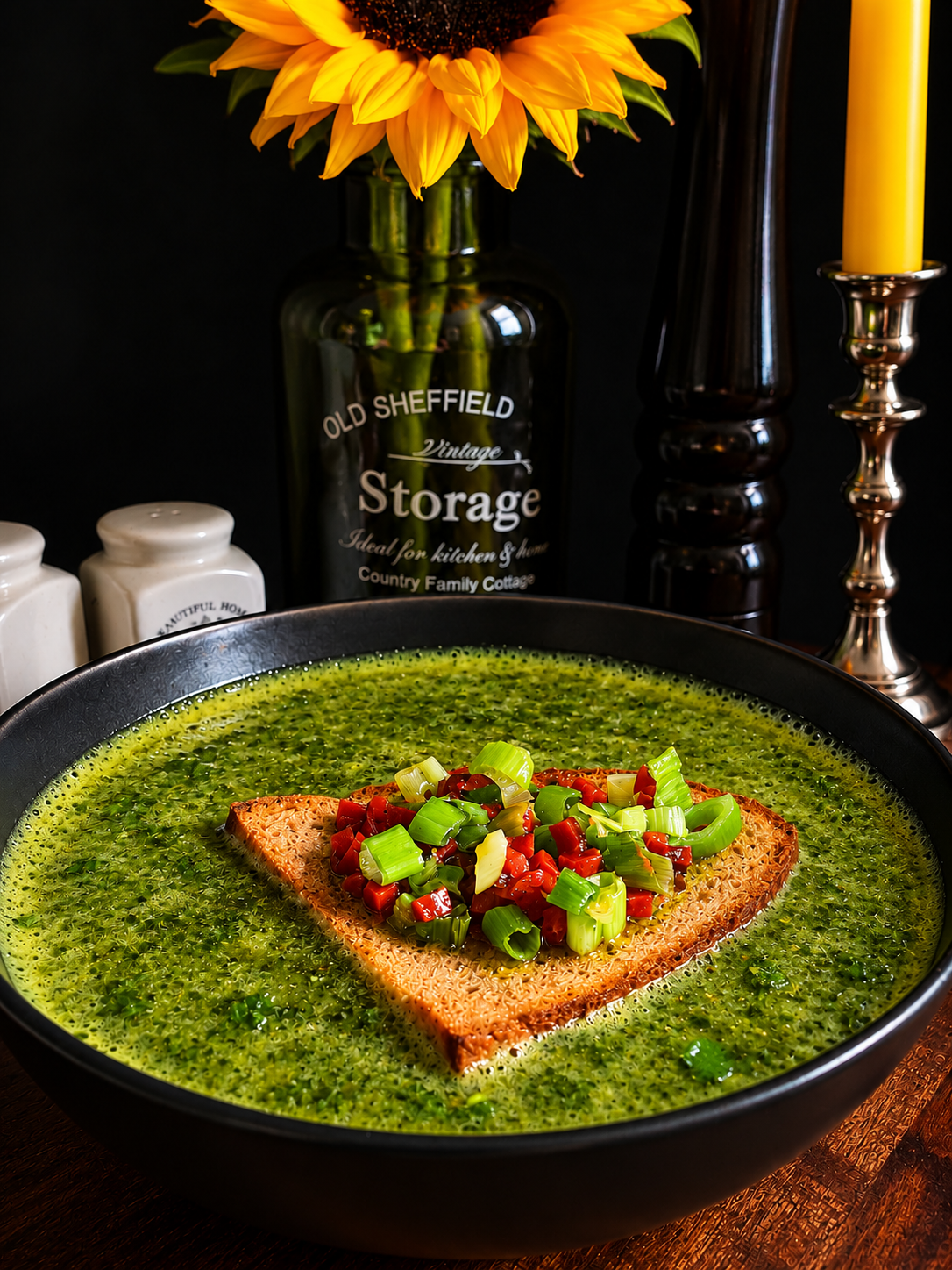
▣ Ingredients (2 servings)
- 2 slices dark, rustic country bread
- 150 g vegan bacon cubes
- 2 tbsp extra viirgin olive oil
- 1 spring onion
- 600 ml vegetable stock (preferably homemade)
- 4 cloves garlic
- 1 bunch fresh coriander
- 1 tbsp Kala Namak
- salt & freshly ground black pepper to taste
♨ Preparation
- Preheat the oven to 180°C fan.
- Finely slice the green part of the spring onion into small rings.
- Wash the coriander and peel the garlic cloves. Add the coriander, garlic, a pinch of Kala Namak and a small splash of water to a blender. Blend until smooth, vibrant green and homogeneous.
- Pour the vegetable stock into a saucepan, bring to a gentle boil and simmer for about 10 minutes.
- Meanwhile, place the two slices of rustic country bread in the oven and toast until warm and slightly crisp.
- At the same time, heat the olive oil in a frying pan. Add the vegan bacon cubes and spring onion rings and fry until the vegan bacon is nicely crisp. Make sure the spring onion stays green and does not brown.
- Divide the coriander and garlic mixture between two soup bowls. Pour 300 ml of the hot vegetable stock into each bowl, preferably through a fine-mesh or tea strainer to catch any larger pieces from homemade stock. Stir well, taste and season with additional salt if needed.
- Remove the toasted bread from the oven and place one slice into each bowl.
- Top the bread with the crispy vegan bacon and spring onion rings. Finish with freshly ground black pepper and serve immediately.
Food Story
You Had Me at Coriander and Four Garlic Cloves!
Seriously, what more could a girl ask for? Fresh coriander? Absolutely! Four garlic cloves? Now we’re talking! And then you tell me that this Portuguese soup also involves rustic, slightly stale bread? Well, that’s practically my personal culinary love language. Anyone who knows my kitchen knows that I’m firmly on Team Garlic and Team Coriander. And I have a particular weakness for recipes that give yesterday’s bread a delicious new purpose. So when I discovered Açorda à Alentejana, I knew this was going to be my kind of dish before I’d even switched on the stove.
When Coriander Meets Smoky Vegan Bacon
Traditionally, Açorda à Alentejana is often served with a poached egg. Naturally, that wasn’t going to happen in my vegan kitchen. Instead, I decided to introduce something a little unexpected: crispy vegan bacon. And I genuinely didn’t anticipate just how ridiculously well those flavours would work together! The vibrant freshness of coriander, the punch of garlic, the smoky, deeply savoury bacon and the rustic bread soaking up all that fragrant broth create an almost absurd contrast of flavours and textures. I also added a few fresh spring onion rings for a beautiful splash of bright green. Sometimes the simplest combinations deliver the biggest surprises.
An Orgasmatronic Explosion of Flavour!
And then came the first spoonful. Oh. My. Goodness. That combination of fresh coriander, garlic, olive oil, smoky vegan bacon and bread was an absolute orgasmatronic explosion of flavour in my mouth! The kind of dish that makes you wonder how something so uncomplicated can taste so incredibly good. No fancy ingredients, no complicated techniques, just a handful of things I absolutely love coming together in one bowl. Is my version completely traditional? Definitely not. Is it ridiculously delicious? Absolutely. And is it 100% Via Veggie Vegan? You bet!
♨ Nutrition per serving
Nutritional values are approximate and may vary depending on the ingredients and products used.
Good to Know
Açorda – A Dish with Arabic Roots
The word “açorda” is commonly associated with Arabic culinary traditions and is often linked to the historical dish thurda, in which bread was soaked in liquid. Although the exact linguistic history is complex, the connection illustrates the lasting influence of Arab and Moorish food culture on Portuguese cuisine. The transformation of bread and broth into a satisfying meal is a tradition shared by many cultures across the Mediterranean.
Not All Portuguese Açordas Are the Same
Açorda varies considerably across Portugal. In Alentejo, the bread is traditionally served in a fragrant, relatively liquid broth. Other regional interpretations may be much thicker, with bread cooked into a porridge-like consistency. Seafood versions, including açorda de marisco, are also popular in Portuguese cuisine. This diversity demonstrates how a simple bread-based dish can take on very different regional identities.
Fresh Coriander – A Herb with a Distinctive Personality
Fresh coriander, also known as cilantro in North America, has a bright, citrusy and slightly peppery aroma. Its flavour is largely created by naturally occurring volatile compounds in the leaves. Interestingly, some people perceive coriander as unpleasantly soapy, partly because of genetic differences in smell perception. For coriander lovers, however, its distinctive freshness is difficult to replace.
Why Garlic Changes Flavour When Crushed
When garlic is chopped, crushed or blended, its cells are damaged and an enzyme called alliinase helps form allicin from naturally occurring sulphur compounds. This reaction contributes to garlic's characteristic pungency. Raw garlic therefore tastes considerably sharper than garlic that has been slowly cooked. In this soup, the blended garlic brings a particularly lively, aromatic intensity to the broth.
Kala Namak – The Secret Behind the Egg-Like Aroma
Kala Namak is a mineral salt traditionally used in South Asian cuisine. Its characteristic sulphurous aroma is reminiscent of cooked eggs, making it especially popular in vegan cooking. It is often used in tofu scrambles, vegan egg salads and plant-based omelettes. Although its name means “black salt,” finely ground Kala Namak commonly appears pinkish-grey rather than black.
Olive Oil and Mediterranean Food Culture
Olive oil has been a cornerstone of Mediterranean food traditions for thousands of years. It provides predominantly monounsaturated fatty acids, especially oleic acid. Extra virgin olive oil also contains naturally occurring polyphenols and aromatic compounds that contribute to its distinctive taste. In simple recipes such as Açorda à Alentejana, the quality and flavour of the olive oil can make a noticeable difference.
Stale Bread – A Traditional Zero-Waste Ingredient
Using slightly stale bread is a practical way to reduce food waste and an important part of many European culinary traditions. Bread-based soups and dishes developed partly because households needed creative ways to use leftover loaves. Stale bread is not necessarily spoiled bread: it has simply lost moisture and undergone changes in its starch structure. However, bread showing any signs of mould must always be discarded rather than reused.
Vegan Bacon – What to Look for Nutritionally
Vegan bacon products can be made from soy,
You may also like
♡
You may also like
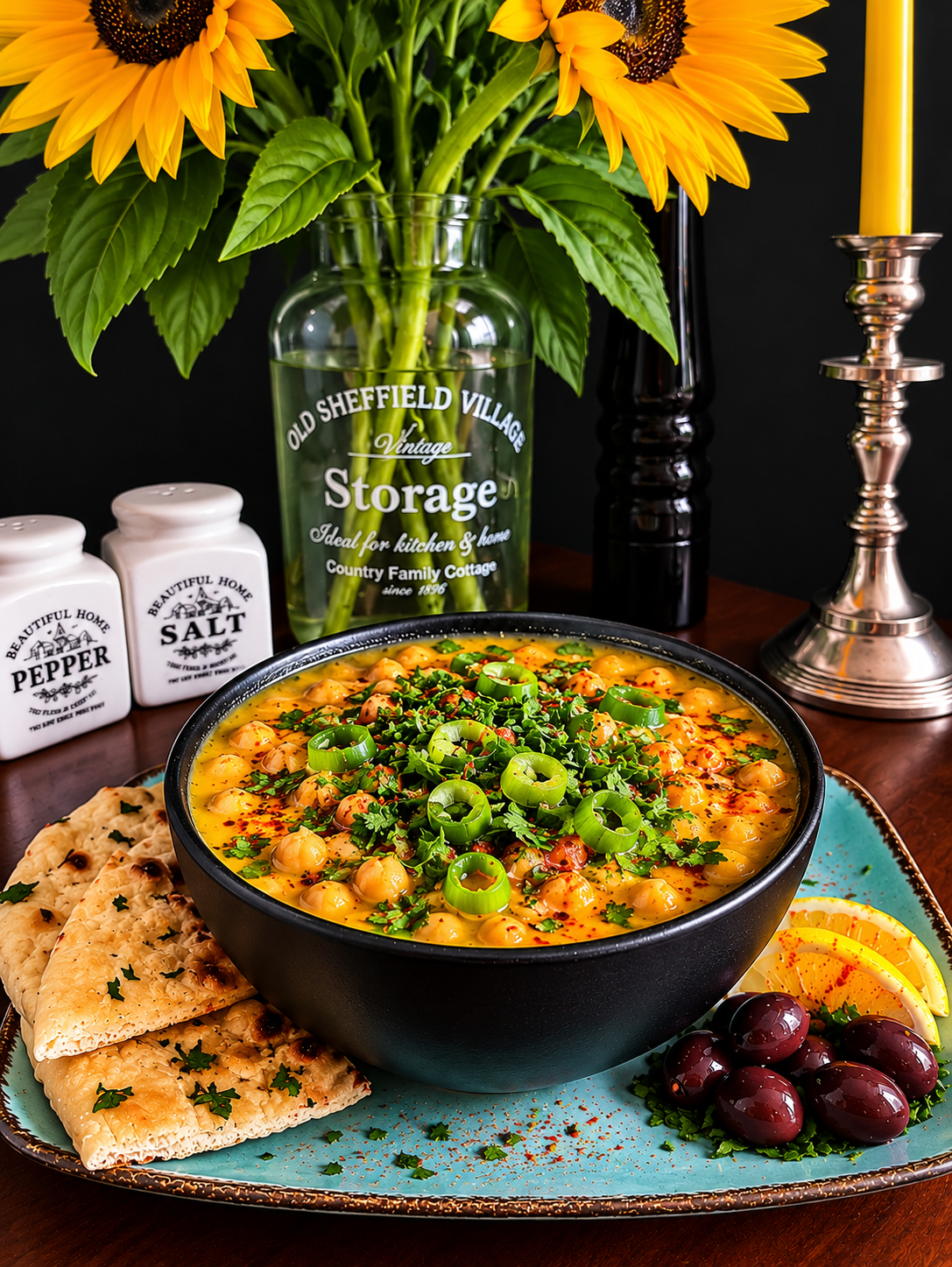
Vegan Tunisian Lablabi – Spicy Chickpea & Bread Soup with Harissa
You may also like
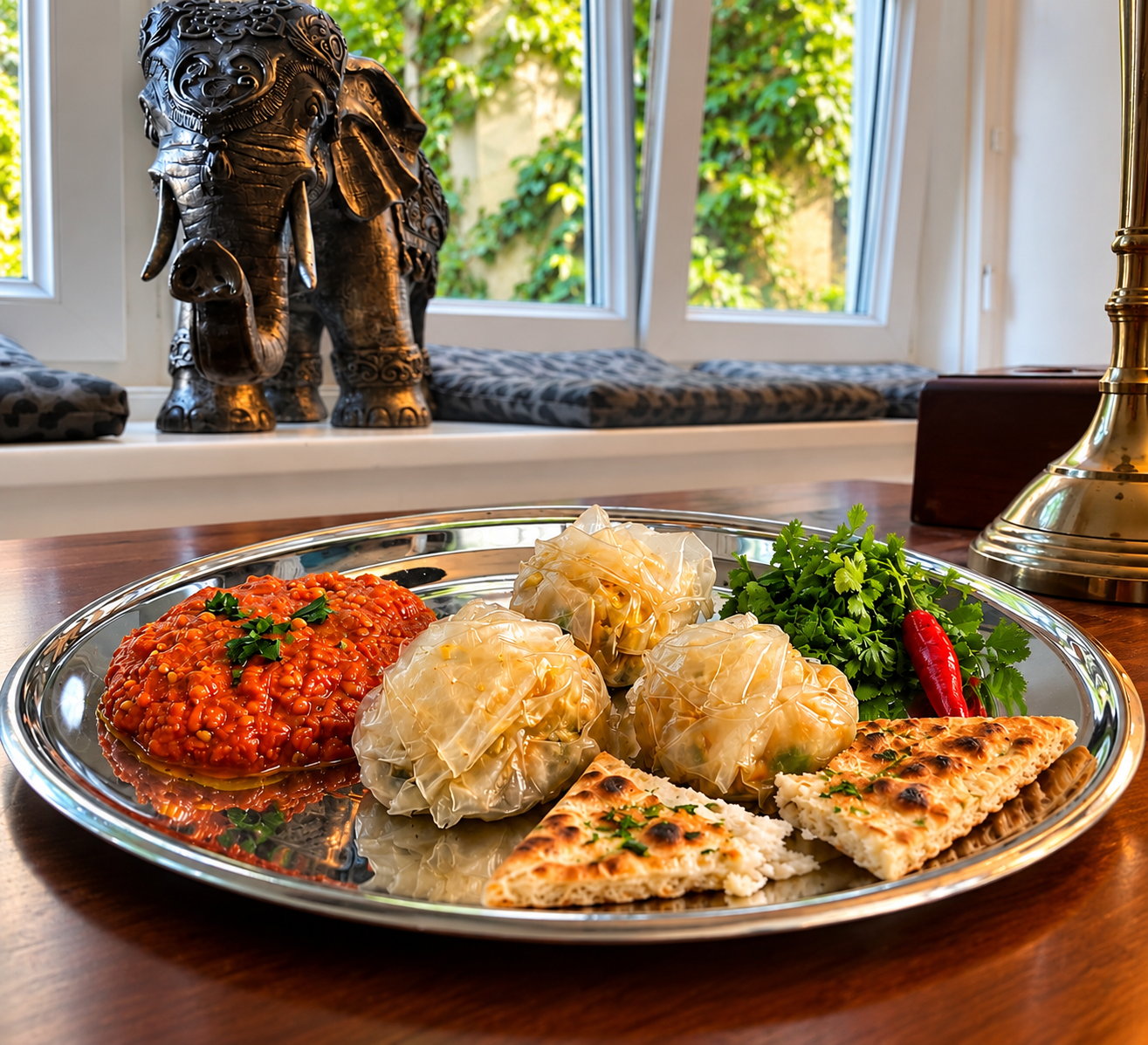
Nepalese Vegan Momos – Handmade Vegetable Dumplings with Spicy Tomato Sesame Achar
You may also like