Nigeria – The Home of Suya and Bold West African Flavours
Nigeria is a West African country with a remarkably diverse culinary heritage, shaped by its many ethnic communities and regional food traditions. Suya is one of its most recognisable street foods and is particularly associated with the Hausa culinary traditions of northern Nigeria. Traditionally, thin pieces of meat are coated in a fragrant, spicy peanut-based seasoning and grilled over charcoal. Suya is commonly served with sliced onions, tomatoes and other fresh accompaniments, creating a delicious contrast between smoky, spicy and refreshing flavours.
What Are Nigerian Suya Cauliflower Hearts?
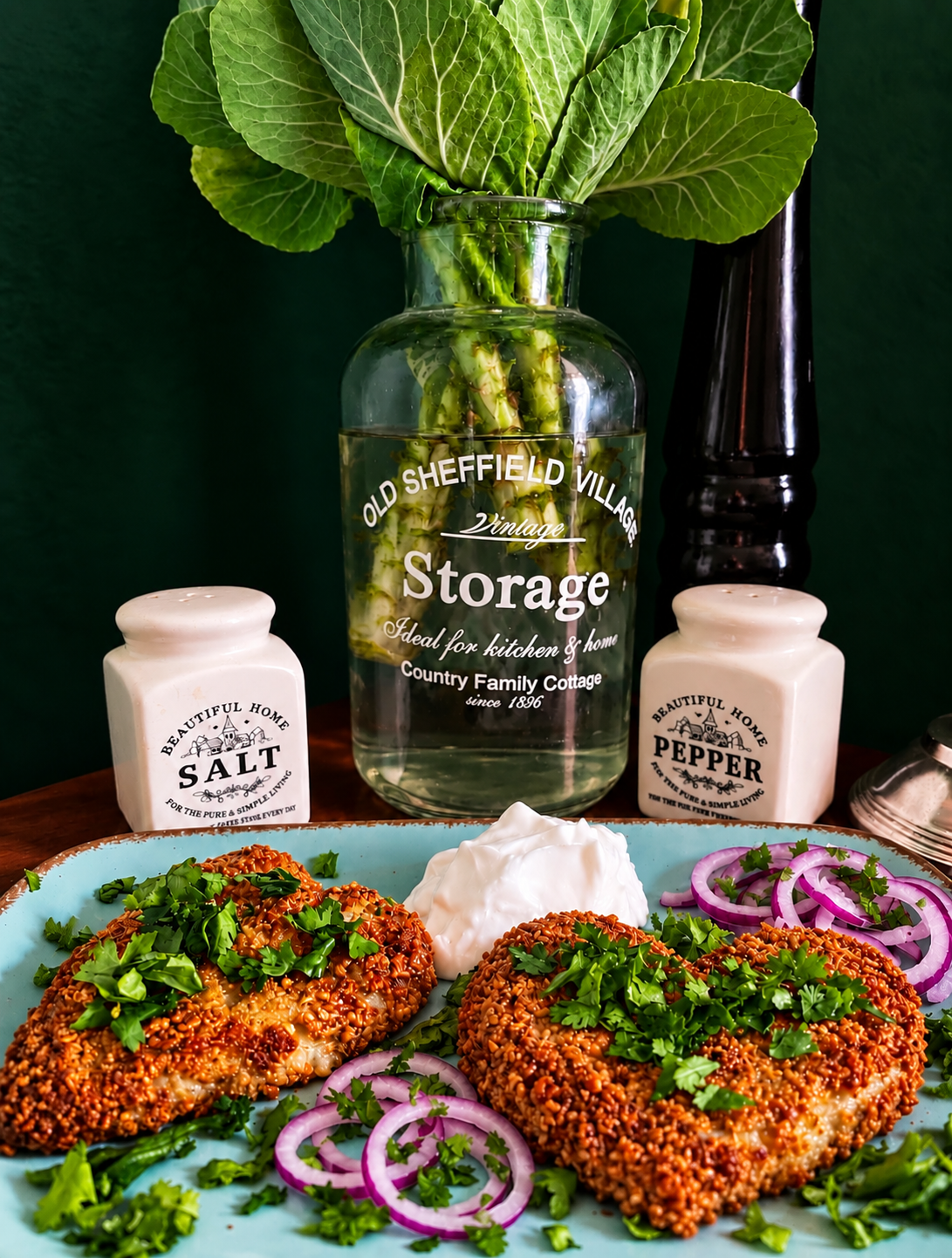
Suya Cauliflower Hearts are my creative Via Veggie Vegan interpretation of Nigerian suya flavours rather than a traditional Nigerian dish. Instead of meat, I use cooked cauliflower, remove the excess moisture and shape it into two decorative hearts. The cauliflower is coated with homemade Yaji, a seasoning inspired by Nigerian suya spice blends and made with roasted peanuts, chilli, ginger, garlic and aromatic spices. After baking, the golden hearts are served with vegan sour cream, red onion rings and fresh coriander. The result is a completely plant-based fusion dish with a nutty, spicy crust and a playful presentation.
▣ Ingredients (2 servings)
- 1 large cauliflower
- 1 red onion
- 1 tsp cayenne pepper or chilli powder
- 1 tsp ground ginger
- 1 tsp garlic powder
- 1 tsp onion powder
- 1 tsp vegetable stock powder
- 1 pinch smoked paprika
- 4 sprigs fresh coriander
- 3 tbsp roasted peanuts
- 4 tbsp vegan sour creme
- 2 tbsp peanut oil
- to taste salt & freshly ground black pepper
♨ Preparation
- Prepare and Cook the Cauliflower
Remove the outer leaves from the cauliflower and separate the head into florets. Bring a large saucepan of lightly salted water to a boil and cook the florets for approximately 8–10 minutes, until tender enough to mash. Drain thoroughly and allow to cool slightly. - Remove Excess Moisture and Shape the Hearts
Transfer the cooked cauliflower to a clean kitchen towel and carefully squeeze out as much liquid as possible. Place the cauliflower in a mixing bowl, mash thoroughly with a fork or potato masher and season with salt and freshly ground black pepper. Preheat the oven to 180°C fan-assisted and line a baking tray with baking parchment. Place two large heart-shaped moulds or cookie cutters onto the tray, divide the cauliflower mixture between them and press firmly into hearts approximately 2 cm thick. Carefully remove the moulds. If the mixture does not hold its shape, remove more moisture before shaping again. - Prepare the Homemade Yaji Spice Blend
Finely grind the roasted peanuts until they resemble coarse flour, taking care not to process them into peanut butter. Combine with the cayenne pepper or chilli powder, ground ginger, garlic powder, onion powder, vegan vegetable stock powder, smoked paprika and a pinch of salt. Mix thoroughly. - Make the Yaji Marinade and Coat the Hearts
Add the peanut oil to the Yaji spice blend and stir until a thick, spreadable marinade forms. If necessary, add only a few drops of water to adjust the consistency. Carefully brush the tops and sides of the cauliflower hearts with the marinade, making sure the peanut and spice mixture covers the edges without damaging the shapes. - Bake Until Golden
Bake the cauliflower hearts at 180°C fan-assisted for approximately 30 minutes, until the Yaji coating is golden, fragrant and lightly crisp. Check towards the end of baking, as the ground peanuts can brown quickly. If necessary, loosely cover the hearts with baking parchment to prevent excessive browning. Leave them to rest on the tray for 3–5 minutes before transferring them. - Prepare the Garnishes and Serve
While the hearts are baking, peel the red onion and cut it into thin rings. Wash, dry and roughly chop the fresh coriander. Carefully transfer one cauliflower heart to each serving plate. Add 2 tablespoons of vegan sour cream per serving, arrange the red onion rings alongside and finish generously with fresh coriander. Serve immediately.
Food Story
Who Said Cauliflower Has to Look Like Cauliflower?
Certainly not me! Today’s culinary journey takes us to Nigeria, home of the wonderfully aromatic suya spice tradition. And while traditional suya is all about seasoned, grilled meat, I had something rather different in mind. Cauliflower. Hearts. And plenty of Yaji. Instead of simply cutting the cauliflower into steaks, I cooked it, squeezed out the excess moisture and shaped it into two beautiful hearts. Because apparently, even vegetables deserve a little romance!
A Little Love and a Lot of Spice
Then came the serious business: a homemade Yaji marinade packed with roasted peanuts, ginger, garlic and chilli. I brushed the mixture generously over the cauliflower hearts and baked them until beautifully golden. The peanut crust brought crunch, the spices brought heat, and the kitchen smelled absolutely wonderful. What started as a simple cauliflower had suddenly turned into something rather special. That’s exactly what I love about getting creative in the kitchen – you never quite know how your little experiment will turn out!
Team Coriander Doesn’t Take Days Off
To finish, I added cool vegan sour cream, crunchy red onion rings and plenty of fresh coriander. And yes, the coriander was absolutely necessary. Team Coriander doesn’t take days off! The result? Two golden cauliflower hearts that look rather sweet but definitely have a fiery personality. A little love. A lot of spice. And absolutely no meat required. Nigeria meets Via Veggie Vegan – and cauliflower gets its moment in the spotlight!
♨ Nutrition per serving
Nutritional values are approximate and may vary depending on the ingredients and products used.
Good to Know
What Is Nigerian Suya?
Suya is a popular Nigerian street food consisting traditionally of thin pieces of seasoned meat threaded onto skewers and grilled over charcoal. It is particularly associated with Hausa food traditions in northern Nigeria but is enjoyed throughout the country. Suya is often served with sliced onions, tomatoes and other fresh accompaniments. Its characteristic combination of spicy seasoning, roasted aromas and savoury depth has inspired numerous modern variations, including plant-based interpretations.
Yaji – The Spice Blend Behind Suya
Yaji is the aromatic seasoning closely associated with Nigerian suya. It commonly contains ground peanuts or processed peanut powder, chilli, ginger and other spices, although recipes vary widely between regions, families and spice sellers. Some commercial blends also contain additional seasonings and flavour enhancers. This homemade Via Veggie Vegan version combines roasted peanuts, cayenne pepper, ginger, garlic powder, onion powder, vegetable stock powder and smoked paprika to create a distinctive nutty and spicy coating.
Why Peanuts Are Important in Suya Seasoning
Peanuts contribute a characteristic nutty flavour and texture to many suya spice preparations. They contain plant-based protein, unsaturated fats and dietary fibre, as well as minerals such as magnesium. Their fat content also influences how the spice mixture behaves when combined with oil. Peanuts are a major food allergen, so this recipe is not suitable for anyone with a peanut allergy unless an appropriately tested alternative recipe is used.
Cauliflower – A Versatile Plant-Based Ingredient
Cauliflower belongs to the Brassica family, alongside broccoli, cabbage and Brussels sprouts. It provides vitamin C, folate and dietary fibre while remaining relatively low in calories. Its mild flavour makes it particularly suitable for absorbing aromatic spice blends. When cooked and mashed, cauliflower can also be shaped into patties, croquettes or other creative forms. In this recipe, its versatility makes the decorative heart-shaped presentation possible.
Why Removing Moisture Matters
Cauliflower contains a high proportion of water. When the florets are cooked, additional moisture can remain trapped between the pieces. Removing excess water before shaping reduces the likelihood of the hearts spreading during baking. A drier mixture also allows the peanut-based marinade to adhere more effectively. However, cauliflower alone contains relatively little starch or other binding material, so the finished hearts remain delicate and should be handled carefully.
Chilli, Cayenne and the Heat Level
The spicy character of this dish comes mainly from cayenne pepper or chilli powder. Their heat is caused by capsaicinoids, naturally occurring compounds found in chilli peppers. Different chilli powders vary significantly in strength, depending on the pepper varieties and any additional spices they contain. The stated Heat Level of 3/4 reflects the use of a relatively generous quantity of cayenne. For a milder version, reduce the cayenne and increase the proportion of sweet paprika.
Ginger, Garlic and Aromatic Depth
Ground ginger, garlic powder and onion powder create the savoury aromatic foundation of this Yaji-inspired marinade. Ginger contains naturally occurring pungent compounds, including gingerols, while garlic and onion develop their characteristic flavours from sulphur-containing compounds. Dried seasonings are particularly practical in a peanut-based coating because they contribute concentrated flavour without adding significant moisture. Their combination gives the cauliflower a rich, fragrant crust.
Peanut Oil and Oven Baking
Peanut oil is suitable for many cooking applications and complements the roasted peanut flavour of the Yaji blend. In this recipe, it helps distribute the spices and encourages browning during baking. Oven baking creates a different result from traditional charcoal-grilled suya, but it is practical for delicate cauliflower hearts. Because ground peanuts can darken quickly, the oven temperature and baking time should be monitored carefully to avoid a bitter, over-roasted crust.
Vegan Sour Cream and Fresh Accompaniments
Cool vegan sour cream provides a creamy contrast to the spicy Yaji crust. Plant-based sour cream alternatives may be made from soy, oats, coconut or other ingredients, and their nutritional composition varies by brand. Fresh red onion rings add crunch and pungency, while coriander contributes a bright herbal note. This combination reflects the general idea of serving intensely seasoned suya with refreshing accompaniments, although the heart-shaped cauliflower and sour cream are modern additions.
Zero Waste – Don't Throw Away the Cauliflower Leaves!
Fresh cauliflower leaves are edible and can be used in many savoury dishes. Wash them thoroughly, remove particularly tough parts and cut the leaves into strips. Toss them with a little oil, salt and smoked paprika, then roast until tender with lightly crisp edges. The cauliflower stalk can also be peeled, finely chopped and added to vegetable soups, curries or homemade stock. Leftover coriander stems can be finely chopped and used in dressings or sauces. One cauliflower, several delicious possibilities. Zero Waste, Full Flavor!