Eritrea – A Culinary Heritage of Spices and Shared Traditions
Located in the Horn of Africa along the Red Sea, Eritrea has a diverse culinary heritage shaped by regional traditions, agriculture and centuries of cultural exchange. Aromatic spices, lentils, vegetables and richly flavoured stews play an important role in Eritrean cooking. Many traditional dishes are served with Injera, a soft, fermented flatbread that forms the foundation of a shared meal. Berbere, a distinctive chilli-based spice blend, is one of the country's most characteristic seasonings.
Zigni – Eritrea's Rich and Spicy Traditional Stew
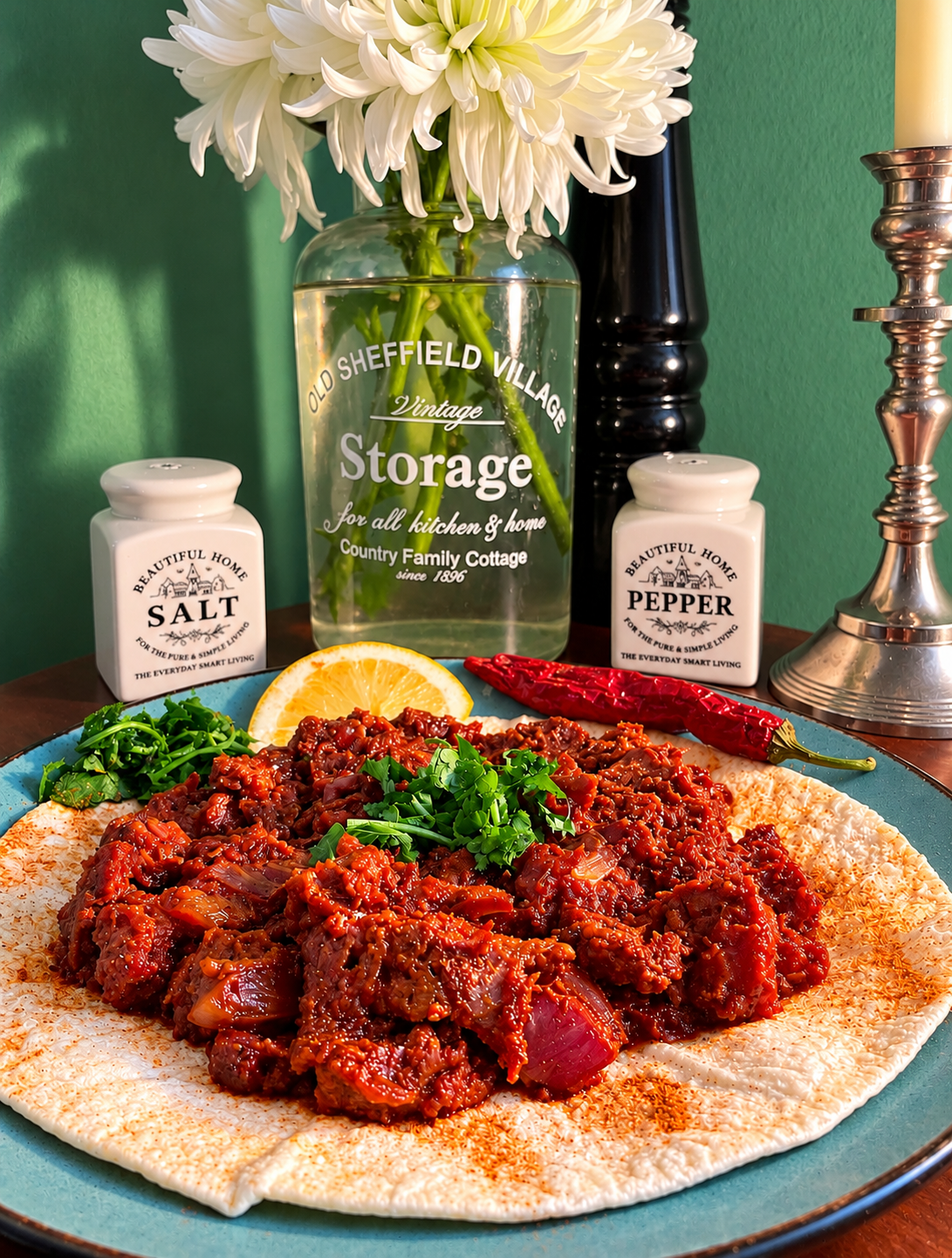
Zigni is one of Eritrea's best-known traditional dishes, typically prepared with beef simmered in a deeply flavoured tomato and onion sauce seasoned with Berbere. The generous quantity of slowly cooked onions creates natural sweetness and richness, while the spice mixture adds warmth, heat and complexity. My Via Veggie Vegan version replaces beef with plant-based steak strips and traditional spiced butter with vegan butter. Fresh tomatoes, homemade Berbere-inspired spices, plum syrup and a small piece of dark chocolate give the sauce its own deliciously intense character.
▣ Ingredients (2 servings)
- 300 g red
- 250 g ripe tomatoes, approximately 3–4 small tomatoes,
- 3 cloves garlic
- 1 tsp fresh ginfger
- 1 tsp sweet paprika powder
- 1/2 tsp cayenne pepper
- 1/2 tsp chilli powder
- 1/2 tsp ground cumin
- 1/2 tsp ground coriander
- 1/4 tsp ground cinamon
- 1 pinch ground cardamom
- 1 pinch black pepper
- 1/2 bunch fresh coriander (optional)
- 400 g vegan steak strips
- 1 tbsp tomato paste
- 1 piece vegan dark chocolate
- 3 tbsp vegan butter alternative
- 1 tbsp plum syrup
- 100-150 ml water
- to taste salt & freshly ground black pepper
- 2 pieces flatbread (optional)
♨ Preparation
- Prepare the Vegetables and Homemade Spice Blend
Finely dice the red onions and ripe tomatoes. Grate the garlic cloves and fresh ginger. In a small bowl, combine the sweet paprika, cayenne pepper, chilli powder, cumin, ground coriander, ground ginger, cinnamon, cloves, cardamom and ground black pepper. Stir until evenly mixed. - Slowly Cook the Red Onions
Place the finely diced red onions in a heavy-bottomed saucepan without adding any fat. Cook over medium-low heat, stirring regularly, until the onions release their moisture and become soft and translucent. Add a small splash of water if necessary to prevent sticking. - Caramelize with Plum Syrup
Add the plum syrup to the softened onions and continue cooking gently until the liquid reduces and the onions develop a slightly sticky, caramelized consistency. Stir frequently to prevent burning. - Sear the Vegan Steak Strips
In a separate frying pan, heat approximately 1 tbsp of the vegan butter. Add the vegan steak strips and sear briefly on both sides until lightly browned and crispy around the edges. Remove from the heat and set aside. - Build the Aromatic Spice Base
Add the remaining vegan butter to the caramelized onions. Stir in the freshly grated garlic and ginger, followed by the homemade Berbere-inspired spice mixture. Cook gently for approximately 1 minute, stirring continuously, until fragrant. Keep the heat moderate to prevent the spices from burning. - – Prepare the Rich Tomato Sauce
Add the tomato paste and cook briefly to develop its flavour. Stir in the finely chopped fresh tomatoes and allow them to soften and release their juices. Pour in approximately 100 ml water, mix well and simmer gently for 10–15 minutes until the sauce begins to thicken. - Add the Vegan Steak and Slow-Cook
Return the seared vegan steak strips to the saucepan and fold them into the aromatic tomato sauce. Cover and simmer over very low heat for approximately 60 minutes, stirring occasionally. Add small splashes of water if necessary to prevent the sauce from becoming too thick or sticking to the bottom of the pan. The exact simmering time may be adjusted according to the texture and cooking instructions of the plant-based steak product. - Finish with Dark Chocolate and Seasonings
During the final minutes of cooking, add the dark chocolate and stir until completely melted into the sauce. Season with salt and freshly ground black pepper. Taste and adjust the balance of heat, sweetness and savoury depth if necessary. - Garnish and Serve
Spoon the rich, deep-red vegan Zigni onto Injera or your preferred flatbread. Garnish with freshly chopped coriander if desired and serve immediately while hot and aromatic.
Food Story
When Eritrea Meets Team Spicy!
Some countries are famous for their mild, delicate flavours. Eritrea certainly isn’t one of them! And anyone who knows my kitchen knows that a generous amount of chilli, garlic and aromatic spices is always welcome. So when I discovered Zigni, with its deeply red sauce, slowly cooked onions and fiery Berbere seasoning, I knew this was going to be exactly my kind of dish. A big pot, lots of spices and plenty of time for the flavours to develop – what’s not to love?
No Berbere? No Problem!
There was just one tiny obstacle: I didn’t have any Berbere spice blend at home. But that wasn’t going to stop me! Instead, I created my own mixture using sweet paprika, cayenne, chilli, cumin, coriander, ginger, cinnamon, cloves, cardamom and black pepper. And because I love experimenting with unexpected ingredients, I added a spoonful of plum syrup to the onions and a little dark chocolate to the finished sauce. The result was wonderfully rich, slightly sweet, beautifully spicy and full of aromatic depth.
One Hour of Patience – and a Lot of Flavour
Instead of traditional beef, I used vegan steak strips, briefly seared them until nicely browned and then let them simmer gently in the tomato and onion sauce for about an hour. The kitchen smelled absolutely incredible! Served on flatbread with a little fresh coriander, this was another reminder of why I love my culinary journey around the world so much. Different countries, different traditions and endless opportunities to discover new combinations. And yes, Team Garlic and Team Spicy were both very happy with this one!
♨ Nutrition per serving
Nutritional values are approximate and may vary depending on the ingredients and products used.
Good to Know
What Is Eritrean Zigni?
Zigni is a traditional Eritrean stew known for its rich red colour, generous use of onions and aromatic Berbere seasoning. It is commonly prepared with beef and served with Injera. The dish is also closely related to spicy stews found in neighbouring Ethiopian cuisine, reflecting the shared culinary traditions of the Horn of Africa.
Berbere – The Heart of Eritrean Flavour
Berbere is a traditional spice blend built around dried chilli peppers and a variety of aromatic spices. Depending on the family or producer, it may include paprika, fenugreek, ginger, coriander, cardamom, cloves and other seasonings. There is no single universal recipe. My homemade alternative uses ten familiar spices to recreate some of Berbere's characteristic heat and complexity, although it is not identical to a traditional blend.
Why So Many Red Onions?
Slowly cooked onions are essential to the character of many Eritrean and Ethiopian stews. As they soften and release moisture, their natural sweetness becomes more noticeable and they gradually form a thick, flavourful base. Using 300 g of red onions gives this vegan Zigni body, richness and a pleasant sweetness that balances the chilli heat.
Dry-Sautéing Onions – A Traditional Cooking Technique
Cooking onions without added fat at the beginning allows their natural moisture to evaporate before butter or oil is introduced. This technique helps concentrate their flavour and creates a deeply aromatic foundation for the stew. A heavy-bottomed pan and frequent stirring are particularly important to prevent sticking or burning.
Why Fresh Tomatoes Make a Difference
Fresh ripe tomatoes bring natural sweetness, acidity and a lighter, fresher tomato flavour to the sauce. Unlike passata, they contain pieces of tomato flesh and varying amounts of water, so the final consistency depends on their ripeness and variety. Finely chopping them and allowing sufficient simmering time helps create a rich, cohesive sauce.
Dark Chocolate in Savoury Cooking
A small piece of dark chocolate can contribute subtle bitterness, roasted notes and additional depth to savoury sauces. It works particularly well alongside tomatoes, chilli and warm spices. The chocolate should complement rather than dominate the dish, so a small quantity is sufficient. Choose dairy-free dark chocolate to keep the recipe vegan.
Plum Syrup – Sweetness with Fruity Depth
Plum syrup adds a concentrated fruity sweetness that complements slowly cooked onions and balances the heat of the spices. Unlike ordinary sugar, it may also contribute gentle fruit acidity and a deeper flavour, depending on the product. In this recipe, just one tablespoon is enough to create a subtle sweet counterpoint without making the stew taste like a dessert.
Injera – More Than Just Flatbread
Injera is a soft, fermented flatbread traditionally made with teff flour, although other grains may also be used. Its characteristic slightly sour flavour and spongy texture make it ideal for absorbing rich sauces. Injera plays an important role in Eritrean and Ethiopian dining traditions and is often used as both a serving base and an accompaniment to stews.
Plant-Based Steak Strips vs. Traditional Beef
Plant-based steak strips can provide a satisfying, meat-like texture without animal-derived ingredients. Many products are made from soy, wheat or pea protein and differ considerably in firmness, moisture content and cooking behaviour. Unlike traditional beef, vegan steak strips do not require prolonged simmering to become safe to eat or tender. Always consider the manufacturer's instructions, as some varieties can become overly soft during extended cooking.
Spices, Heat and Personal Preference
Chilli heat comes primarily from capsaicinoids, compounds found in chilli peppers. Cayenne pepper and chilli powder can vary greatly in intensity, so the same quantity may produce different results depending on the brand. If you prefer a milder Zigni, reduce the cayenne and chilli powder. For a hotter version, increase them gradually while keeping the aromatic spices balanced.