
South Korea – A Culinary Culture of Balance and Fermentation
South Korea is an East Asian country renowned for its diverse culinary traditions, fermented foods and colorful vegetable dishes. Korean cuisine combines savory, spicy, sweet and aromatic flavors, with ingredients such as garlic, sesame oil, soy sauce and gochugaru playing important roles. A traditional Korean meal often includes banchan, small side dishes served alongside rice and other preparations. Vegetables, seasonal ingredients and fermentation are central elements of this rich food culture.
What Is Aehobak Bokkeum?
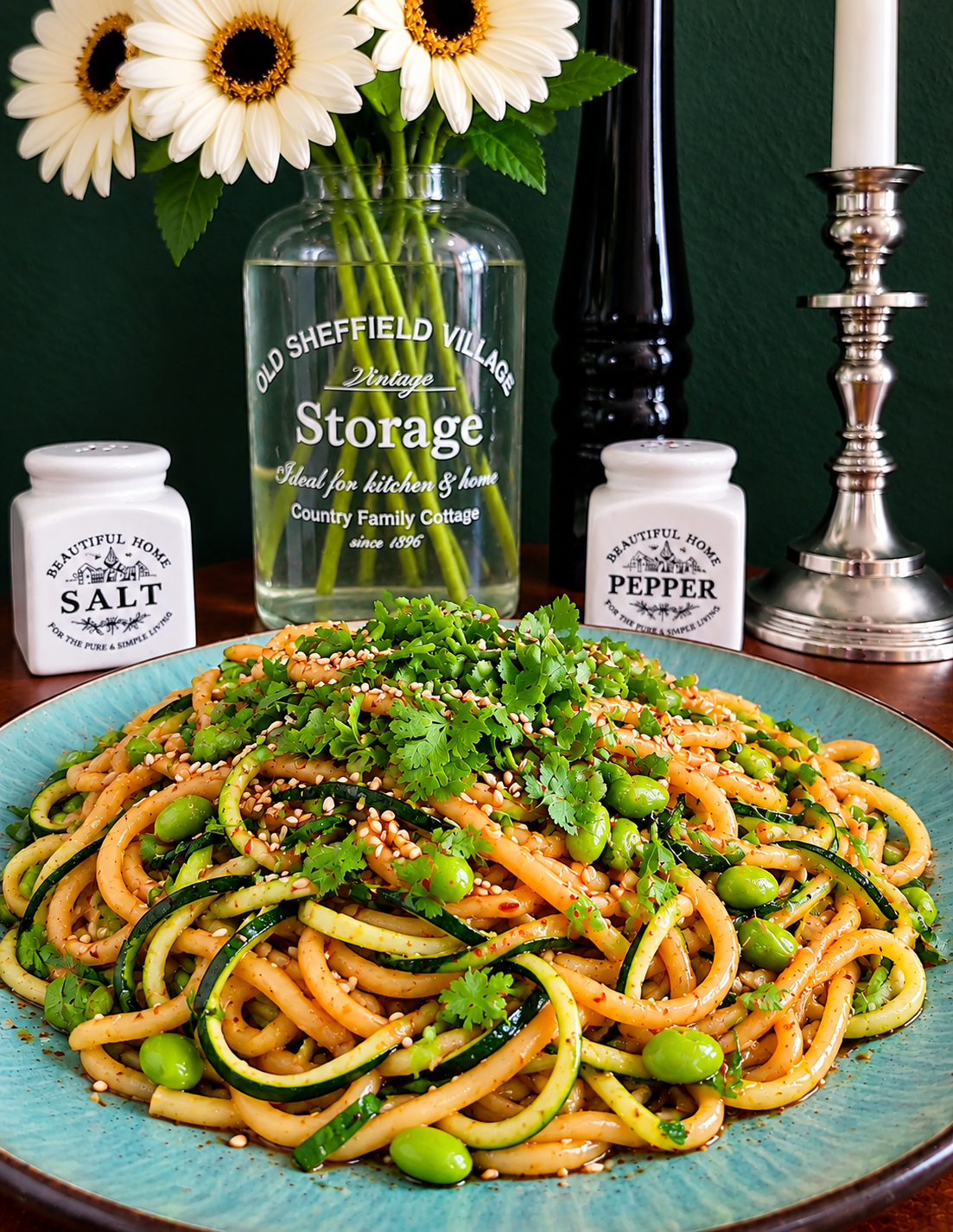
Aehobak Bokkeum (애호박볶음) is a traditional Korean stir-fried summer squash dish commonly served as banchan. Aehobak refers to Korean summer squash, while bokkeum means stir-fried. Traditionally, the squash is sliced and quickly cooked with ingredients such as garlic, spring onions and sesame oil. My Via Veggie Vegan interpretation replaces Korean aehobak with spiralized zucchini and transforms the vegetable side dish into a complete noodle meal with Udon, edamame and a savory miso-gochugaru sauce. Fresh coriander and sesame add the finishing touch.
▣ Ingredients (2 servings)
- 1 zucchini
- 2-3 cloves garlic
- 2 spring onions
- 1 tbsp neutral oil
- 1 tbsp soy sauce
- 1 tsp white miso paste
- 1 tsp maple syrup
- 1 tsp gochugaru
- 1 tbsp water
- 1 tsp toasted sesame oil
- 90 g undon noodles
- 30 g shelled edamame
- 1 handful fresh coriander
- 1 tsp sesame seeds
- to taste salt & freshly ground black pepper
♨ Preparation
- – Prepare the Udon Noodles
Cook the Udon noodles according to the package instructions.
Drain thoroughly and set aside.
If using pre-cooked Udon, loosen the noodles according to the package instructions before adding them to the pan. - Prepare the Vegetables
Wash the zucchini and trim both ends.
For this Via Veggie Vegan version, cut the zucchini into thin, noodle-like strips using a spiralizer or julienne cutter.
Peel and thinly slice the onion.
Finely chop the garlic.
Cut the spring onions into thin rings, keeping the white and green parts separate.
Roughly chop the fresh coriander. - Mix the Sauce
In a small bowl, combine the soy sauce, white miso paste, maple syrup, gochugaru and water.
Stir until the miso has dissolved and the ingredients form a smooth sauce.
Set aside. - Stir-Fry the Zucchini
Heat the neutral vegetable oil in a large frying pan or wok over medium-high heat.
Add the onion and stir-fry briefly until softened.
Add the zucchini strips and cook for approximately 3–4 minutes, tossing gently.
The zucchini should soften slightly while retaining some bite.
Avoid overcooking, as thin zucchini strips release moisture quickly. - Add the Aromatics and Edamame
Add the chopped garlic, the white parts of the spring onions and the shelled Edamame.
Stir-fry for another 1–2 minutes until fragrant and the Edamame are heated through.
If using frozen Edamame, make sure they have been cooked or heated thoroughly according to the package instructions. - Add the Sauce and Udon
Pour the prepared sauce into the pan.
Toss the vegetables until evenly coated.
Add the cooked Udon noodles and gently combine everything.
Continue cooking for approximately 1–2 minutes until the noodles are hot and coated with the sauce.
Allow any excess liquid from the zucchini to reduce slightly. - Finish with Sesame Oil
Remove the pan from the heat.
Add the toasted sesame oil and season with freshly ground black pepper.
Taste before adding salt, as both the soy sauce and miso already provide saltiness. - Serve
Divide the Korean Stir-Fried Zucchini with Udon & Edamame between two plates or bowls.
Finish with fresh coriander, sesame seeds and the reserved green spring onion rings.
Serve immediately while the noodles are hot and the zucchini still has a little bite.
Food Story
When a Side Dish Decides to Become Dinner
Sometimes a side dish decides it would rather be dinner. And that’s exactly what happened to my zucchini! Aehobak Bokkeum is traditionally served as Korean banchan, but I had other plans. Since Korean summer squash isn’t something I can easily find everywhere, I used regular zucchini and turned it into long, beautiful noodles with my spiralizer. A quick stir-fry with garlic, onion and spring onions, and my little Korean-inspired adventure was already taking shape.
Sorry, Rice. I’m Team Noodles!
But let’s be clear about one thing: I’m much more of a noodle person than a rice person. So instead of serving my zucchini alongside rice, I invited some chewy Udon noodles to join the party. A handful of green edamame added color, texture and plant-based protein, while white miso, soy sauce, maple syrup and gochugaru created a beautifully savory, slightly spicy coating. Everything went into the same pan until the zucchini noodles and Udon were perfectly mixed. Two kinds of noodles, one very happy cook!
Team Coriander Strikes Again
And because no country is entirely safe from Team Coriander, a generous mountain of fresh coriander landed right on top. Add a little toasted sesame oil, sesame seeds and spring onions, and dinner is served! This isn’t traditional Aehobak Bokkeum anymore, but that’s the beauty of my culinary journey: discovering traditional dishes and giving them a personal plant-based twist. Korean banchan at heart, a complete noodle dinner on my plate. And absolutely, unmistakably Via Veggie Vegan!
♨ Nutrition per serving
Nutritional values are approximate and may vary depending on the ingredients and products used.
Good to Know
Aehobak – Korea's Summer Squash
Aehobak (애호박) is a Korean summer squash widely used in everyday home cooking. Although it resembles European zucchini, it is a different cultivated variety, often lighter green with a delicate, slightly sweet flavor. Aehobak appears in soups, pancakes, stews and stir-fries. Aehobak Bokkeum is traditionally a relatively simple vegetable side dish rather than a complete noodle meal.
What Does Bokkeum Mean?
Bokkeum (볶음) refers to a Korean cooking technique involving stir-frying ingredients in a pan. Vegetables, noodles, tofu and other ingredients can all be prepared using this method. The relatively short cooking time helps vegetables retain texture while developing flavor from aromatic seasonings.
What Is Gochugaru?
Gochugaru (고춧가루) is Korean red chili powder or flakes made from dried red chilies. It is widely used in Korean cooking, particularly in kimchi, soups, stews and spicy vegetable dishes. Depending on the variety, it provides a fruity chili flavor with mild to pronounced heat. Unlike many Western chili powder blends, gochugaru generally contains only dried chilies.
Gochugaru vs. Gochujang
Although their names sound similar, gochugaru and gochujang are different ingredients. Gochugaru consists of dried chili flakes or powder, while gochujang is a fermented Korean chili paste traditionally made with chili, glutinous rice, fermented soybeans and salt. Gochujang adds sweetness and fermented complexity, while gochugaru provides more direct chili flavor and heat.
What Is White Miso?
White miso, also known as shiro miso, is a fermented Japanese seasoning paste typically made from soybeans, koji and salt. It generally has a milder, slightly sweeter flavor than many darker miso varieties. In this recipe, white miso adds savory depth and complements the soy sauce without overpowering the delicate zucchini.
Why Combine Udon and Zucchini Noodles?
Udon noodles provide a soft, chewy texture and satisfying carbohydrates, while spiralized zucchini adds freshness, volume and additional vegetables. Combining both creates a lighter vegetable-forward noodle dish without giving up the comforting texture of traditional wheat noodles. The two types of noodles also absorb and carry the savory sauce differently, creating an interesting contrast.
Are Udon Noodles Korean?
Udon noodles are particularly associated with Japanese cuisine and are traditionally made from wheat flour, water and salt. Their inclusion here is a personal Via Veggie Vegan interpretation rather than part of traditional Aehobak Bokkeum. The combination illustrates how ingredients from different East Asian culinary traditions can be brought together in a modern plant-based dish.
Zucchini – Light, Versatile and Nutritious
Zucchini has a high water content and is relatively low in calories. It provides vitamin C, potassium and smaller amounts of other vitamins and minerals. Vitamin C contributes to normal immune function and collagen formation, while potassium supports normal muscle function and helps maintain normal blood pressure.
Edamame – Small Beans, Valuable Protein
Edamame are young soybeans harvested before full maturity. They provide plant-based protein, dietary fiber, folate and minerals. Soy protein contains all essential amino acids, making edamame a valuable ingredient in vegan meals. Their slightly firm texture also contrasts nicely with the tender Udon and zucchini noodles.
Plant-Based Protein and Satiety
Combining wheat noodles, edamame and vegetables provides carbohydrates, protein and dietary fiber. Protein contributes to the maintenance of muscle mass, while fiber supports normal digestive function and helps promote satiety. For a higher-protein meal, the edamame quantity can be increased or additional tofu can be included.
Dietary Fiber and Digestive Health
Zucchini, onions, spring onions and edamame contribute dietary fiber. Fiber supports normal bowel function and forms an important part of a balanced plant-based diet. Edamame provides considerably more fiber per gram than zucchini, making the legumes particularly valuable in this combination.
Sesame Oil and Unsaturated Fatty Acids
Sesame oil contains predominantly unsaturated fatty acids, including monounsaturated and polyunsaturated fats. Replacing saturated fats with unsaturated fats can help lower LDL cholesterol. Elevated LDL cholesterol contributes to cardiovascular risk, while HDL participates in transporting cholesterol back toward the liver. The overall balance of dietary fats is more important than focusing on a single oil.
Why Add Toasted Sesame Oil at the End?
Toasted sesame oil has an intense nutty aroma created during the roasting of sesame seeds. Adding it after cooking helps preserve its characteristic flavor. It is primarily used as a finishing oil in this recipe rather than as the main frying fat.
Fermented Foods and Umami
Both miso and soy sauce are fermented products that contribute umami, one of the five basic tastes. Umami is associated with naturally occurring glutamate and other flavor compounds. Fermentation helps develop the complex savory flavors that make relatively simple vegetable dishes taste rich and satisfying. Fermented condiments are not necessarily sources of live probiotics, particularly when pasteurized or heated.
Watch the Sodium
Soy sauce and miso both contain substantial amounts of sodium. Using moderate quantities and tasting before adding salt helps prevent the finished dish from becoming overly salty. Reduced-sodium soy sauce can be used if preferred, although its flavor and salt content still vary by brand.
Why Does Zucchini Release So Much Water?
Zucchini consists largely of water. When heated, its plant cells soften and release moisture, especially when cut into thin strips. A large, hot pan allows excess liquid to evaporate more quickly. Overcrowding or prolonged cooking can result in soft, watery zucchini noodles.
Zero Waste – Use the Entire Zucchini
Spiralizing zucchini often leaves behind a small central core and irregular pieces. Instead of discarding them, finely chop the leftovers and add them directly to the stir-fry. Alternatively, use them in vegetable soups, pasta sauces or homemade stock. Tender coriander stems can also be chopped and used alongside the leaves.
Naturally Vegan – No Animal Products Required
Zucchini, onions, garlic, spring onions, edamame, wheat Udon, gochugaru, sesame, coriander, miso, soy sauce and maple syrup can all be naturally plant-based ingredients. No meat, dairy or egg alternatives are necessary. Check packaged Udon noodles and prepared condiments to ensure they contain no animal-derived additives.
You may also like
♡
You may also like
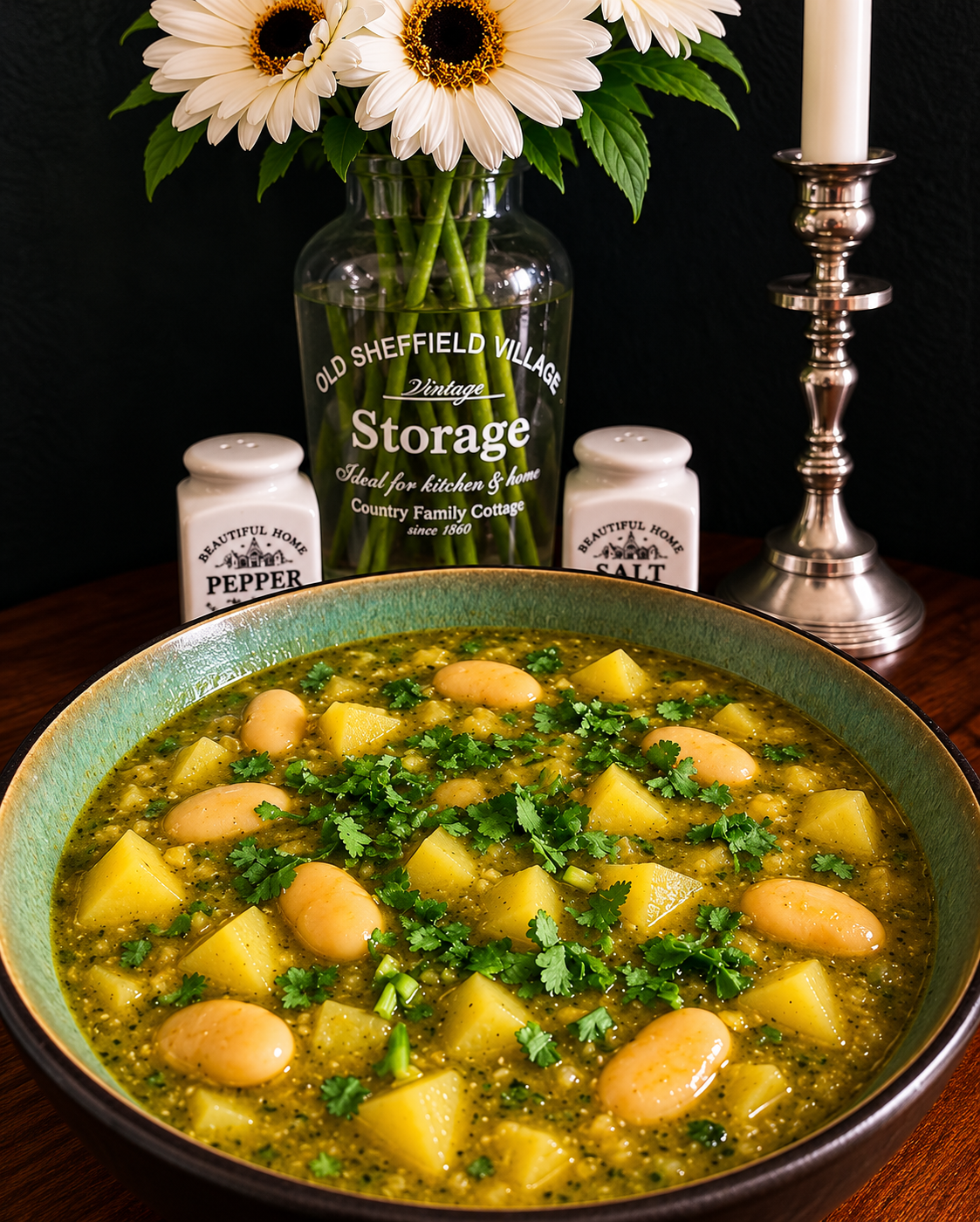
Peruvian Coriander Stew – Vegan Seco de Frijoles y Papas with Homemade Ají Amarillo Paste
You may also like
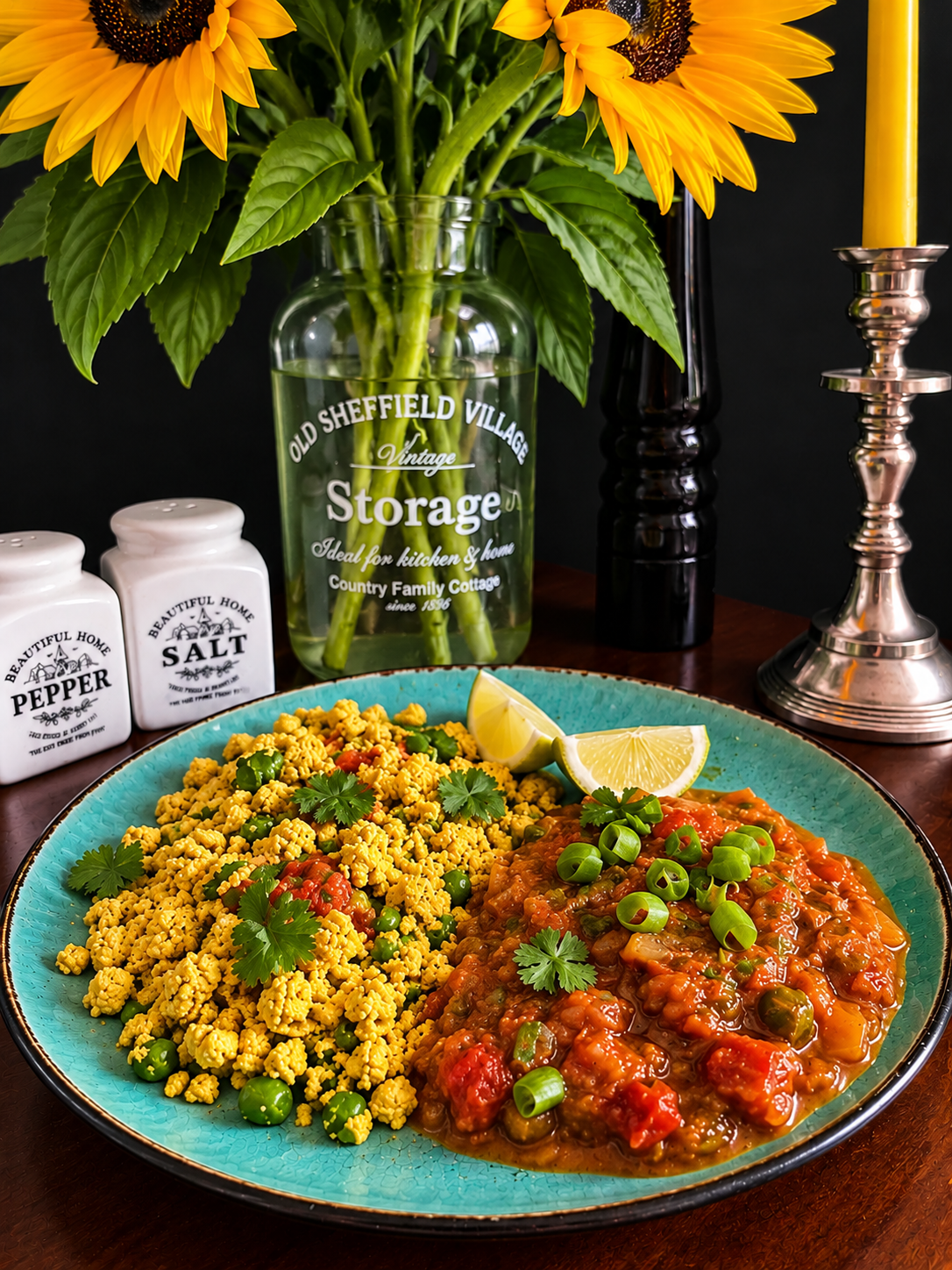
Vegan Trinidadian Tomato Choka with Creamy Tofu Scramble

You may also like