Recipe postcard
India – A Country of Extraordinary Culinary DiversityIndia is a vast South Asian country with an exceptionally diverse culinary heritage shaped by regional traditions, geography, climate, religion and history. From the fragrant rice dishes of the south to the rich lentil preparations of the north, Indian cuisine offers an extraordinary variety of ingredients, cooking techniques and flavors. Pulses, rice, vegetables, herbs and spices are central to many regional food traditions. Fresh coriander, known as hara dhaniya in Hindi, is widely used in chutneys, curries and vegetable dishes, while dried coriander seeds provide a distinctly different, warm and aromatic flavor. Indian cuisine includes countless naturally plant-based dishes, making it a wonderful source of inspiration for vegan cooking.
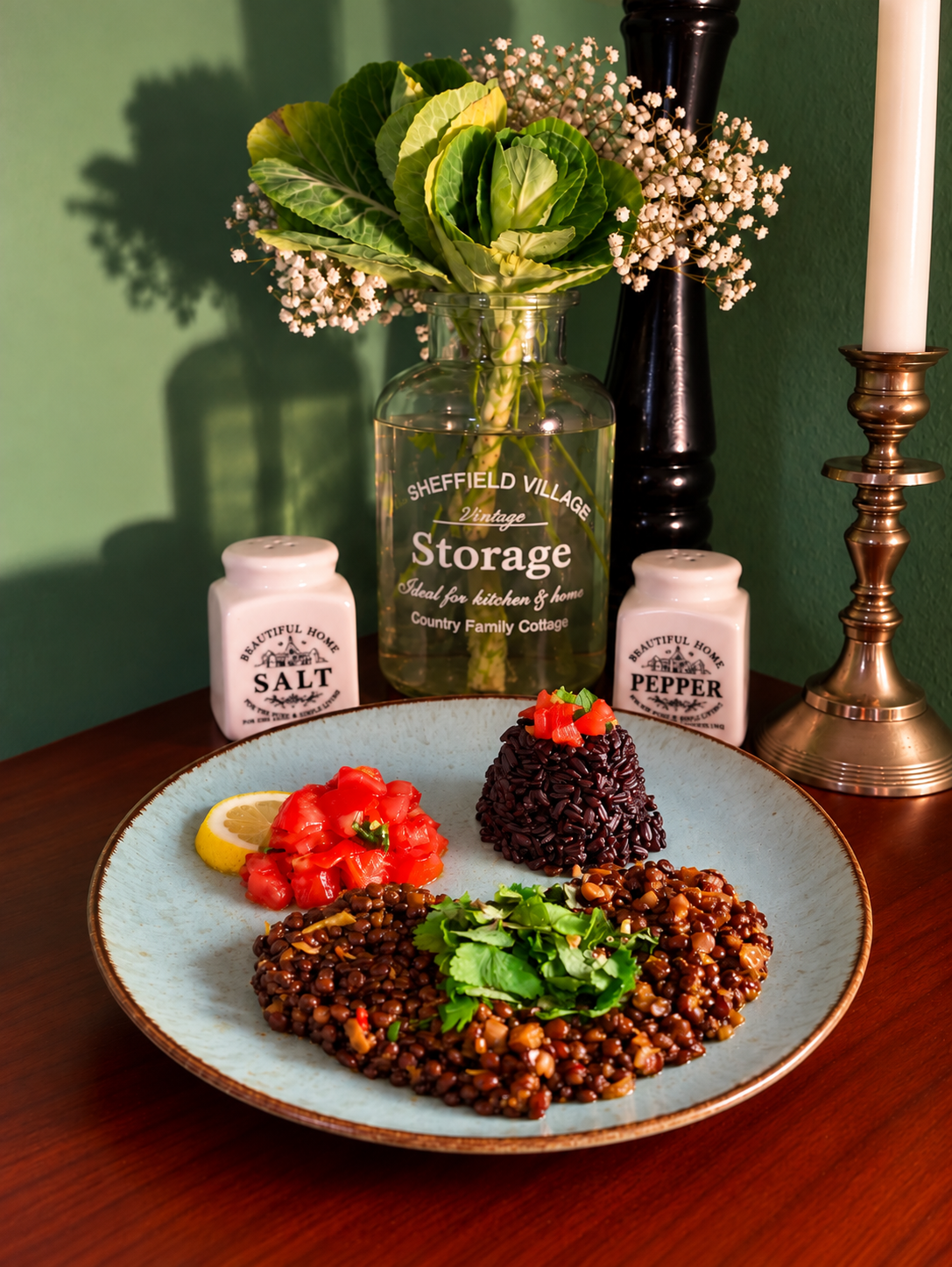
Hara Dhaniya Dal – A Fresh Coriander Lentil CurryIn Hindi, hara means green, dhaniya means coriander and dal refers to certain pulses or dishes prepared from them. Hara Dhaniya Dal can therefore be understood as a lentil dish featuring fresh green coriander. This Via Veggie Vegan creation is inspired by Indian ingredients and flavors rather than representing a specific traditional regional recipe. Black Beluga lentils are combined with onion, garlic, cinnamon, bay leaf, garam masala and ground coriander, then coated in a vibrant paste of fresh coriander, green chili, ginger and lemon juice. Served with black rice, the dish brings together earthy lentils, aromatic spices and bright herbal freshness in a colorful, naturally vegan interpretation of Indian-inspired comfort food.
Cook this recipe →
Recipe postcard
Haiti – The Caribbean Nation That Fought for FreedomHaiti occupies the western part of the Caribbean island of Hispaniola, which it shares with the Dominican Republic. Its culture reflects a rich heritage shaped by African traditions, Indigenous history, French colonial influence and the extraordinary struggle for independence. On 1 January 1804, Haiti declared its independence after a successful revolution against French colonial rule, becoming the first independent Black republic and the first state established through a successful revolt by enslaved people. Haitian cuisine is known for its vibrant seasonings, aromatic herbs, vegetables, rice, beans and deeply flavorful dishes. Food plays an important role in family gatherings, cultural identity and the preservation of traditions.
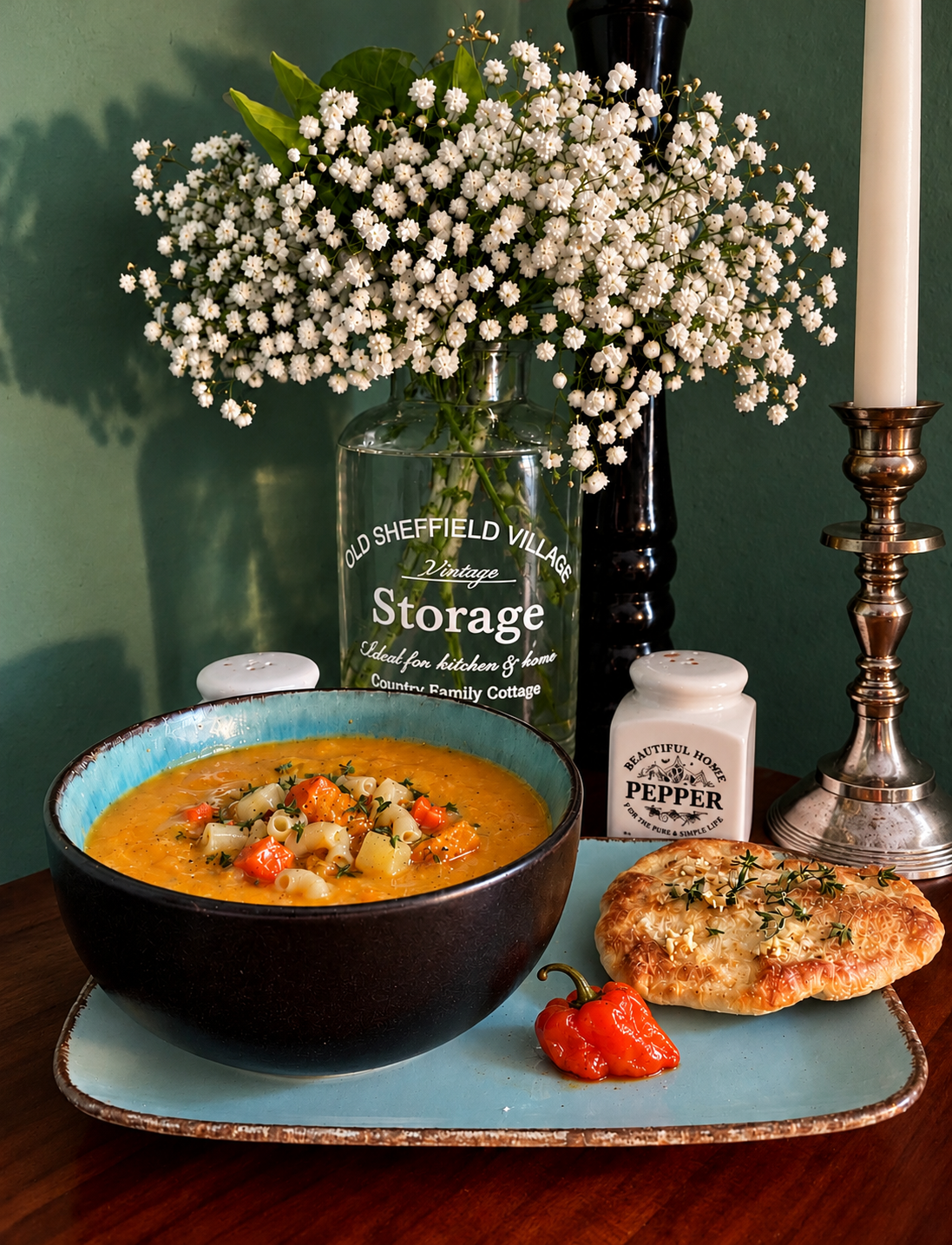
Soup Joumou – Haiti's Freedom Soup, Traditionally Eaten on 1 JanuarySoup Joumou is a traditional Haitian squash soup with profound historical and cultural significance. According to Haitian tradition, during French colonial rule, the richly prepared soup was associated with the colonial elite and denied to enslaved Haitians. Following independence on 1 January 1804, preparing and enjoying Soup Joumou became a powerful symbol of liberation, dignity and the freedom to enjoy what had previously been forbidden. Today, Haitian families and communities in Haiti and around the world traditionally prepare and share the soup on New Year's Day, which is also Haiti's Independence Day. Soup Joumou is often described as a soup of freedom, unity and peace. In 2021, UNESCO inscribed the knowledge and practices surrounding Joumou soup on its Representative List of the Intangible Cultural Heritage of Humanity. Traditional versions often contain meat, while this Via Veggie Vegan interpretation celebrates the dish with butternut squash, vegetables, pasta, homemade Haitian epis and vegetable broth.
Cook this recipe →
Recipe postcard
Georgia – Where Europe and Asia MeetGeorgia lies in the Caucasus region, between the Black Sea and the mountains of the Greater Caucasus. Its cuisine is famous for generous hospitality, fresh herbs, walnuts, garlic, aromatic spices and a remarkable variety of vegetable and bean dishes. Traditional Georgian meals often feature several small plates shared around the table, creating a colorful combination of flavors and textures. Walnuts are especially important in Georgian cooking, appearing in sauces, spreads, vegetable dishes and fillings.
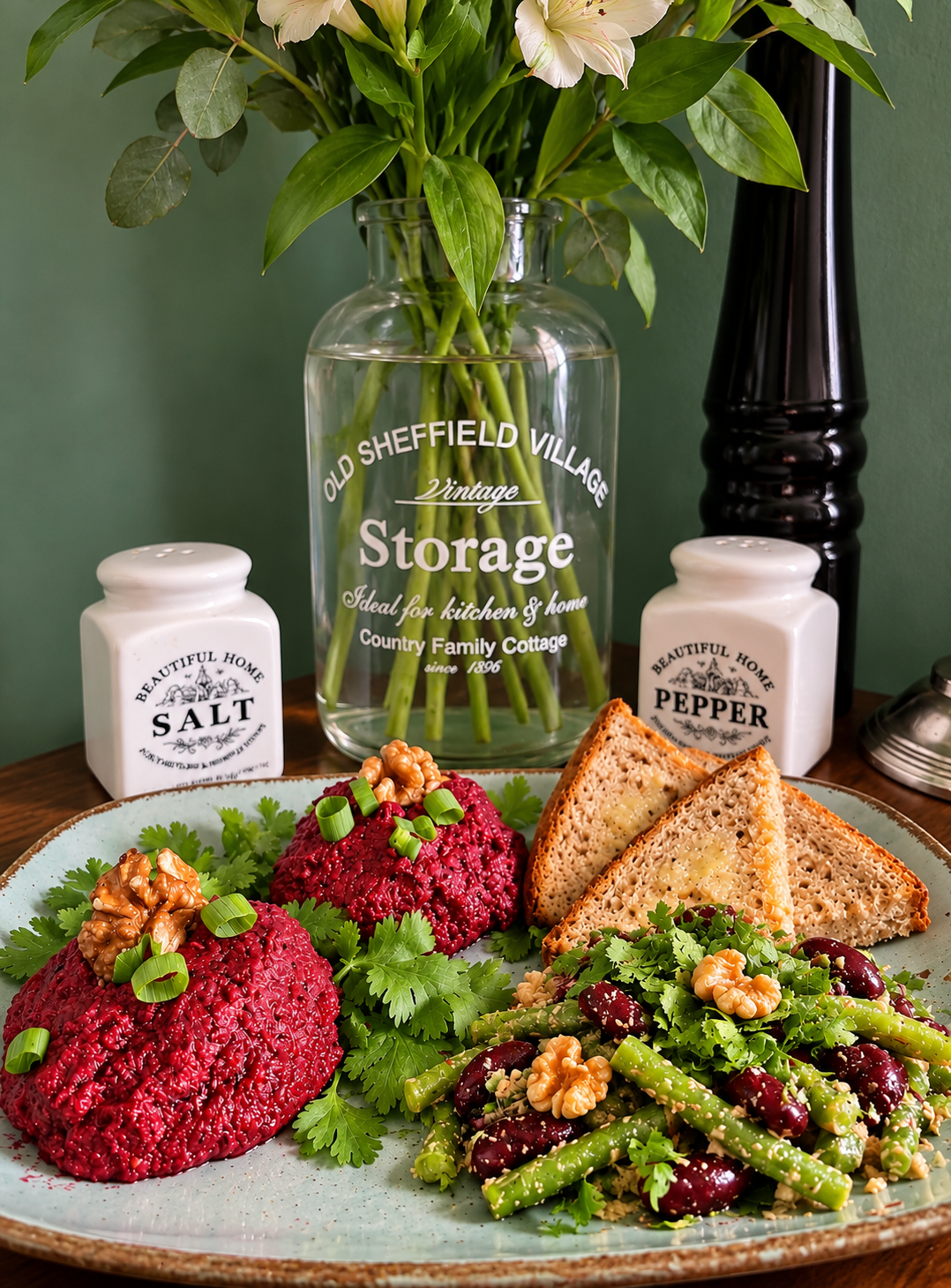
Charkhlis Pkhali & Mtsvane Lobio – Two Georgian SpecialtiesCharkhlis Pkhali (ჭარხლის ფხალი) is a beetroot variation of Pkhali, a family of Georgian vegetable dishes prepared with ground walnuts, garlic, herbs and spices. Beetroot Pkhali is commonly made with cooked beetroot, but this Via Veggie Vegan version uses fresh raw beetroot for a firmer texture and particularly earthy flavor. Mtsvane Lobio (მწვანე ლობიო) means green beans and refers to Georgian preparations centered on this vegetable. My interpretation combines green beans with red kidney beans, fresh coriander and a walnut dressing enriched with pomegranate molasses and lemon juice. Served together with toasted bread, the two dishes make a satisfying plant-based meal.
Cook this recipe →
Recipe postcard
France – A Country of Culinary TraditionsFrance is renowned for its diverse regional cuisine, centuries-old culinary traditions and appreciation of carefully prepared food. From rustic countryside dishes to refined restaurant cooking, French cuisine places great importance on developing flavor through ingredients and technique. Onions, butter, fresh herbs, cheese and rich stocks are familiar elements in many traditional preparations. One of the country's best-known comfort foods is Soupe à l'oignon, the classic French onion soup, especially associated with Parisian bistro cooking.
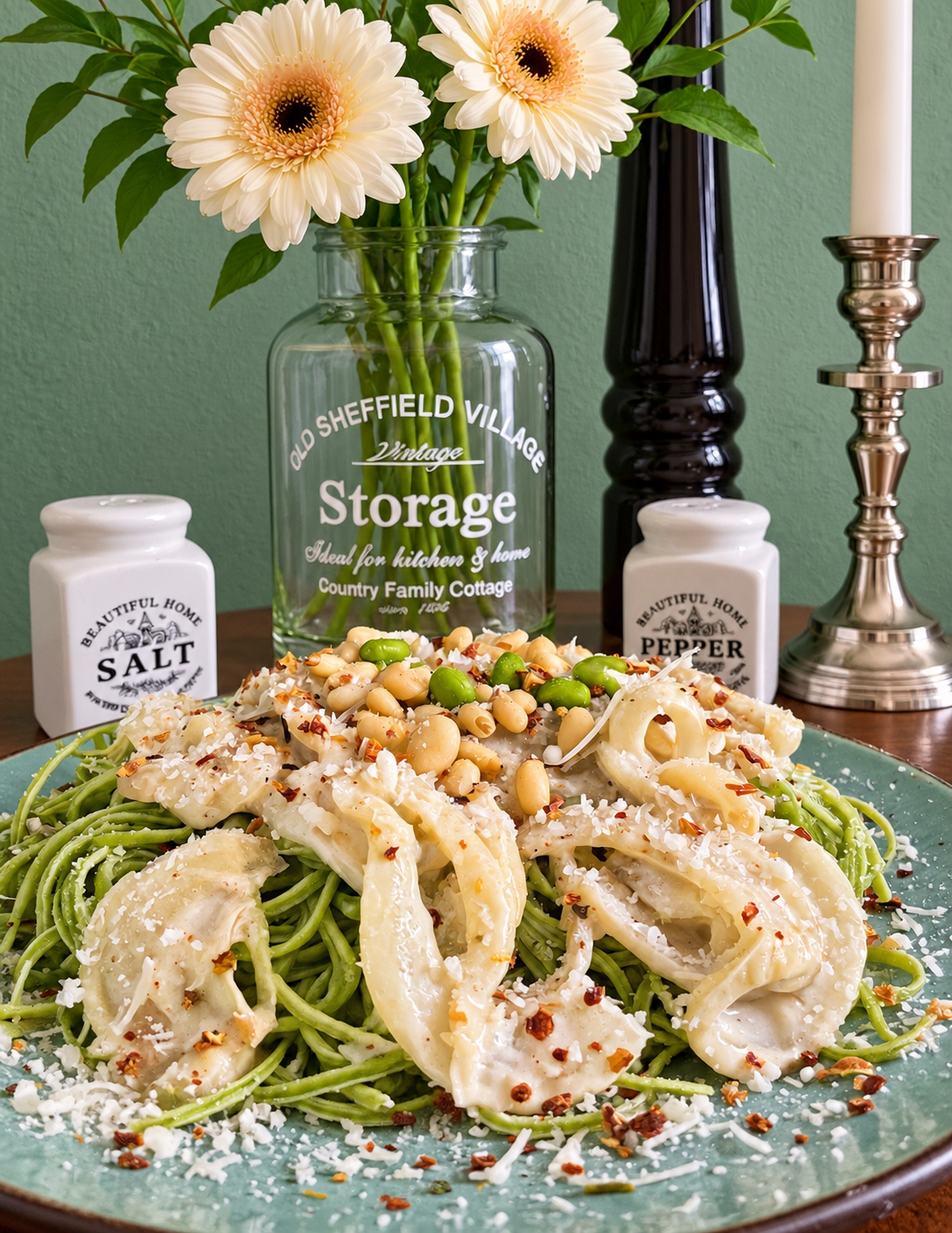
What Is French Onion Pasta?French Onion Pasta is not a traditional French dish. It is a modern pasta creation inspired by the flavors of French onion soup, particularly its slowly caramelized onions, thyme, savory broth and melted cheese. Viral versions reinterpret these familiar ingredients as a creamy pasta sauce. My vegan variation uses Edamame Spaghetti, homemade vegetable stock, vegan cheddar-style cheese, nutritional yeast and plant-based cream. Apple cider vinegar replaces the acidity sometimes provided by wine, while lemon zest, nutmeg, toasted pine nuts and pistachios add my own personal touch.
Cook this recipe →
Recipe postcard
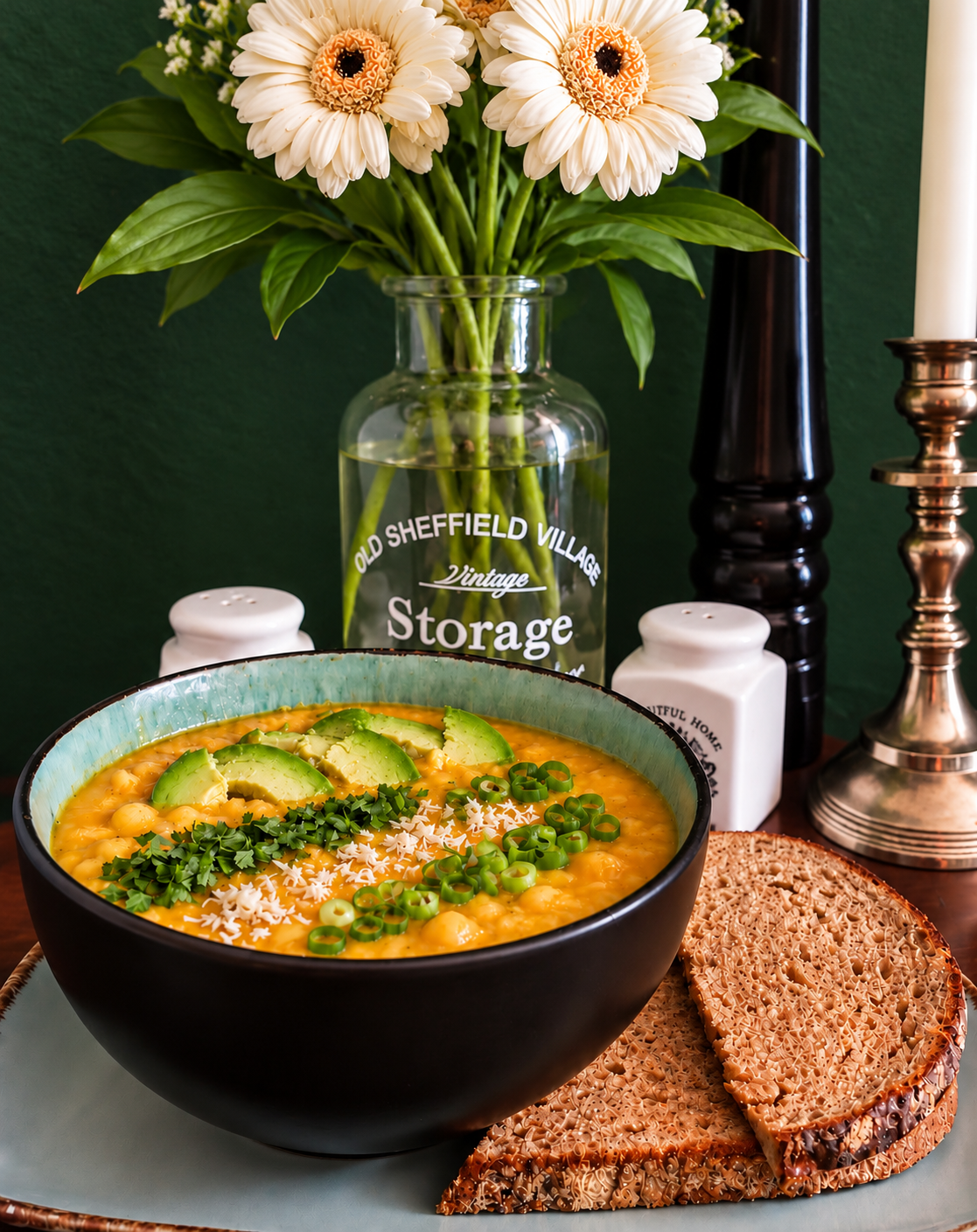
Ecuador – From the Andes to the PacificEcuador is a South American country with an extraordinarily diverse landscape, stretching from the Pacific coast through the Andes to the Amazon rainforest. Its cuisine reflects these different regions and their agricultural traditions. In the Andean highlands, potatoes, corn, legumes and other locally cultivated ingredients have shaped everyday cooking for centuries. Ecuador is also home to the Galápagos Islands, famous for their remarkable biodiversity.
What Is Locro de Papa?Locro de Papa is one of Ecuador's best-known traditional potato soups, particularly associated with the Andean highlands. It is usually prepared with potatoes, onions, garlic, cumin, milk and fresh cheese, and is often served with avocado. The potatoes give the soup its characteristic thick, comforting texture. My vegan interpretation replaces dairy products with a vegan butter alternative, unsweetened plant-based drink and vegan cheddar. Nutritional yeast adds savory depth, while fresh coriander, spring onions and avocado complete the dish.
Cook this recipe →
Recipe postcard
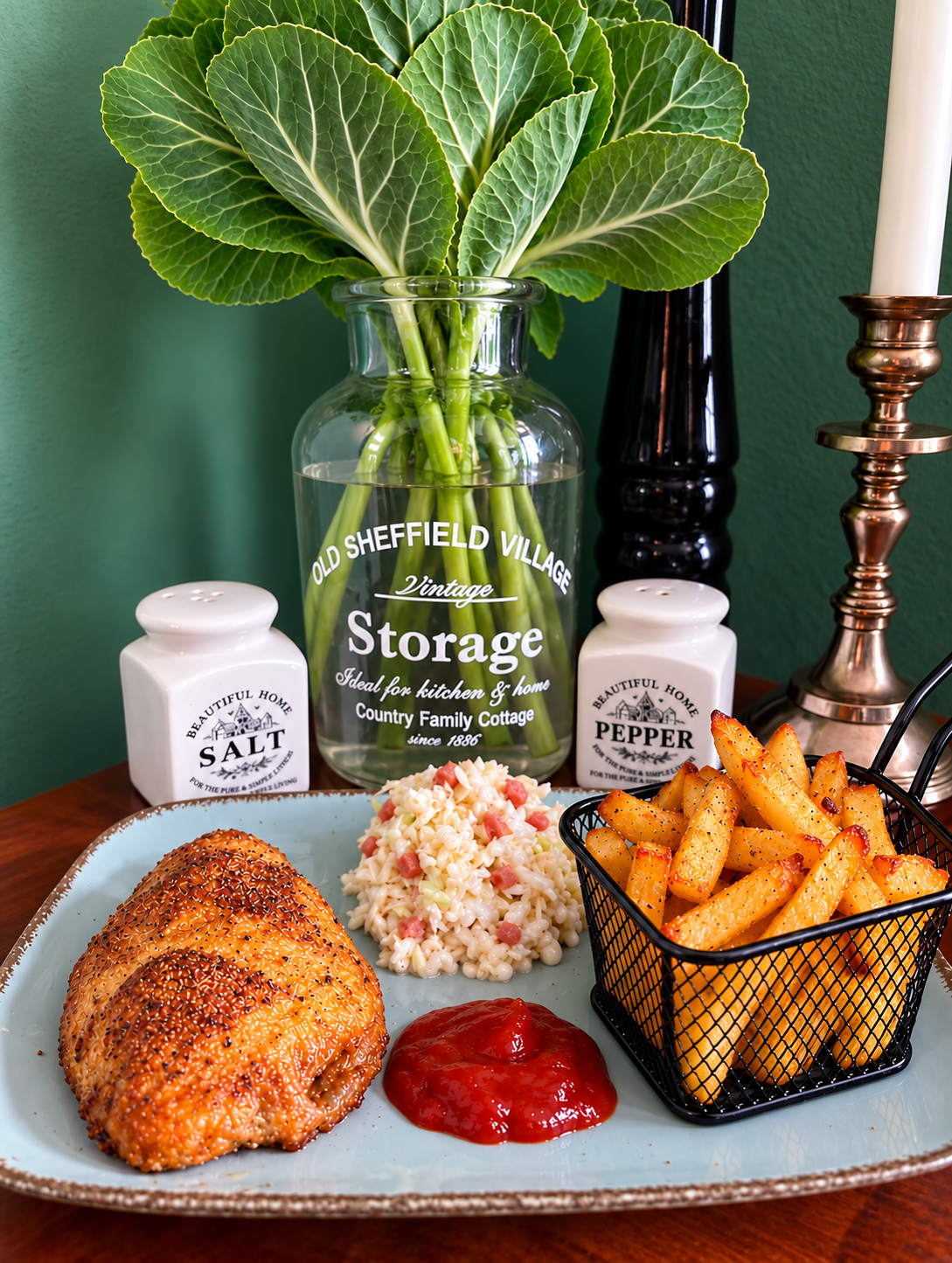
Germany – Where the Broiler Became an East German IconGermany's regional food culture reflects a fascinating mix of traditions and historical influences. During the years of the German Democratic Republic (DDR), the word Broiler became an everyday term for roast chicken. Borrowed from English, where broiling refers to cooking with intense direct heat and broiler also describes a chicken raised for meat, the term became firmly established in East German food culture. Goldbroiler restaurants and takeaway counters helped turn the dish into a familiar DDR favorite.
What Is a Goldbroiler?A Goldbroiler is a seasoned roast chicken with a characteristic golden-brown skin. Its popularity grew in the DDR during the 1960s, when poultry production and dedicated chicken restaurants expanded. My vegan version replaces the chicken with a plant-based alternative and recreates the crispy skin using seasoned rice paper. Homemade fries, white cabbage coleslaw and espresso ketchup complete this nostalgic East German-inspired meal.
Cook this recipe →

Recipe postcard
Andorra – A Tiny Mountain Country with Hearty Culinary TraditionsNestled high in the Pyrenees between France and Spain, Andorra is one of Europe's smallest countries. Its mountain cuisine reflects centuries of Catalan influence, cold winters and a love of simple, nourishing ingredients. Potatoes, cabbage, beans and rustic vegetable dishes have long been staples of traditional Andorran cooking.
What Is Trinxat?Trinxat is one of the best-known traditional dishes of Andorra and the Catalan Pyrenees. Its name comes from the Catalan word meaning chopped or mashed. Traditionally prepared with potatoes, winter cabbage and pork fat or bacon, the mixture is pressed into a thick, tortilla-like cake and pan-fried until beautifully golden. The result is a wonderful contrast between a crispy exterior and a soft, comforting centre. This vegan version replaces the bacon with plant-based ham, uses aromatic mustard oil and finishes in the oven rather than the frying pan.
Cook this recipe →
Recipe postcard
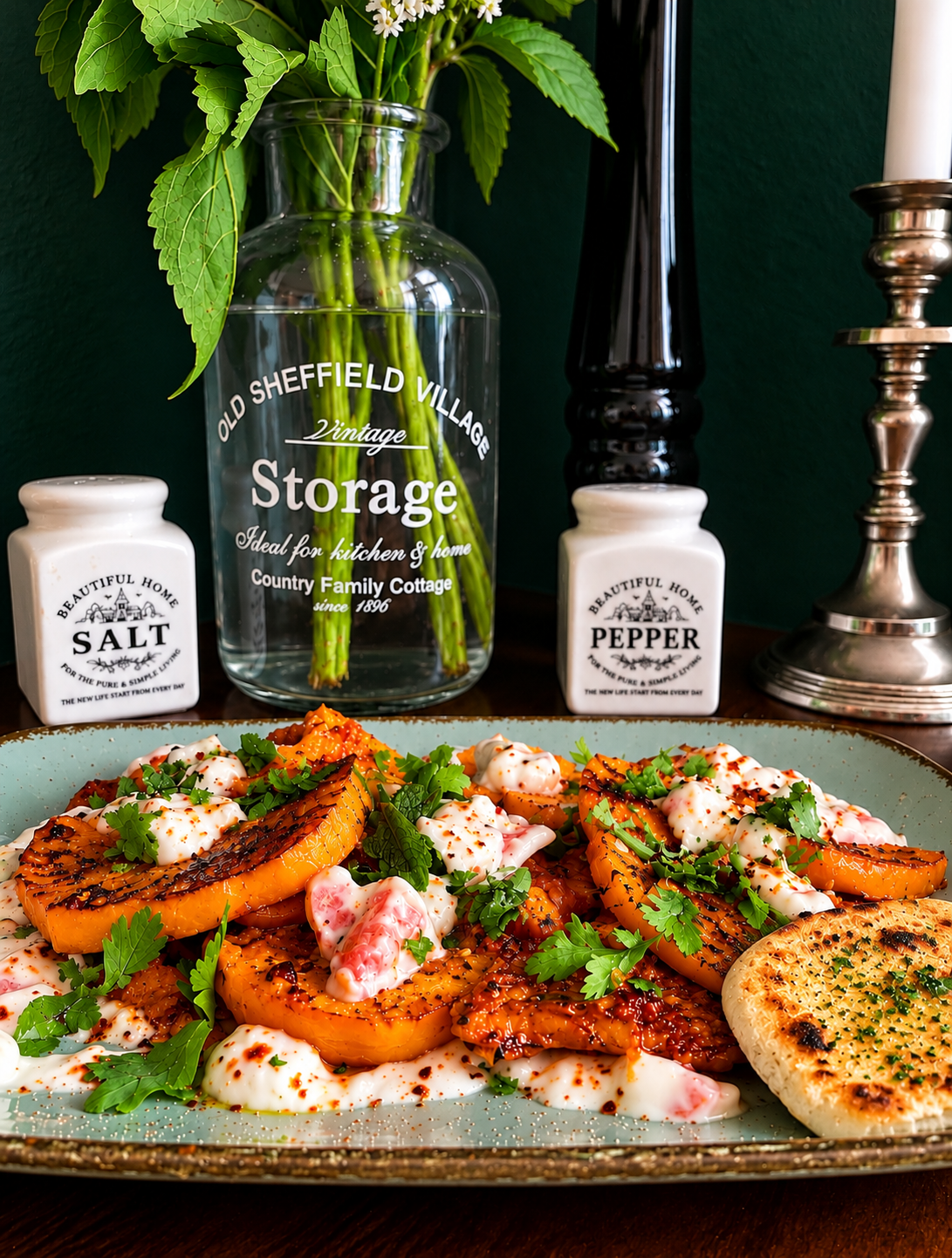
Afghanistan – A Country of Hospitality and Rich Culinary TraditionsAfghanistan lies at the crossroads of Central and South Asia, and its cuisine reflects centuries of cultural exchange. Fragrant spices, fresh herbs, vegetables, flatbreads and yogurt-based accompaniments play important roles in Afghan cooking, where sharing food is an expression of hospitality.
What Is Borani Kadoo?Borani Kadoo is an Afghan pumpkin dish featuring tender pumpkin cooked in a richly seasoned tomato sauce and served with garlic yogurt. Kadoo refers to pumpkin or squash, while borani describes a family of vegetable dishes accompanied by yogurt. The contrast between sweet pumpkin, savory tomato sauce and cool, tangy yogurt makes this dish particularly memorable. My version replaces dairy yogurt with a plant-based Chaka-inspired sauce and adds a few Via Veggie Vegan touches.
Cook this recipe →
Recipe postcard
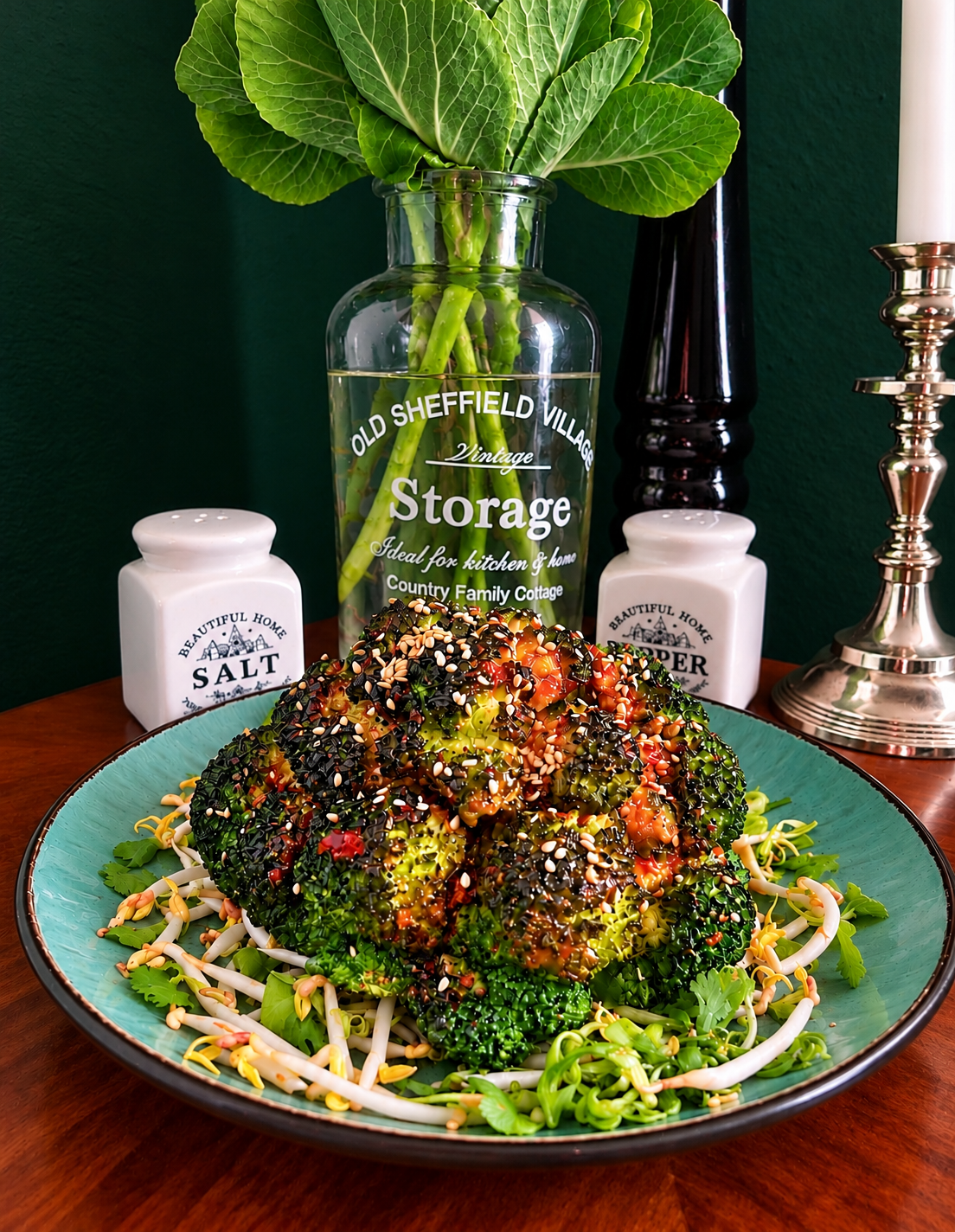
China – A Culinary World of Regional DiversityChina has one of the world's most diverse culinary traditions, shaped by centuries of regional cooking techniques, ingredients and food culture. From delicate Cantonese preparations to the bold, spicy flavors of Sichuan and Hunan, vegetables play an important role in Chinese cuisine. Garlic, ginger, soy sauce and quick stir-frying techniques are especially familiar elements of Chinese home-style cooking.
What Is Suànróng Xīlánhuā?Suànróng Xīlánhuā (蒜蓉西兰花) literally means garlic broccoli. Traditionally, broccoli florets are briefly blanched or stir-fried with generous amounts of fresh garlic, creating a simple, aromatic vegetable dish. My Via Veggie Vegan version takes a different approach: an entire broccoli head is roasted with a glossy garlic-ginger glaze and served with water spinach, mung bean sprouts, sesame and coriander. The inspiration is Chinese; the whole-roasted presentation is my personal twist.
Cook this recipe →

Recipe postcard
Potatoes, My One True LoveSome people fall in love with chocolate. Others can't live without pasta. Me? Potatoes! Absolutely, completely, unapologetically potatoes. Boiled, fried, roasted, baked, mashed or Hasselback-style – I love them all. Give me a potato and I'll find a way to turn it into something delicious. So when my culinary journey brought me to Belarus and its famous Draniki, I knew this was going to be a match made in potato heaven. After all, if there's one vegetable that deserves a little extra love, it's definitely the humble potato!
Love Is in the Shape of a PotatoTraditional Belarusian Draniki are usually round, but why settle for ordinary potato pancakes when you can turn them into little hearts? Exactly! I finely grated the potatoes and onion, added plenty of garlic, nutritional yeast and a pinch of nutmeg, then shaped the mixture into adorable potato hearts. A quick trip to the frying pan, a little finishing time in the oven, and there they were: golden, crispy on the outside and beautifully tender inside. Naturally, a generous spoonful of vegan sour cream and a shower of fresh chives had to join the party. Because even true love deserves a little seasoning. Team Garlic certainly approves!
There Is One Exception, Though...Now, I've said that I love potatoes in practically every possible form. Well, almost every form. Because there's one potato product I can happily live without: vodka! Since I don't drink alcohol, I'll gladly leave the potato spirits to somebody else. I'd much rather enjoy my potatoes golden, crispy and shaped like little hearts. No complicated ingredients, no fancy techniques – just potatoes, a little patience and a whole lot of love. Belarus, you've certainly found the way to my heart. Through my stomach, obviously! Via Veggie Vegan – A Culinary Journey Around the World.
Cook this recipe →
