
India – A Country of Extraordinary Culinary Diversity
India is a vast South Asian country with an exceptionally diverse culinary heritage shaped by regional traditions, geography, climate, religion and history. From the fragrant rice dishes of the south to the rich lentil preparations of the north, Indian cuisine offers an extraordinary variety of ingredients, cooking techniques and flavors. Pulses, rice, vegetables, herbs and spices are central to many regional food traditions. Fresh coriander, known as hara dhaniya in Hindi, is widely used in chutneys, curries and vegetable dishes, while dried coriander seeds provide a distinctly different, warm and aromatic flavor. Indian cuisine includes countless naturally plant-based dishes, making it a wonderful source of inspiration for vegan cooking.
Hara Dhaniya Dal – A Fresh Coriander Lentil Curry
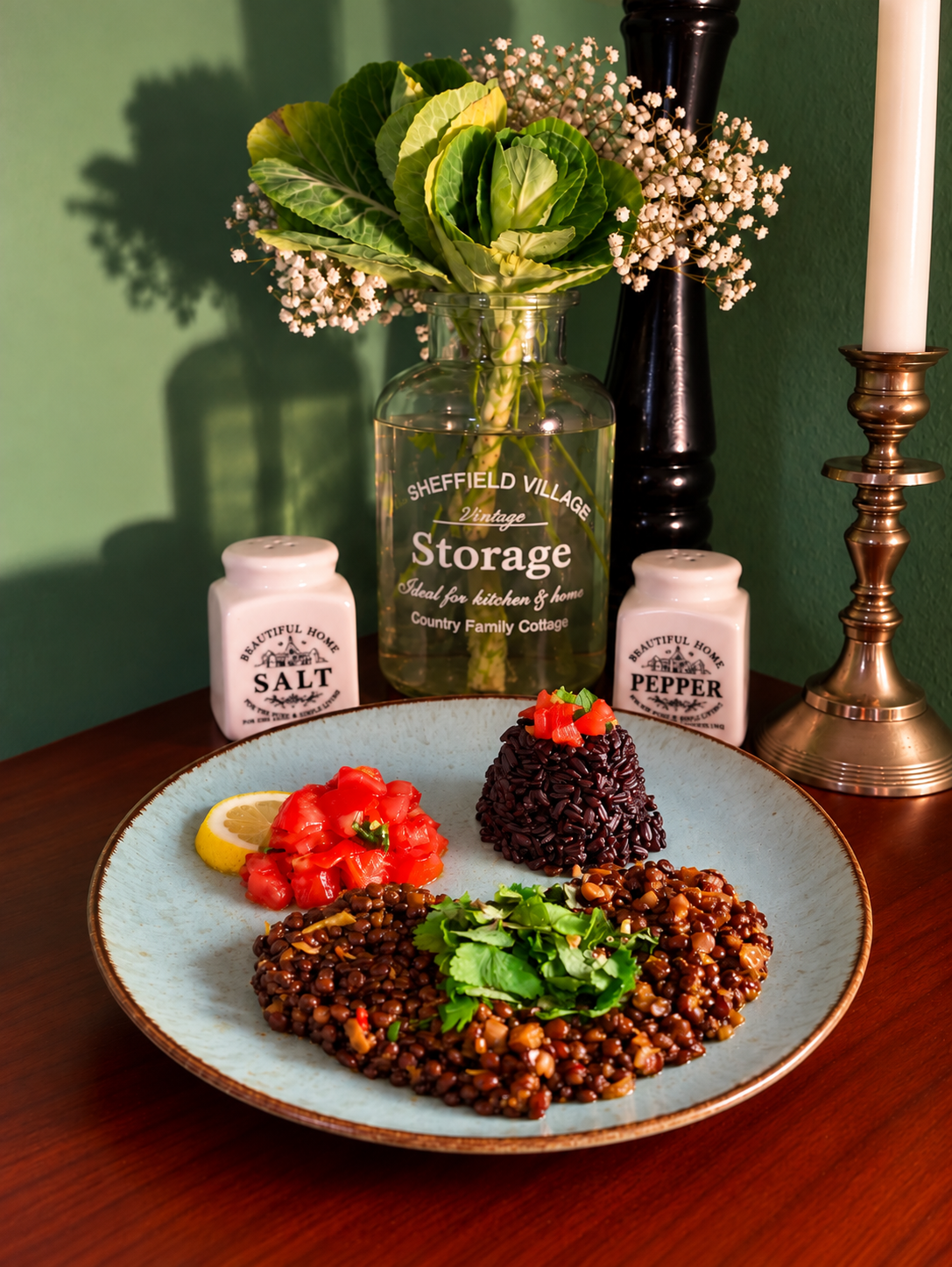
In Hindi, hara means green, dhaniya means coriander and dal refers to certain pulses or dishes prepared from them. Hara Dhaniya Dal can therefore be understood as a lentil dish featuring fresh green coriander. This Via Veggie Vegan creation is inspired by Indian ingredients and flavors rather than representing a specific traditional regional recipe. Black Beluga lentils are combined with onion, garlic, cinnamon, bay leaf, garam masala and ground coriander, then coated in a vibrant paste of fresh coriander, green chili, ginger and lemon juice. Served with black rice, the dish brings together earthy lentils, aromatic spices and bright herbal freshness in a colorful, naturally vegan interpretation of Indian-inspired comfort food.
▣ Ingredients (2 servings)
- 100 g beluga lentils
- 1 tbsp vegetable oil
- 1 onion
- 2 cloves garlic
- 1 cinnamon stick
- 1 bay leaf
- 1/2 tsp garam masal
- 1/2 tsp ground coriander
- 1/4 tsp kala namak
- 1 bunch fresh coriander
- 1 green chili
- 1 cm fresh ginger
- 2 tsp fresh lemon juice
- 3-4 tbsp water
- to taste salt & freshly ground pepper
♨ Preparation
- Cook the Black Rice
Rinse the black rice if recommended on the packaging.
Place it in a saucepan with the appropriate amount of water.
Cook according to the package instructions until tender.
Drain any excess water if necessary.
Keep warm until serving. - Cook the Beluga Lentils
Rinse the Beluga lentils thoroughly under cold running water.
Place them in a saucepan with sufficient water.
Bring to a boil, then reduce the heat.
Cook according to the package instructions until tender but still holding their shape.
Avoid overcooking, as the lentils should retain their distinctive texture.
Drain and set aside. - Prepare the Fresh Ingredients
Wash the fresh coriander thoroughly.
Shake off excess water.
Roughly chop the coriander, including the tender stems.
Trim the green chili.
Peel the fresh ginger. - Blend the Coriander Paste
Place the coriander, green chili, ginger, lemon juice and water into a blender.
Blend until smooth and vibrantly green.
Add a little additional water if necessary.
The paste should be thick but pourable.
Set aside. - Sauté the Onion
Peel and finely chop the onion.
Heat the vegetable oil in a frying pan over medium heat.
Add the onion and sauté gently until soft and translucent.
Stir regularly to prevent browning. - Add the Garlic and Whole Spices
Peel and finely chop the garlic cloves.
Add the garlic, cinnamon stick and bay leaf to the onion.
Cook briefly, stirring continuously, until fragrant. - Add the Ground Spices
Sprinkle the garam masala and ground coriander into the pan.
Stir for approximately 30 seconds to release their aromas.
Avoid burning the spices. - Add the cooked and drained Beluga lentils.
Stir thoroughly until the lentils are evenly coated with the aromatic spice mixture.
Allow everything to heat through gently. - Add the Fresh Coriander Paste
Pour the prepared coriander paste over the lentils.
Stir gently until everything is evenly combined.
Heat over low to medium heat until warmed through.
Avoid prolonged cooking or vigorous boiling, as this can dull the fresh coriander flavor and vibrant green color.
Add a small splash of water if the curry becomes too thick. - Finish the Curry
Remove the cinnamon stick and bay leaf.
Season with kala namak and additional salt to taste.
Stir gently and adjust the consistency if necessary. - Arrange the Black Rice
Divide the cooked black rice between two plates or bowls.
For a decorative presentation, use a small serving mold to shape the rice. - . Serve the Hara Dhaniya Dal
Spoon the warm Hara Dhaniya Dal alongside or over the black rice.
Serve immediately while the coriander sauce is fresh and aromatic.
Food Story
India – A Country I Never Stop Rediscovering
I’ve been to India several times, and somehow, every visit feels like discovering the country all over again. There is always something new to see, something unexpected to experience and, of course, something absolutely fantastic to eat. The variety of flavors, the incredible spices, the aromas drifting from kitchens and food stalls – Indian food never fails to fascinate me. And every time I think I already know a little about Indian cuisine, another dish comes along and proves just how much there is still to discover.
Team Coriander – Loud and Proud!
Now, anyone who knows me knows that I belong firmly to Team Coriander. Not the kind of person who adds three decorative leaves and calls it a day. Oh no! If coriander is invited to my kitchen, it gets a proper role. Preferably the leading one. So for this Indian-inspired dish, I decided to give it exactly that: an entire bunch of fresh coriander blended with green chili, ginger and lemon juice. The result was a wonderfully fragrant, intensely green sauce. If coriander could take a bow, this would have been its moment.
Fantastic Food – But Where’s the Presentation?
There is one little thing I’ve occasionally found a shame during my travels in India. The food is often so incredibly delicious, but beautiful plating isn’t always the priority. Of course, I know that appearance is not what makes a dish authentic or memorable. The flavors are what really matter, and Indian cuisine certainly delivers those in abundance. Still, I love it when a plate looks as inviting as the food tastes. So back in my own kitchen, I enjoy giving my Indian-inspired dishes a little extra visual attention. Not to improve the cuisine – it certainly doesn’t need improving – but simply because creative presentation is part of the fun for me.
Black Rice, Black Lentils and a Whole Lot of Green
For this Hara Dhaniya Dal, I couldn’t resist playing with the colors. Tiny black Beluga lentils, beautifully dark rice and that bright green coriander sauce – what a combination! A little serving mold helped me arrange the rice neatly, while the fragrant curry took its place alongside it. The finished dish looked wonderfully dramatic, but the real reward was the flavor: earthy lentils, warm Indian spices, fresh ginger, green chili and coriander in all its glory. Another little culinary journey to India, without even leaving my kitchen. And yes, Team Coriander, this one’s definitely for us!
♨ Nutrition per serving
Nutritional values are approximate and may vary depending on the ingredients and products used.
Good to Know
What Does Hara Dhaniya Dal Mean?
In Hindi, hara means green, dhaniya refers to coriander and dal refers to certain pulses or dishes prepared from them. The name Hara Dhaniya Dal therefore describes a lentil dish featuring fresh green coriander. This particular combination of Beluga lentils, coriander paste and black rice is a Via Veggie Vegan creation inspired by Indian cooking rather than a documented traditional regional specialty.
Why Are Lentils So Important in Indian Cuisine?
Lentils and other pulses play an important role in many regional Indian food traditions. They are used in everyday dals, soups, stews, snacks and festive dishes. Different varieties offer different textures and flavors, from soft red lentils to firmer whole pulses. Lentils also provide plant-based protein, complex carbohydrates, fiber and minerals, making them valuable ingredients in a balanced vegan diet.
What Makes Beluga Lentils Special?
Beluga lentils are small, glossy black lentils named for their resemblance to Beluga caviar. They generally hold their shape better than many split lentil varieties and have a pleasantly earthy flavor. Their firm texture makes them suitable for curries, salads and grain bowls. Although Beluga lentils are not among the most typical lentils used in traditional Indian dals, they work beautifully in this Indian-inspired interpretation.
Fresh Coriander vs. Ground Coriander
Fresh coriander leaves and dried coriander seeds come from the same plant, Coriandrum sativum, but their flavors are very different. Fresh coriander has a bright, citrusy and herbaceous character, while ground coriander seeds taste warmer, milder and slightly nutty. This recipe deliberately combines both forms: the fresh leaves create the vibrant green sauce, while the ground seeds add depth to the aromatic curry base.
Why Does Coriander Taste Like Soap to Some People?
Some people perceive fresh coriander as having a soapy flavor. Research suggests that genetic differences in sensitivity to certain aroma compounds, particularly aldehydes, contribute to this perception. Personal experience and familiarity with coriander may also influence how its flavor is perceived. Fortunately for Team Coriander, those same aromatic compounds can create a wonderfully fresh and citrusy taste.
Why Add the Coriander Paste at the End?
Fresh coriander contains delicate aromatic compounds that change during heating. Its green pigments can also become less vibrant with prolonged cooking, particularly in an acidic environment. Adding the paste toward the end and warming it gently helps preserve both its fresh flavor and attractive color. The lemon juice adds brightness, but the finished curry should not be boiled vigorously.
What Is Garam Masala?
Garam masala is a fragrant Indian spice blend whose composition varies between regions, households and manufacturers. Common ingredients include cumin, coriander, cardamom, cinnamon, cloves and black pepper. The word garam refers to warmth rather than necessarily indicating intense chili heat. In this recipe, garam masala adds aromatic depth that complements the fresh coriander, ginger and garlic.
What Is Kala Namak?
Kala namak, often called Indian black salt, is a mineral salt known for its distinctive sulfurous aroma. Despite its name, it is often pinkish-gray when finely ground. Its characteristic flavor comes from sulfur-containing compounds and is familiar in various Indian snacks, chutneys and spice mixtures. A small amount adds an unusual savory note to this curry, but it should be used sparingly because its flavor can quickly become dominant.
What Makes Black Rice Special?
Black rice contains natural pigments called anthocyanins, which give the grains their deep purple-black color. These compounds are also found in blueberries and purple cabbage. Black rice has a slightly nutty flavor and pleasantly chewy texture. Cooking it separately prevents its dark pigments from coloring the green coriander sauce and allows the dramatic contrast between rice, lentils and curry to remain visible.
Nutrition, Naturally Vegan Cooking and Zero Waste
This recipe is naturally vegan because it contains only plant-based ingredients without requiring animal-product substitutes. Beluga lentils provide protein and dietary fiber, while black rice contributes carbohydrates and additional nutrients. The vegetable oil supplies fat, including unsaturated fatty acids depending on the type used. Plant foods do not naturally contain dietary cholesterol, and replacing saturated fats with unsaturated fats can help lower LDL cholesterol. For a zero-waste approach, use the tender coriander stems in the paste, save suitable vegetable trimmings for homemade stock and freeze leftover coriander paste in small portions for future curries.
You may also like
♡
You may also like
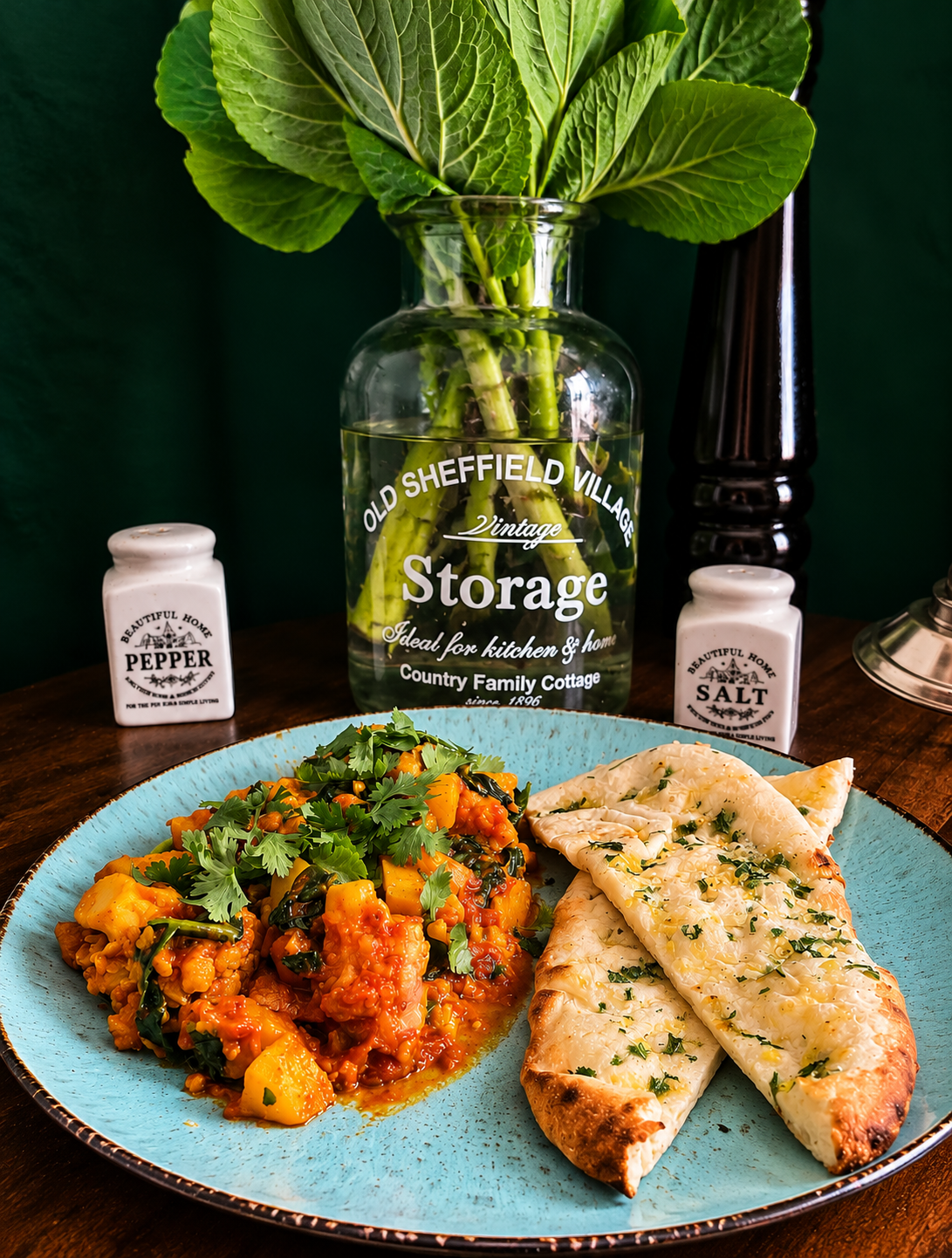
Pakistani Aloo Gobi Palak – Vegan Potato, Cauliflower & Spinach Curry with Garlic Naan
You may also like
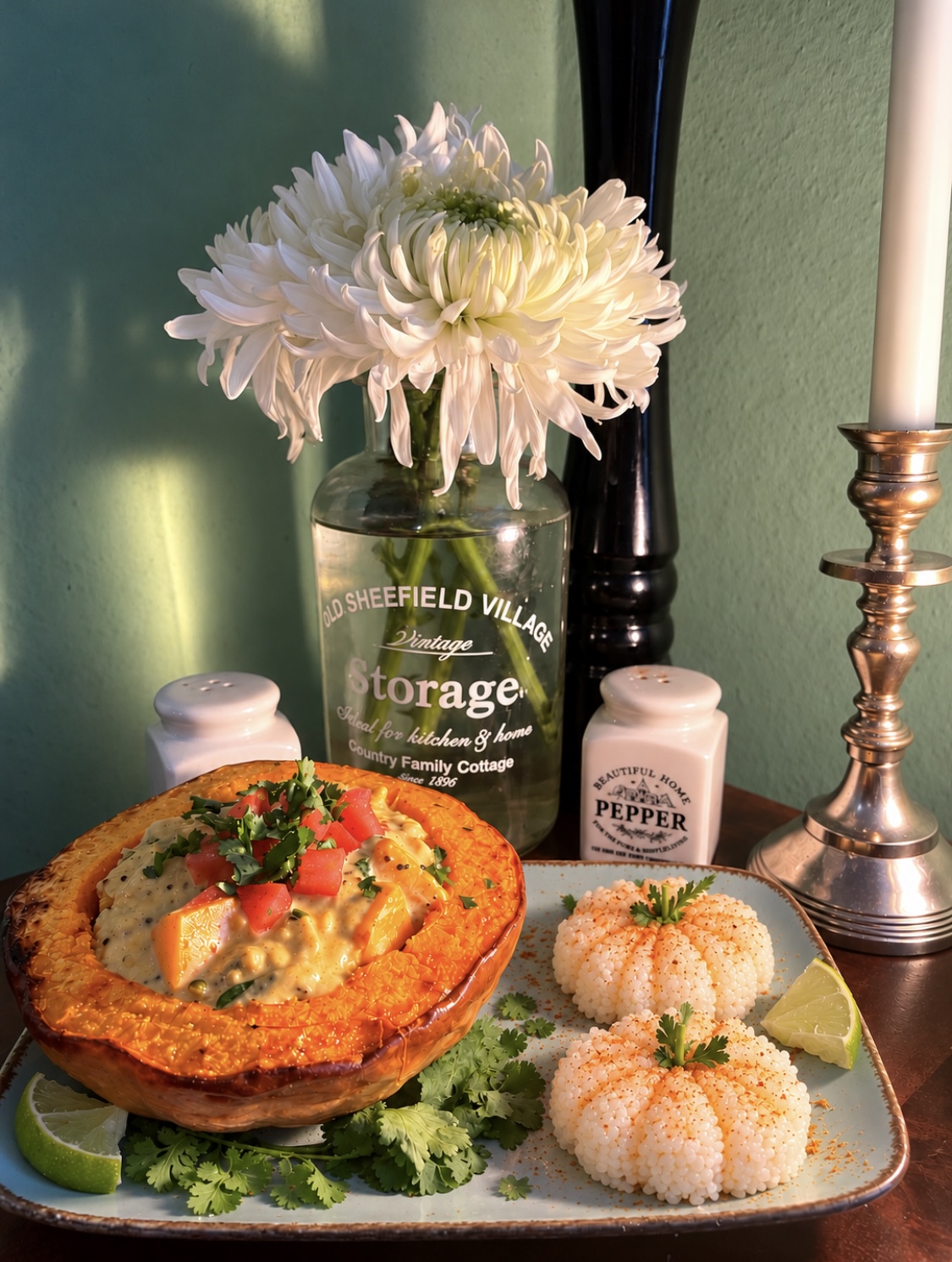
Fijian Kaddu Tarkari – Vegan Roasted Pumpkin Curry with Two Halloween Rice Pumpkins
You may also like