China – A Culinary World of Regional Diversity
China has one of the world's most diverse culinary traditions, shaped by centuries of regional cooking techniques, ingredients and food culture. From delicate Cantonese preparations to the bold, spicy flavors of Sichuan and Hunan, vegetables play an important role in Chinese cuisine. Garlic, ginger, soy sauce and quick stir-frying techniques are especially familiar elements of Chinese home-style cooking.
What Is Suànróng Xīlánhuā?
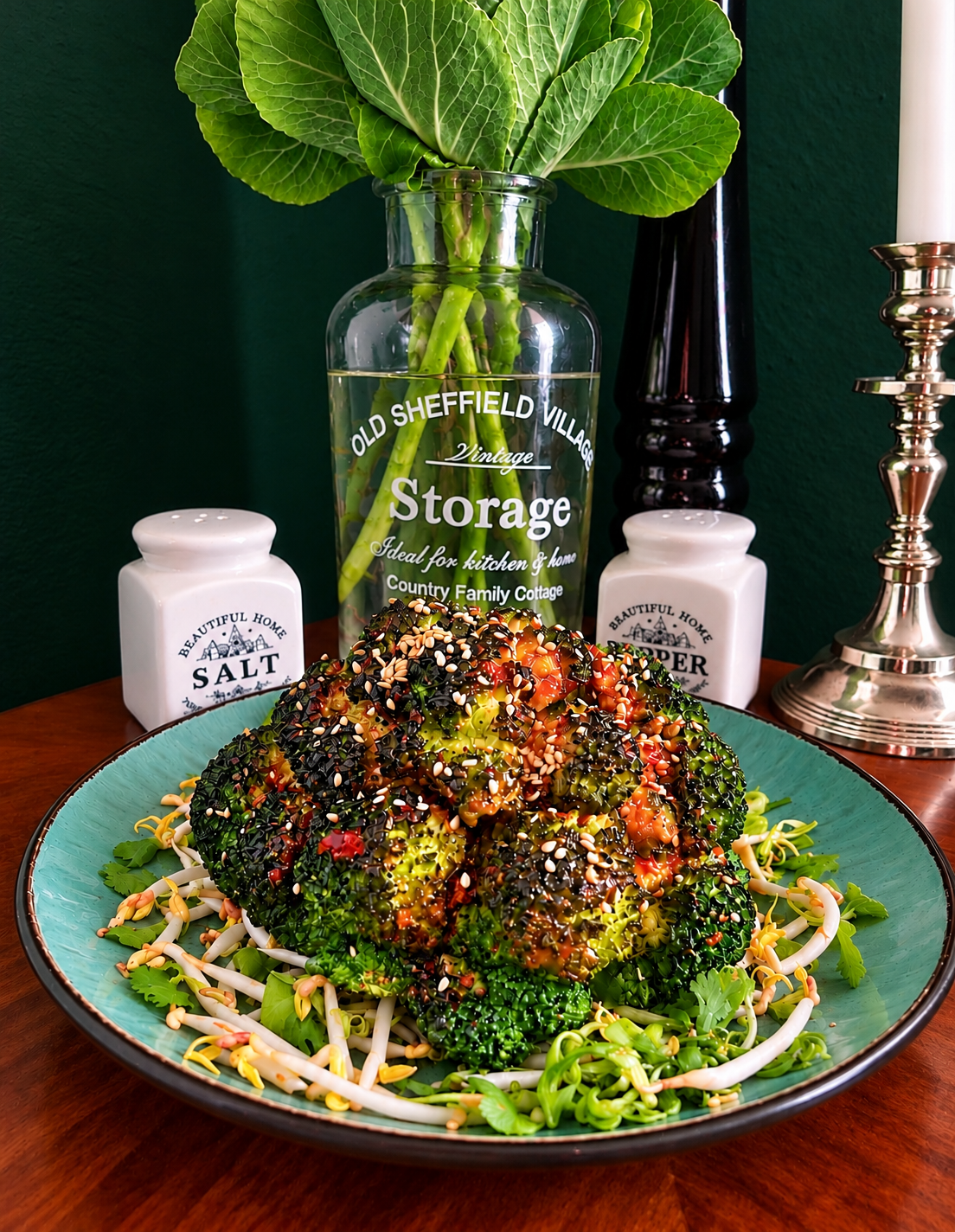
Suànróng Xīlánhuā (蒜蓉西兰花) literally means garlic broccoli. Traditionally, broccoli florets are briefly blanched or stir-fried with generous amounts of fresh garlic, creating a simple, aromatic vegetable dish. My Via Veggie Vegan version takes a different approach: an entire broccoli head is roasted with a glossy garlic-ginger glaze and served with water spinach, mung bean sprouts, sesame and coriander. The inspiration is Chinese; the whole-roasted presentation is my personal twist.
▣ Ingredients (2 servings)
- 1 brooccoli (large)
- 10 cloves garlic
- 1/2 cm ginger
- 100 g water spinach
- 100 g mung bean sprouts
- 4 tsp vegetable oil
- 4 tsp soy sauce
- 4 tsp vegan oyster sauce
- 4 tsp maple syrup
- 1 tsp arrowroot starch
- 1 tsp cold water
- 1 tsp sesame oil
- 1 tsp sesame seeds
- 1 tsp chili flakes
- 1 handful fresh coriander
♨ Preparation
- Prepare the Broccoli
Leave the broccoli whole. Remove the tough end of the stalk and any damaged leaves. Wash the broccoli thoroughly, including between the florets, and allow it to drain. Trim the base carefully so the broccoli can stand upright in a baking dish. - Prepare the Garlic-Ginger Glaze
Mix the arrowroot starch with the cold water in a small bowl until completely smooth. In a separate bowl, combine the soy sauce, vegan oyster sauce, maple syrup and 3 teaspoons of vegetable oil. Stir in the arrowroot mixture. Peel and finely grate the garlic and ginger directly into the glaze. Mix thoroughly until all ingredients are evenly combined. - Prepare for Roasting
Preheat the oven to 180°C fan/convection. Place the whole broccoli upright in a suitable baking dish. Brush it generously with the garlic-ginger glaze, making sure the sauce reaches between the florets. Reserve some glaze for brushing during roasting. - Roast the Broccoli
Roast the broccoli for approximately 30–35 minutes. Brush it several times with the remaining glaze during cooking. Check the broccoli towards the end of the roasting time. A knife should slide easily into the thickest part of the stalk, while the florets should remain intact and develop lightly roasted edges. - Prepare the Water Spinach
Wash the water spinach thoroughly and remove any tough or damaged stem ends. Cut the stems and leaves into manageable pieces. Heat the remaining teaspoon of vegetable oil in a large frying pan over medium-high heat. Add the water spinach and stir-fry briefly for approximately 2–3 minutes until the stems are tender and the leaves have just wilted. Remove from the heat. - Prepare the Mung Bean Sprouts and Garnishes
Rinse the mung bean sprouts thoroughly and drain well. Blanch them briefly in boiling water or stir-fry until thoroughly heated, then drain. Wash and roughly chop the fresh coriander. Prepare the sesame seeds and chili flakes for garnishing. - Assemble the Vegetable Bed
Arrange the warm water spinach in the center of a large serving plate. Scatter the prepared mung bean sprouts around and over the spinach, creating a vegetable bed for the roasted broccoli. - Plate and Garnish
Carefully transfer the whole roasted broccoli onto the prepared vegetable bed. Drizzle with sesame oil. Scatter the fresh coriander, sesame seeds and chili flakes generously over the broccoli. Serve immediately while the broccoli is warm and the garlic glaze is glossy.
Food Story
Love at First Bite in Chinatown
My love affair with Chinese garlic broccoli began many years ago in New York’s Chinatown. Anno dazumal, as we say in German! I ordered this wonderfully simple vegetable dish, and what can I say? It was love at first bite. Broccoli, garlic and that irresistible savory flavor – sometimes the simplest combinations make the biggest impression.
Ten Garlic Cloves? Absolutely!
Fast-forward to my culinary journey around the world, and here we are in China. Naturally, I had to revisit that unforgettable garlic-broccoli combination. But instead of stir-frying individual florets, I decided to roast an entire broccoli head. And because Team Garlic doesn’t believe in half measures, ten cloves went straight into the glaze. Yes, ten. No, that’s not a typo!
A Little Via Veggie Vegan Adventure
Fresh ginger, soy sauce, vegan oyster sauce and maple syrup joined the party, creating a glossy glaze with plenty of savory depth. Underneath the broccoli, I arranged water spinach and mung bean sprouts, then added coriander, sesame and chili flakes. The result is quite different from the dish I first enjoyed in Chinatown, but the inspiration remains the same: broccoli and garlic are simply made for each other. From New York’s Chinatown to my own kitchen – one culinary love story, one whole broccoli and ten very happy garlic cloves. Team Garlic approved!
♨ Nutrition per serving
Nutritional values are approximate and may vary depending on the ingredients and products used.
Good to Know
What Does Suànróng Xīlánhuā Mean?
Suànróng (蒜蓉) means finely minced or crushed garlic, while Xīlánhuā (西兰花) refers to broccoli. Together, the name describes a familiar combination in Chinese home-style cooking: broccoli prepared with plenty of aromatic garlic.
Traditional Preparation vs. My Roasted Version
Chinese garlic broccoli is generally prepared using quick cooking methods such as blanching and stir-frying. These techniques preserve a crisp-tender texture and bright green color. Roasting the broccoli whole is not the traditional method, but it creates lightly caramelized edges, concentrates flavor and turns a familiar vegetable into an impressive centerpiece.
Broccoli – A Member of the Cabbage Family
Broccoli belongs to the Brassica family, alongside cauliflower, Brussels sprouts, kale and cabbage. It provides vitamin C, vitamin K, folate and dietary fiber. Like other cruciferous vegetables, broccoli contains glucosinolates, naturally occurring plant compounds that contribute to its characteristic flavor.
Glucosinolates and Sulforaphane
When broccoli is chopped or chewed, enzymes can convert certain glucosinolates into compounds such as sulforaphane. These substances are being studied for their potential biological effects. Cooking methods influence their formation and availability, however, and no single vegetable can prevent or cure disease. Broccoli is best enjoyed as part of a varied, balanced diet.
Garlic and Ginger – The Aromatic Power Duo
Garlic develops its characteristic aroma when cloves are crushed, chopped or grated, triggering reactions involving sulfur compounds such as allicin. Fresh ginger contributes pungent compounds called gingerols. Heating changes these substances and creates deeper, warmer flavors. Together, garlic and ginger form the aromatic foundation of this recipe. And yes, ten garlic cloves are absolutely intentional. Team Garlic doesn't do half measures!
What Is Vegan Oyster Sauce?
Traditional oyster sauce contains oyster extracts and is therefore not vegan. Plant-based alternatives often use mushrooms, soy-based ingredients or other savory seasonings to create a similar umami-rich flavor. For this recipe, choose a clearly labeled vegan oyster sauce and check the ingredient list if you have allergies.
What Is Water Spinach?
Water spinach, also called kangkong or morning glory, is a leafy vegetable widely eaten in parts of Asia. Despite its English name, it is not closely related to ordinary spinach. Its tender leaves and hollow stems are particularly suitable for quick stir-frying. Here, water spinach provides a fresh, delicate vegetable base beneath the richly glazed broccoli.
Mung Bean Sprouts – Crunchy, Fresh and Best Cooked
Mung bean sprouts grow from mung beans rather than soybeans. They have a mild flavor and delicate, crisp texture that complements stronger sauces. Because sprouts grow in warm, humid conditions that can also encourage bacterial growth, washing alone cannot reliably eliminate harmful microorganisms. Cooking them thoroughly is the safer option, particularly for vulnerable groups.
Arrowroot Starch – The Secret to a Glossy Glaze
Arrowroot starch is a plant-derived thickener that gives sauces a smooth, glossy texture. Always mix it with cold water before adding it to the glaze to prevent lumps. Prolonged high heat can weaken its thickening effect. In this recipe, soy sauce and vegan oyster sauce provide savory depth, maple syrup adds sweetness, and arrowroot helps the garlic-ginger glaze cling beautifully to the roasted broccoli.
Zero Waste – Don't Forget the Broccoli Stalk
Broccoli stalks are completely edible and often milder and sweeter than the florets. Peel away the tough outer layer if necessary, then slice or dice the tender interior. It can be added to stir-fries, soups, curries or vegetable stock. Using the whole broccoli reduces food waste and makes the most of a wonderfully versatile vegetable. Zero Waste, Full Flavor!