
Mongolia – A Land of Endless Steppes and Nomadic Traditions
Mongolia is a landlocked country in East Asia, situated between Russia and China. Its vast landscapes include grasslands, mountains, deserts and freshwater lakes. Traditional Mongolian cuisine has been shaped by the country's continental climate and long history of nomadic pastoralism. Meat, dairy products and wheat-based foods have historically played important roles, while vegetables and other ingredients have become increasingly accessible through trade and changing food cultures. Hearty noodle dishes, dumplings and warming meals reflect the practical cooking traditions of a country known for its extraordinary landscapes and hospitality.
What Is Tsuivan?
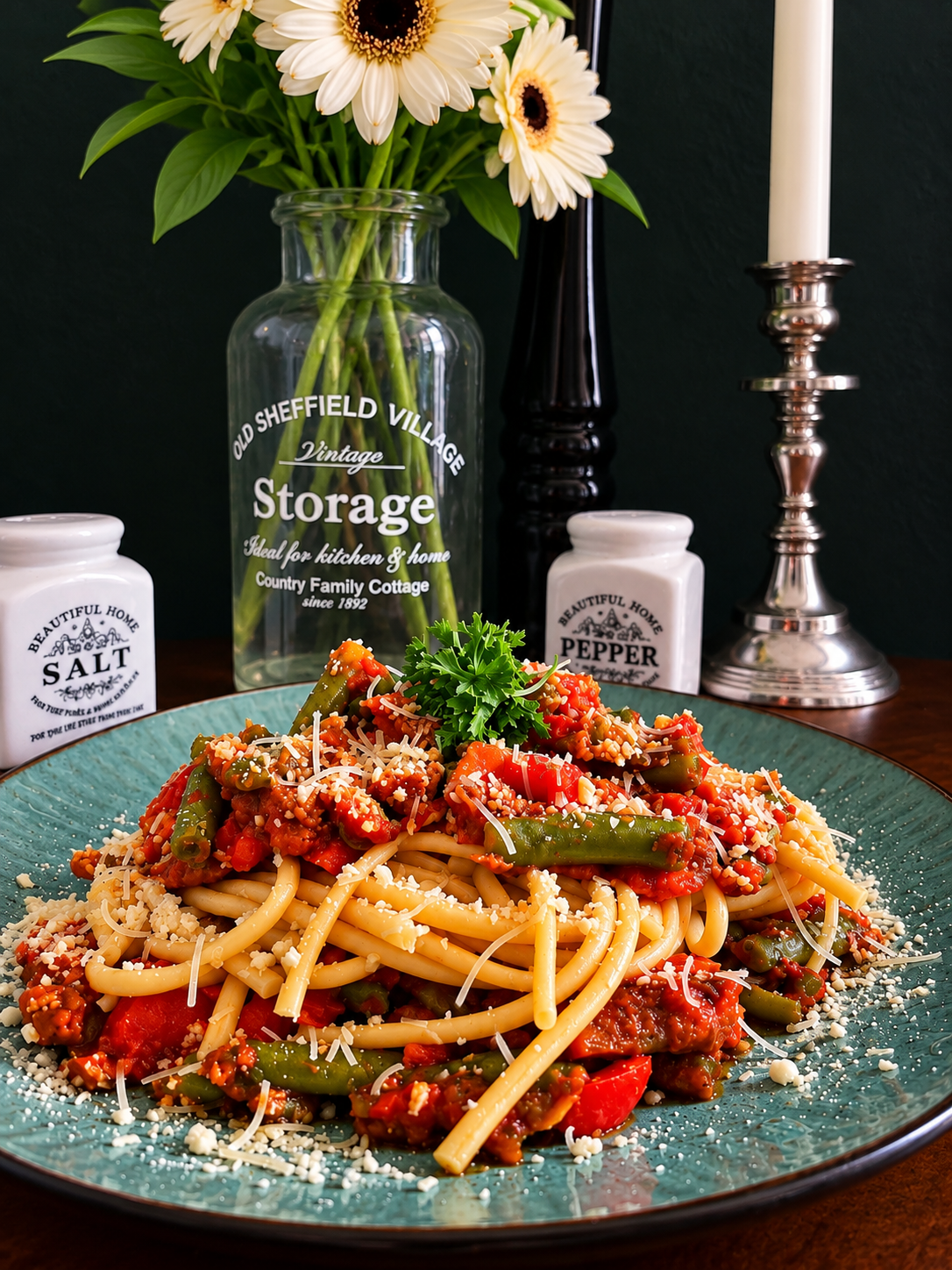
Tsuivan is a traditional Mongolian dish made with wheat noodles, meat and vegetables. One of its defining features is the cooking technique: freshly prepared noodles are placed over the meat and vegetables and steamed in the covered pan before everything is mixed together. This Via Veggie Vegan version takes a different approach, using ready-made Japanese udon noodles, plant-based beef-style strips and a tomato-based vegetable sauce. Rosemary, thyme, parsley and vegan cheese introduce additional fusion influences. It is therefore a Mongolian-inspired vegan interpretation rather than a traditional preparation of Tsuivan.
▣ Ingredients (2 servings)
- 180 g udon noodles
- 250 g vegan beef-style strips
- 2 ripe tomatoes
- 1 carrot
- 1 onion
- 1/2 red bell pepper
- 1 cloves garlic
- 100 g fresh green beans
- 1 tbsp tomato paste
- 2 tbsp vegetable broth
- 1 srig fresh rosemary
- 1 sprig fresh thyme
- 1 tbsp nutritional yeast
- 50 g grated vegan cheese
- 1 handful fresh parsley
- to taste salt & freshly ground black pepper
♨ Preparation
- Prepare the Vegetables
Wash the tomatoes and cut them into small cubes.
Peel the carrot and cut it into thin strips or small pieces.
Peel the onion and slice it into thin strips.
Wash the red bell pepper and cut it into bite-sized pieces.
Peel and finely chop the garlic.
Trim the green beans and cut them into approximately 3–4 cm pieces.
Wash the rosemary, thyme and parsley.
Finely chop the parsley and set it aside for serving. - – Brown the Plant-Based Beef
Heat 1 tablespoon of vegetable oil in a large, deep frying pan over medium-high heat.
Add the vegan beef-style strips.
Fry for approximately 4–5 minutes, stirring occasionally, until lightly browned.
Remove from the pan and set aside. - Sauté the Aromatics
Add the remaining tablespoon of oil to the same pan.
Add the onion and sauté for approximately 2 minutes.
Stir in the chopped garlic and cook for another 30 seconds.
Add the carrot, red bell pepper and green beans.
Continue frying for approximately 3–4 minutes, stirring regularly. - Build the Tomato Sauce
Add the chopped fresh tomatoes and tomato paste.
Stir thoroughly to combine.
Cook for approximately 2 minutes, allowing the tomatoes to soften.
Pour in the vegetable broth.
Add the rosemary and thyme sprigs.
Season with freshly ground black pepper and a little salt.
Bring everything to a gentle simmer. - Simmer the Vegetables
Cover the pan and simmer gently for approximately 5–7 minutes, until the green beans are tender but retain a little bite.
Remove the rosemary and thyme sprigs.
Return the browned vegan beef-style strips to the pan.
Stir gently to combine. - Prepare the Udon Noodles
Prepare the udon noodles according to the package instructions.
If using dried udon, cook them in boiling water until just tender.
If using precooked udon, loosen and heat them according to the package instructions.
Drain if necessary.
Do not overcook the noodles, as they will be combined with the hot sauce. - Combine Everything
Add the prepared udon noodles to the pan.
Gently toss them with the tomato sauce, vegetables and vegan beef-style strips.
Sprinkle over the nutritional yeast.
Continue cooking for approximately 1–2 minutes, until everything is thoroughly heated and the noodles are evenly coated.
If the sauce becomes too thick, add a small splash of hot vegetable broth or water.
Taste and adjust the seasoning. - Finish and Serve
Divide the noodles between two plates.
Arrange the vegetables and vegan beef-style strips generously over the noodles.
Sprinkle with the grated vegan cheese.
Finish with freshly chopped parsley.
Serve immediately. - Serving Suggestion
Serve the Vegan Mongolian Tsuivan-inspired noodles on a large rustic ceramic plate.
Arrange the thick udon noodles in the center, allowing the strands to remain visible.
Spoon the rich tomato and vegetable mixture generously over the noodles.
Distribute the green beans, red bell pepper and plant-based beef strips across the surface.
Finish with grated vegan cheese and a small bunch of fresh parsley.
The combination of golden noodles, red tomato sauce, green beans and fresh herbs creates a colorful, rustic presentation.
Food Story
Mongolia Meets Japan – And My Kitchen Has Other Plans
Traditional Mongolian Tsuivan has a rather clever cooking method. Fresh wheat noodles are prepared from scratch and steamed directly over meat and vegetables in a covered pan. It sounds wonderful, and I love discovering these little culinary techniques on my journey around the world. But on this particular day, my kitchen had other plans. Instead of making noodle dough, I reached for thick, chewy Japanese udon noodles. They are wonderfully satisfying and save quite a bit of preparation time. The meat was replaced with plant-based beef-style strips, and suddenly my Mongolian-inspired dinner was well on its way. Traditional? Not exactly. Delicious? That was certainly the plan.
Somewhere Between Ulaanbaatar and the Mediterranean
And because I apparently have a difficult time leaving a perfectly good recipe alone, I added ripe tomatoes, green beans, carrots, red bell pepper and plenty of garlic. Then came fresh rosemary, thyme and parsley. At this point, my imaginary culinary map was becoming rather interesting. We had started in Mongolia, taken a little detour through Japan for the udon noodles and somehow ended up somewhere near the Mediterranean herb garden. The tomato sauce brought everything together, while the vegan beef-style strips added a wonderfully savory bite. Team Garlic was delighted, and the vegetables made sure this noodle dish was as colorful as it was comforting.
The Uninvited Cheese Guest
And then came the grated vegan cheese. Was it invited by Mongolian culinary tradition? Absolutely not. Did it receive a very warm welcome in my kitchen? Without question. A little nutritional yeast, a generous handful of fresh parsley and the finishing touch was complete. What landed on my plate was a hearty, colorful fusion dish with chewy noodles, rich tomato sauce, tender vegetables and plenty of plant-based goodness. It may not be an authentic reconstruction of Tsuivan, but it captures exactly what I love about Via Veggie Vegan: discovering the world’s food traditions, learning something new and occasionally taking a delicious detour. One country. One kitchen. And one very happy plate of noodles.
♨ Nutrition per serving
Nutritional values are approximate and may vary depending on the ingredients and products used.
Good to Know
What Is Tsuivan?
Tsuivan is a traditional Mongolian noodle dish generally prepared with wheat noodles, meat and vegetables. It is a substantial, comforting meal that reflects Mongolia's tradition of hearty home cooking. Recipes vary between families and regions, but the combination of noodles and savory ingredients is central to the dish.
What Makes Traditional Tsuivan Special?
One distinctive feature of Tsuivan is its noodle preparation. Handmade wheat noodles are typically placed over the meat and vegetables and steamed in a covered pan. Once cooked, they are mixed with the other ingredients. This technique allows the noodles to absorb some of the cooking juices and develop a characteristic texture.
Why This Recipe Is Mongolian-Inspired
This Via Veggie Vegan interpretation uses ready-made udon noodles instead of homemade Mongolian wheat noodles. It also includes a tomato-based sauce, green beans, rosemary, thyme, parsley and grated vegan cheese. These additions are personal fusion elements rather than defining ingredients of traditional Tsuivan.
Mongolia – A Country Shaped by Nomadic Life
Mongolia has a long history of nomadic pastoralism, with herding communities traditionally moving livestock between seasonal grazing areas. Sheep, goats, cattle, horses and camels have played important roles in rural livelihoods. This way of life has influenced food traditions, household practices and the country's cultural identity.
The Mongolian Steppe
Large areas of Mongolia are covered by grassland ecosystems known as steppes. These open landscapes support grazing animals, birds and specialized plant communities. The steppe is central to Mongolia's pastoral heritage and remains ecologically important.
The Gobi Desert – More Than Endless Sand
The Gobi stretches across southern Mongolia and northern China. Contrary to popular imagination, much of the Gobi consists of rocky plains, gravel surfaces and dry grasslands rather than continuous sand dunes. Its harsh climate supports animals and plants adapted to limited rainfall and extreme temperatures.
The Snow Leopard – Mongolia's Mountain Predator
Snow leopards inhabit rugged mountain regions of Central Asia, including Mongolia. Their thick fur, powerful limbs and long tails help them survive in cold, rocky environments. Habitat fragmentation, conflicts with livestock herders and declining prey availability remain important conservation concerns.
The Przewalski's Horse – A Remarkable Conservation Story
Przewalski's horses, also known as takhi in Mongolia, are a rare wild horse lineage. After disappearing from the wild during the twentieth century, they were reintroduced to protected areas in Mongolia through international conservation programs. Their recovery demonstrates the importance of coordinated species protection and habitat management.
The Bactrian Camel – Adapted to Extreme Conditions
Two-humped Bactrian camels are well adapted to the cold deserts and dry landscapes of Central Asia. Domestic Bactrian camels have long supported transport and pastoral livelihoods in Mongolia. The critically endangered wild camel is a distinct population found in remote desert regions of Mongolia and China.
The Mongolian Gazelle – Life on the Open Grasslands
Mongolian gazelles inhabit the country's eastern grasslands and are known for their large-scale seasonal movements. They depend on extensive, connected steppe habitats. Fences, roads and other landscape barriers can interfere with their movement and access to grazing areas.
Lake Khövsgöl – Mongolia's Freshwater Treasure
Lake Khövsgöl in northern Mongolia is one of the country's best-known freshwater lakes. Surrounded by mountains and forests, it forms part of a remarkable natural landscape. The lake and surrounding ecosystems support biodiversity and are important for regional conservation.
The Altai Mountains
The Altai mountain system extends across parts of Mongolia and neighboring countries. Its landscapes include high peaks, alpine meadows, valleys and glaciers. These environments provide habitats for specialized mountain wildlife and contribute to the country's geographic diversity.
Mongolia's Extreme Continental Climate
Mongolia experiences large seasonal temperature differences, with very cold winters and warm or hot summers depending on the region. This climate has influenced traditional food preservation, pastoral practices and the preference for filling, energy-rich meals.
What Are Udon Noodles?
Udon are thick Japanese wheat noodles known for their soft yet chewy texture. They are commonly served in broth, stir-fried dishes or with various sauces. Their substantial consistency makes them suitable for this Mongolian-inspired fusion recipe.
Udon Versus Traditional Tsuivan Noodles
Traditional Tsuivan noodles are made from wheat dough and cooked using a steaming technique within the dish itself. Udon noodles are prepared separately and then combined with the sauce. Although both are wheat-based noodles, their preparation and culinary traditions are different.
Why Noodle Texture Matters
Wheat noodles contain starch and gluten-forming proteins that influence their texture during cooking. Excessive cooking causes further starch hydration and softening, which can make noodles less pleasantly chewy. Following the package instructions and avoiding prolonged reheating helps preserve their structure.
Plant-Based Beef – A Modern Vegan Alternative
Plant-based beef-style strips are designed to imitate some of the texture and savory characteristics of meat. They may be made from soy protein, wheat protein, pea protein or combinations of plant ingredients. Their nutritional composition varies considerably between products.
Why Browning Improves Flavor
Browning plant-based protein strips can create additional roasted and savory aromas through heat-driven chemical reactions. A relatively hot pan and sufficient surface contact encourage browning. Cooking the strips separately also helps prevent them from becoming overly soft in the sauce.
Plant-Based Protein – More Than Just Meat Alternatives
Plant proteins are found in legumes, soy products, grains, nuts and seeds. Many plant-based meat alternatives provide substantial amounts of protein, although their nutritional quality and sodium content depend on the product. A varied vegan diet can provide sufficient protein when overall energy and nutrient needs are met.
Green Beans – A Nutritious Vegetable
Green beans provide dietary fiber and several micronutrients, including vitamin C and folate. Their mild flavor and firm texture make them suitable for vegetable-rich noodle dishes. Cooking softens the beans while preserving some of their structure.
Why Green Beans Must Be Cooked
Raw and insufficiently cooked common green beans contain naturally occurring lectins, including phytohaemagglutinin, which can cause gastrointestinal symptoms. Thorough cooking reduces these lectins. Green beans should therefore be properly cooked rather than served raw or merely warmed.
Carrots and Beta-Carotene
Carrots contain beta-carotene, a carotenoid that the body can convert into vitamin A as needed. Vitamin A supports normal vision, immune function and the maintenance of healthy skin and mucous membranes. The oil in this recipe can help support the absorption of fat-soluble carotenoids.
Tomatoes and Lycopene
Tomatoes contain lycopene, a carotenoid responsible for much of their red color. Cooking and processing can make lycopene more accessible, particularly when tomatoes are consumed with a small amount of dietary fat. Lycopene is being studied for its potential relationship with long-term health outcomes, although no single food prevents disease.
Why Tomato Paste Adds Depth
Tomato paste is produced by concentrating tomatoes, which intensifies their flavor and color. It contributes natural sweetness, acidity and savory compounds. In this recipe, tomato paste helps create a richer sauce without requiring a long cooking time.
Red Bell Pepper – Sweetness Without Chili Heat
Red bell peppers contain naturally occurring sugars and carotenoid pigments that contribute to their sweet flavor and vibrant color. Unlike hot chili peppers, typical sweet bell peppers contain little to no capsaicin and therefore do not produce noticeable chili heat.
Garlic – A Powerful Aromatic Ingredient
Garlic contains sulfur compounds that contribute to its characteristic aroma and flavor. Crushing or chopping garlic activates enzymatic processes that produce compounds such as allicin. Heating changes these compounds and creates a milder, rounder flavor.
Rosemary and Thyme – Mediterranean Herbs in a Mongolian-Inspired Dish
Rosemary and thyme are aromatic herbs strongly associated with Mediterranean cooking. Their essential oils contribute distinctive herbal notes that pair well with tomatoes, garlic and savory plant-based proteins. In this recipe, they are deliberate fusion ingredients rather than traditional Mongolian seasonings.
Parsley – Freshness at the Finish
Fresh parsley adds a bright herbal flavor that contrasts with the rich tomato sauce and savory noodles. Adding it immediately before serving helps preserve its fresh aroma and vibrant green appearance.
Nutritional Yeast – Savory Flavor Without Dairy
Nutritional yeast is an inactive yeast product commonly used in vegan cooking for its savory, slightly nutty flavor. It may also provide protein and certain B vitamins. Vitamin B12 is present only when the product has been fortified, so nutritional yeast should not automatically be considered a reliable B12 source.
Vegan Cheese – What Is It Made From?
Vegan cheese alternatives can be produced from ingredients such as coconut oil, starches, nuts, soy or legumes. Their texture, melting behavior and nutritional composition vary significantly. Some products are relatively high in saturated fat, while others provide more unsaturated fats or additional protein.
Saturated and Unsaturated Fatty Acids
Saturated and unsaturated fats differ in their chemical structures and their effects on blood lipids. Replacing some saturated fats with unsaturated fats can help reduce LDL cholesterol and support cardiovascular health. Plant-based foods are not automatically low in saturated fat, particularly when they contain substantial amounts of coconut or palm fat.
Understanding LDL and HDL Cholesterol
LDL and HDL are lipoproteins that transport cholesterol through the bloodstream. Elevated LDL cholesterol contributes to atherosclerosis and increases cardiovascular risk. HDL participates in transporting cholesterol back toward the liver, but high HDL levels alone do not guarantee cardiovascular protection. Overall dietary patterns, physical activity and other individual factors influence cardiovascular risk.
Vegetable Oil – Choosing the Right Fat
Vegetable oils vary in their fatty acid composition. Rapeseed and olive oils are relatively rich in monounsaturated fatty acids, while sunflower oil often contains more polyunsaturated fatty acids, depending on the variety. Using oils appropriately and avoiding excessive overheating helps maintain cooking quality.
Dietary Fiber – Supporting Digestive Health
Vegetables and wheat-based noodles contribute varying amounts of dietary fiber. Fiber supports normal bowel function, and some types can be fermented by intestinal microorganisms. A varied diet rich in vegetables, legumes and whole grains helps support digestive health.
Why Vegetables Add More Than Color
Combining tomatoes, carrots, green beans, onion and bell pepper provides a variety of flavors, textures and plant compounds. Different vegetables contribute different nutrients, which is one reason dietary variety is beneficial. The colorful presentation also makes a hearty noodle dish more visually appealing.
Zero Waste – Save Your Vegetable Trimmings
Clean carrot peelings, onion ends and other suitable vegetable scraps can be collected in a freezer-safe container. Once enough have accumulated, simmer them with water and herbs to make homemade vegetable broth. Avoid spoiled material and unsuitable scraps. The finished broth can be used for soups, stews and noodle dishes.
Creative Ways to Use Leftover Tomato Sauce
If any tomato and vegetable sauce remains, it can be refrigerated separately and used with pasta, potatoes or roasted vegetables. Leftover parsley can be chopped and frozen in small portions for future cooking.
How to Store Leftover Vegan Mongolian Tsuivan
Cool leftovers promptly and transfer them to an airtight container. Refrigerate and consume within approximately 2–3 days. Reheat thoroughly before serving, adding a splash of vegetable broth or water if necessary. For the best noodle texture, store the sauce and udon separately when practical.
You may also like
♡
You may also like
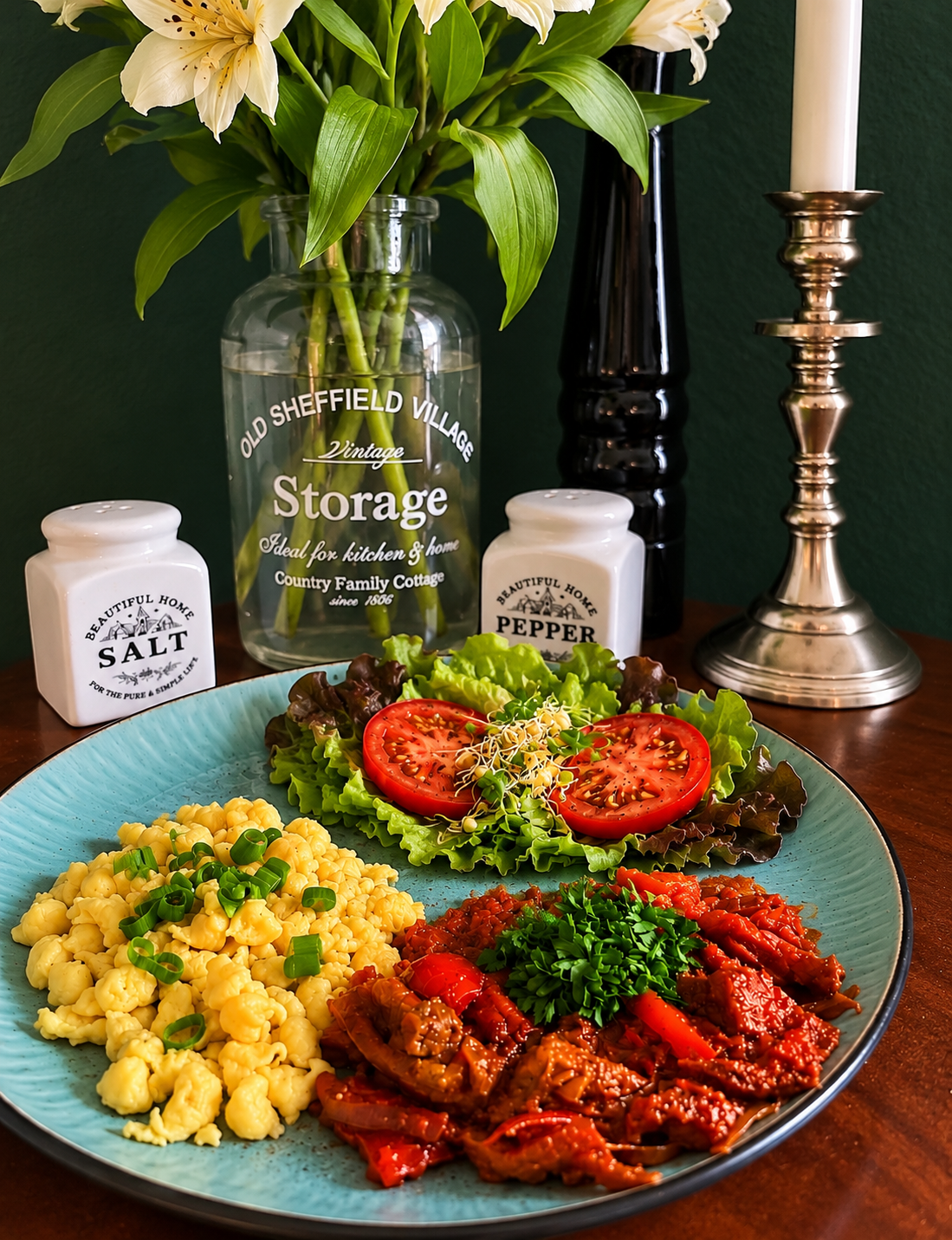
Hungarian Vegan Goulash with Galuska – Hearty Paprika Stew & Egg-Free Dumplings
You may also like
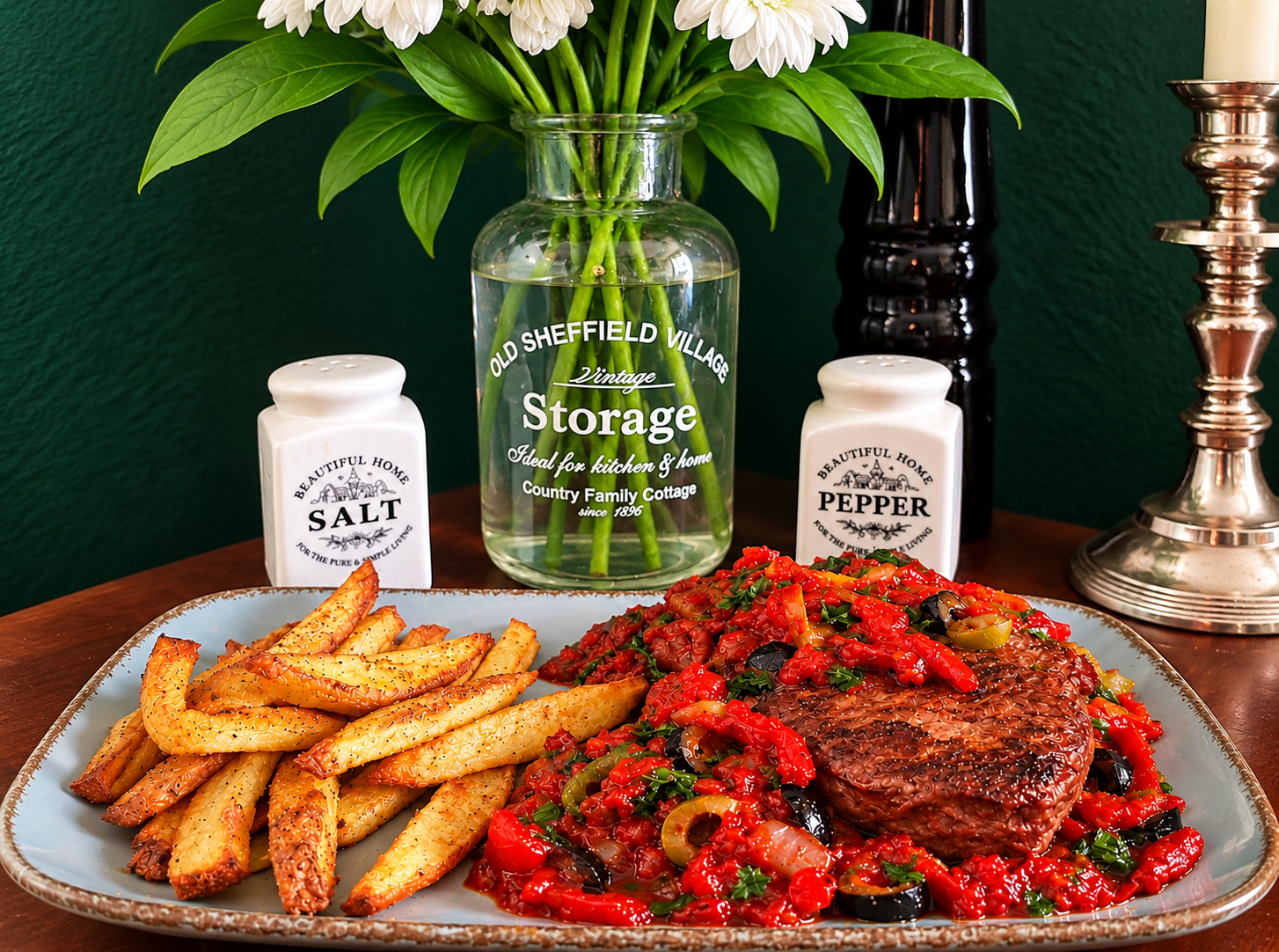
Vegan Argentinian Steak with Homemade Salsa Criolla

You may also like