
Finland – Nordic Nature and Comforting Cuisine
Finland is a Nordic country famous for its forests, thousands of lakes, long winters and strong connection to nature. Finnish cuisine makes excellent use of seasonal ingredients, particularly potatoes, carrots, parsnips and other root vegetables that can be stored throughout the colder months. Simple, nourishing soups are an important part of everyday home cooking, offering warmth and comfort when temperatures drop.
What Is Porkkana-Palsternakkasosekeitto?
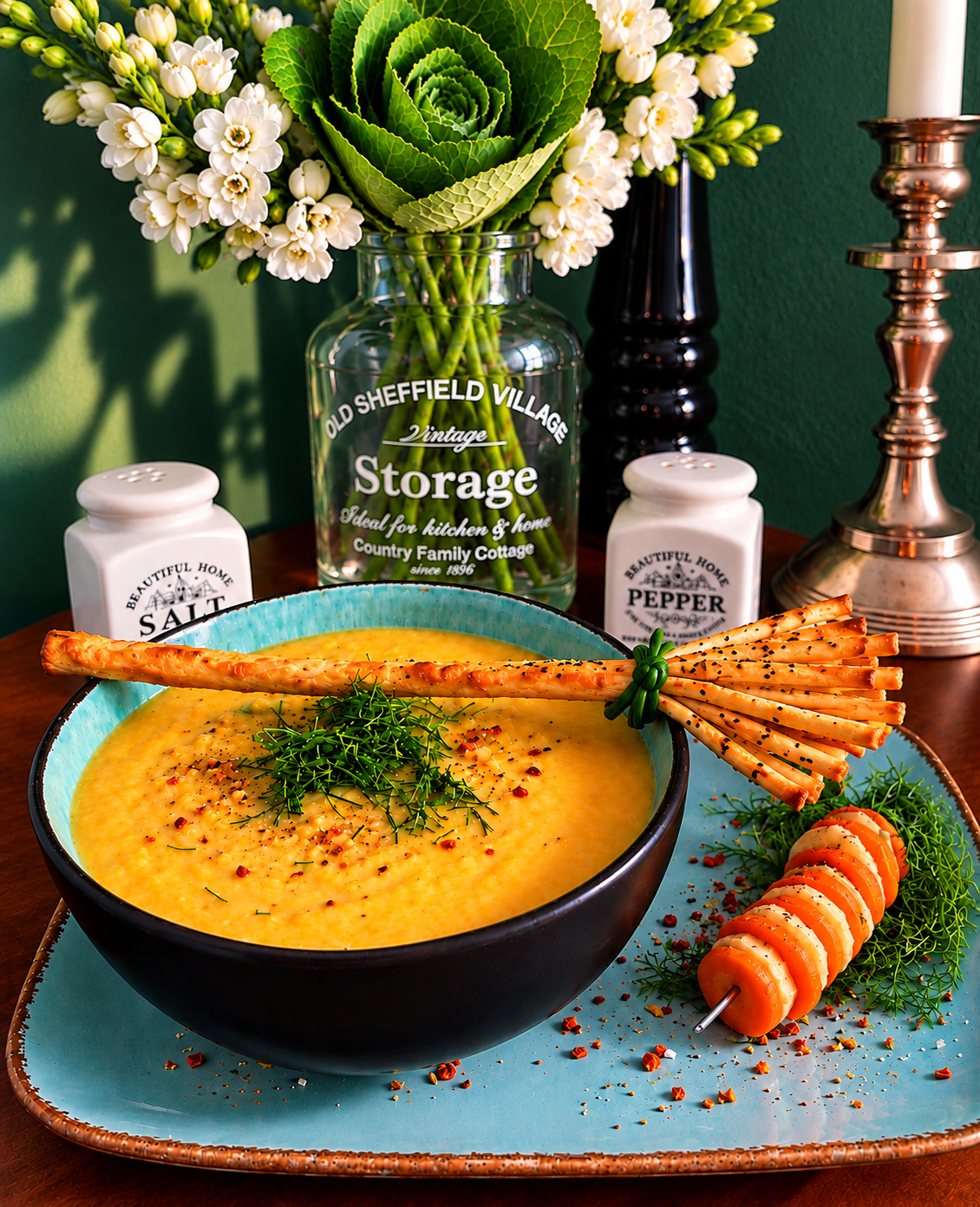
The Finnish name describes the dish perfectly: "porkkana" means carrot, "palsternakka" means parsnip and "sosekeitto" means puréed soup. This creamy vegetable soup combines the natural sweetness of carrots with the earthy, aromatic flavor of parsnips. A small potato provides body, while plant-based cream creates a smooth texture. My vegan version is finished with fresh dill and given a spooky Halloween makeover with a homemade pizza dough witch's broom and decorative vegetable skewers.
▣ Ingredients (2 servings)
- 250 g carrots
- 150 g parsnips
- 1 potato
- 1 onion
- 1 tbsp vegan butter alternative
- 500 ml vegetable stock
- 75 ml plant-based whipping cream, unsweetened
- 1 pinch freshly grated nutmeg
- 1/2 bunch fresh dill
- 70 g vegan pizza dough, for the witch's broom
- 1 tsp unsweetened plant-based drink, for brushing
- 1 tsp chili oil, for brushing
- 1/2 tsp black mustard seeds
- 2 stalks chive, optional, for tying the broom decoration
- to taste salt & freshly ground black pepper
♨ Preparation
- Prepare the Vegetables
Peel the carrots, parsnips and potato.
Set aside a few attractive carrot and parsnip slices for the decorative skewers.
Cut the remaining carrots, parsnips and potato into evenly sized cubes.
Peel and finely chop the onion. - Sauté the Onion
Heat the vegan butter alternative in a large saucepan over medium heat.
Add the finely chopped onion and sauté gently for approximately 2–3 minutes until soft and translucent.
Avoid browning the onion, as the soup should retain its delicate, slightly sweet vegetable flavor. - Cook the Root Vegetables
Add the diced carrots, parsnips and potato to the saucepan.
Stir briefly to coat the vegetables in the vegan butter alternative.
Pour in enough hot vegetable stock to just cover the vegetables, approximately 500 ml.
Bring to a boil, then reduce the heat and cover with a lid.
Simmer gently for approximately 15–20 minutes until all the vegetables are completely tender. - Prepare the Decorative Vegetable Skewers
While the soup is simmering, cut the reserved carrot and parsnip pieces into evenly sized round slices.
Blanch them briefly in lightly salted water until tender but still firm enough to hold their shape.
Drain and allow them to cool slightly.
Thread the carrot and parsnip slices alternately onto two small skewers, creating a colorful layered pattern.
Set aside for serving. - Shape the Witch's Broom
Preheat the oven to 200°C / 390°F.
Divide the pizza dough into two portions if making one broom for each serving.
Roll part of each portion into a long, thin strip to form the broom handle.
Shape the remaining dough into a slightly thicker, flattened section approximately 3 cm long for the broom head.
Attach the thicker section securely to one end of the handle.
Using a very sharp, thin knife, make several fine, parallel cuts into the broom head to create individual bristles.
Gently separate the strips so they resemble the fanned-out bristles of a witch's broom. - Brush and Bake the Witch's Brooms
Place the shaped pizza dough brooms on a baking tray lined with parchment paper.
Brush lightly with the plant-based drink and a little chili oil.
Sprinkle the broom heads with black mustard seeds.
Bake for approximately 10 minutes until golden brown and crisp.
Watch carefully, as the thin broom handles and bristles can brown quickly.
Remove from the oven and allow to cool slightly.
If desired, tie a long chive stalk around the base of each broom head to create a decorative green band. - Purée the Soup
Once the carrots, parsnips and potato are completely tender, remove the saucepan from the heat.
Using an immersion blender, blend the vegetables and broth until completely smooth and velvety.
If the soup is too thick, add a little extra warm vegetable stock until the desired consistency is reached. - Add the Plant-Based Cream
Stir the plant-based whipping cream into the puréed soup.
Return the saucepan to low heat and warm gently.
Avoid vigorous boiling after adding the cream. - Season the Soup
Add freshly grated nutmeg, salt and white pepper to taste.
Stir thoroughly and adjust the seasoning if necessary.
Wash the fresh dill, pat it dry and chop it finely.
Reserve some of the dill for garnishing and stir a small amount into the soup if desired. - Garnish and Serve
Divide the hot soup between two bowls.
Garnish generously with fresh dill.
Place a carrot-parsnip skewer beside each bowl.
Rest a freshly baked pizza dough witch's broom across the rim of each bowl, allowing the bristles to extend playfully over the edge.
Serve immediately while the soup is hot and the broom is still wonderfully crisp.
Food Story
A Little Finnish Soup with a Magical Twist
Finland is known for its forests, lakes and wonderfully comforting food. And when autumn arrives, there’s hardly anything more inviting than a warm bowl of creamy vegetable soup. Carrots, parsnips, potatoes and a little plant-based cream – simple ingredients that turn into something beautifully smooth and delicious. But of course, it’s October in the Via Veggie Vegan kitchen. And you know what that means: even an innocent Finnish vegetable soup isn’t safe from my Halloween ideas!
Witch, Please! Where’s My Broom?
So I decided that this soup needed a witch’s broom. Not just any broom, of course, but an edible one made from pizza dough. I rolled the handle, shaped the broom head and carefully cut dozens of little bristles with a thin knife. A touch of plant-based drink, chili oil and black mustard seeds later, my broom was ready for the oven. And honestly, if witches knew how delicious their broomsticks could be, they’d probably spend a lot more time in the kitchen and a lot less time flying around!
A Vegetable Skewer Joins the Party
Because one Halloween decoration apparently wasn’t enough, I also saved a few carrot and parsnip slices and turned them into a little vegetable skewer. A generous handful of fresh dill completed the scene. The result? A creamy Finnish soup, a crunchy homemade witch’s broom and a tiny vegetable sidekick. No magic spell required – just a little imagination and a very sharp knife!
♨ Nutrition per serving
Nutritional values are approximate and may vary depending on the ingredients and products used.
Good to Know
What Does Porkkana-Palsternakkasosekeitto Mean?
Finnish food names can look wonderfully complicated at first glance, but they are often surprisingly descriptive. "Porkkana" means carrot, "palsternakka" means parsnip and "sosekeitto" means puréed soup.
Put them together and you get Porkkana-Palsternakkasosekeitto – literally carrot and parsnip puréed soup. A long name for a wonderfully simple dish!
Is This a Traditional Finnish Soup?
Vegetable purée soups, known as sosekeitot, are a familiar part of Finnish home cooking. Root vegetables such as carrots, potatoes and parsnips are well suited to these comforting dishes.
There is no single universally fixed recipe for carrot and parsnip soup. Families and home cooks may vary the proportions, seasonings and creamy ingredients according to preference. This version follows a Finnish-style root vegetable soup tradition while replacing dairy ingredients with plant-based alternatives.
The Halloween witch's broom and decorative skewers are creative additions rather than traditional Finnish accompaniments.
Why Are Root Vegetables So Important in Nordic Cooking?
Root vegetables are especially practical in regions with long, cold winters because many varieties can be stored for extended periods under suitable conditions.
Carrots, parsnips, potatoes and other hardy vegetables provide a reliable foundation for soups, stews, casseroles and everyday meals. Their naturally sweet and earthy flavors also become especially comforting when cooked slowly.
Carrots – More Than Just a Sweet Vegetable
Carrots contain carotenoid pigments, particularly beta-carotene, which gives orange varieties their characteristic color.
The body can convert beta-carotene into vitamin A as needed. Vitamin A contributes to normal vision, immune function and the maintenance of healthy skin and mucous membranes.
Cooking softens the carrot's cell structure, which can make some carotenoids more accessible. Including a little dietary fat can also support the absorption of these fat-soluble compounds.
Parsnips – The Underrated Root Vegetable
Parsnips have a pale, creamy color and a naturally sweet, slightly earthy flavor. Their taste can be described as a combination of carrot, parsley root and gentle nuttiness.
They are a useful source of dietary fiber and provide nutrients such as potassium and folate. Their sweetness develops beautifully during cooking, making them particularly suitable for creamy soups.
Why Do Carrots and Parsnips Work So Well Together?
Carrots bring a bright, familiar sweetness, while parsnips add a deeper, more aromatic flavor. Together, they create a balanced soup without requiring many spices.
The orange carrots also give the finished soup its warm golden color, while the parsnips contribute to its creamy texture.
Why Add a Potato to the Soup?
The small potato is more than just an additional vegetable. As it cooks, its starch granules absorb water and soften, helping give the puréed soup a thicker, smoother consistency.
This makes it possible to achieve a comforting texture without adding large quantities of cream or flour.
What Makes a Puréed Soup Creamy?
Blending breaks cooked vegetables into small particles and distributes them throughout the liquid. Starch from the potato and soluble components from the vegetables help create a smooth consistency.
The result is a soup that feels rich and velvety even when the amount of added fat is relatively modest.
For the smoothest result, blend only after all the vegetables are completely tender. Take care when blending hot liquids to avoid splashing.
Why Use Plant-Based Whipping Cream?
Plant-based whipping cream can provide richness and a smooth mouthfeel without dairy. Depending on the product, it may be based on oats, soy, coconut or other plant ingredients.
Choose an unsweetened, unflavored product suitable for savory cooking. Different brands vary in fat content and heat stability, so gentle warming is preferable to vigorous boiling.
Why Nutmeg and White Pepper?
Nutmeg contributes a warm, slightly sweet aromatic note that complements cooked root vegetables. White pepper provides gentle warmth without adding prominent dark specks to the smooth soup.
Both seasonings should be used sparingly so the natural flavors of the carrots and parsnips remain the focus.
Fresh Dill – A Nordic Favorite
Dill is widely used in Nordic cooking, where its fresh, grassy and slightly sweet aroma complements potatoes, vegetables, fish dishes and creamy sauces.
In this vegan soup, fresh dill adds a fragrant contrast to the naturally sweet root vegetables. Adding it near the end helps preserve its aroma and vibrant green color.
Why Is the Soup Naturally Golden?
The soup's warm golden-orange color comes primarily from the carrots and their carotenoid pigments.
The parsnips, potato and plant-based cream soften the color into a pale golden shade. No artificial coloring is needed.
Halloween – A Celebration with European Roots
Halloween is often associated with the United States, but many of its traditions have older European origins, particularly in Ireland and Scotland.
Over centuries, seasonal customs associated with the end of the harvest became intertwined with Christian observances around All Saints' Day and All Hallows' Eve. Later, immigration and changing popular culture helped shape the Halloween celebrations familiar today.
Samhain – The Beginning of the Dark Season
Samhain was an important seasonal festival in Gaelic tradition, associated with the transition from the harvest period into winter.
Folklore connected this time of year with supernatural beings and a perceived closeness between the human world and the otherworld.
Modern Halloween developed through several overlapping traditions, so not every costume, decoration or celebration can be traced directly to Samhain.
Why Are Witches Associated with Halloween?
Witches became part of Halloween imagery through a mixture of European folklore, historical beliefs about magic and witchcraft, and later popular culture.
The familiar pointed hat, broomstick and black cat are now recognizable symbols of Halloween, even though their historical development is more complicated than any single legend.
Why Do Witches Ride Broomsticks?
The image of a witch flying on a broomstick developed through European folklore and early modern representations of witchcraft.
Over time, the broomstick became a familiar symbol in stories, illustrations and Halloween decorations. Today, it is one of the most playful elements of witch-themed celebrations.
And in the Via Veggie Vegan kitchen, the broomstick has one additional advantage: you can eat it!
Why Pizza Dough Works for a Witch's Broom
Pizza dough contains flour, water and usually yeast, which gives it elasticity and allows it to be shaped into long, thin pieces.
When baked, the dough becomes golden and crisp on the outside. Thinly cut sections can resemble individual broom bristles, while the thicker rolled section forms a sturdy handle.
Ready-made pizza dough is a convenient shortcut, but check the ingredients to ensure it is vegan.
What Do Black Mustard Seeds Add?
Black mustard seeds provide a subtle nutty, peppery flavor and a decorative contrast against the golden pizza dough.
Their dark color makes them particularly suitable for Halloween baking. Use them sparingly so they complement rather than dominate the delicate flavor of the bread.
Why Brush the Dough with Plant-Based Drink?
Brushing pizza dough lightly with plant-based drink moistens the surface and can encourage even browning during baking.
The addition of chili oil contributes flavor and a little extra richness. Because the broom bristles are thin, the amount of liquid should remain small to avoid making the dough too soft.
Why Are the Vegetable Skewers a Good Idea?
Reserving a few slices of carrot and parsnip creates a decorative element without introducing additional vegetables or unnecessary food waste.
The skewers also allow diners to taste the individual root vegetables separately from the puréed soup, highlighting the ingredients that give the dish its flavor.
Vegan Butter Alternatives and Saturated Fat
Plant-based butter alternatives vary in their fat composition. Some are made primarily with rapeseed, sunflower or other vegetable oils, while others contain substantial amounts of coconut or palm fat.
Products rich in unsaturated fatty acids generally have a different nutritional profile from those high in saturated fat. Checking the nutrition label is useful when comparing products.
HDL, LDL and the Importance of Fat Quality
LDL particles transport cholesterol through the bloodstream. Elevated LDL cholesterol is a well-established cardiovascular risk factor because LDL-containing particles can contribute to the development of plaque in blood vessels.
HDL particles participate in transporting cholesterol away from peripheral tissues, but higher HDL cholesterol alone does not necessarily guarantee lower cardiovascular risk.
Replacing some saturated fats with unsaturated fats can help lower LDL cholesterol. A balanced plant-based diet can include creamy comfort foods while emphasizing vegetables, legumes, whole grains, nuts and unsaturated fats overall.
Is This Soup Naturally Cholesterol-Free?
Carrots, parsnips, potatoes and other unprocessed plant foods naturally contain no cholesterol. Using vegan butter alternative and plant-based cream also avoids the cholesterol found in dairy ingredients.
However, cholesterol-free does not automatically mean low in saturated fat or calories. The nutritional profile depends on the specific plant-based products used.
Fiber – A Benefit of Root Vegetables
Carrots and parsnips contribute dietary fiber, which supports normal digestive function and can help make meals more satisfying.
Blending the vegetables does not remove their fiber, unlike straining away the solid vegetable material. The fiber remains part of the finished soup.
Zero Waste – Use the Vegetable Trimmings
Clean carrot and parsnip peels can be collected with other suitable vegetable trimmings and used to prepare homemade vegetable stock.
Wash the vegetables thoroughly before peeling, and avoid using spoiled or excessively dirty trimmings. Freeze clean scraps until you have enough to make stock.
What Can You Do with Leftover Pizza Dough?
Any remaining pizza dough can be shaped into small breadsticks, twists or miniature rolls.
Brush them with a little plant-based drink or olive oil, sprinkle with herbs or seeds and bake until golden. This is an easy way to avoid wasting small pieces of dough left over from the Halloween decorations.
Can the Soup Be Prepared in Advance?
The soup can be prepared ahead, cooled promptly and stored in a covered container in the refrigerator for approximately 2–3 days.
Reheat gently, adding a little vegetable stock if it has thickened. Prepare the pizza dough brooms separately and keep them dry until serving so they retain their crisp texture.
Can You Freeze the Soup?
The puréed vegetable base freezes well, although some plant-based cream products may change texture after thawing.
For the best result, freeze the soup before adding the cream, then stir in the cream after reheating. The pizza dough decorations and vegetable skewers are best prepared fresh.
You may also like
♡
You may also like
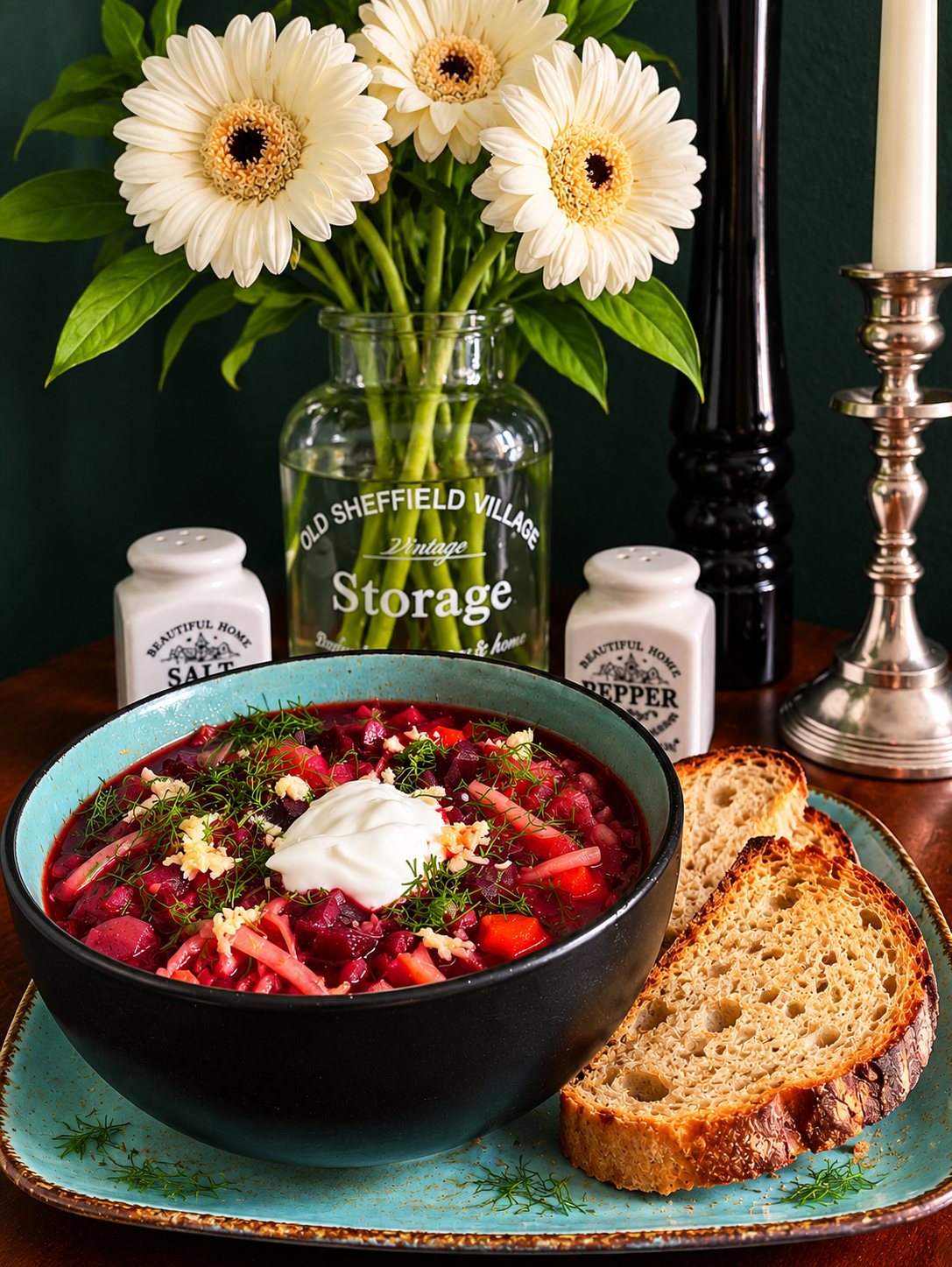
Vegan Ukrainian Borscht – Traditional Beetroot & Cabbage Soup with Dill and Sour Cream
You may also like
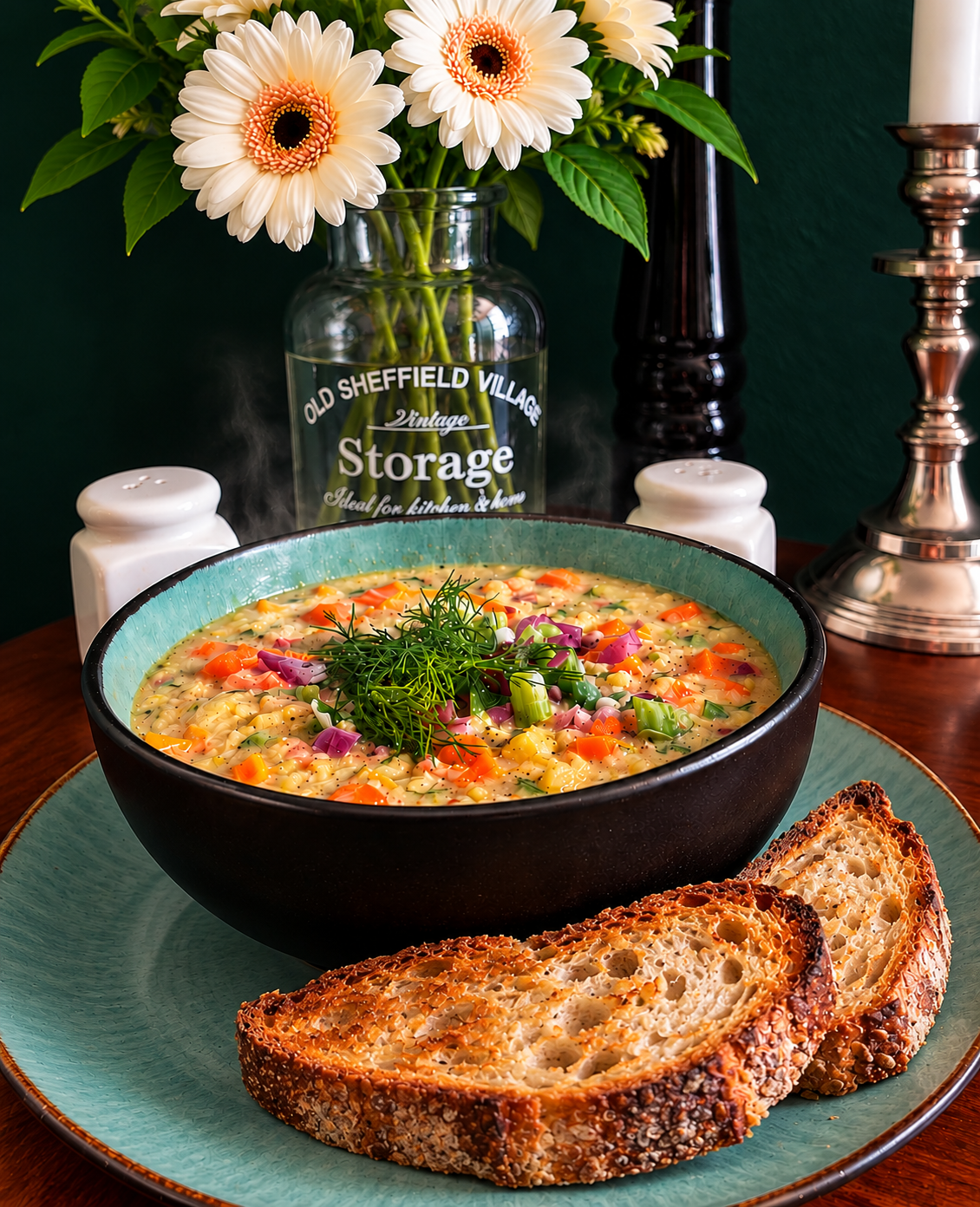
Estonian Kohlrabi Soup – Creamy Vegan Kohlrabisupp
You may also like