
Estonia – Seasonal Comfort Food from the Baltic Region
Estonia is a Northern European country on the Baltic Sea, known for its forests, islands and strong connection to seasonal ingredients. Traditional Estonian cuisine features potatoes, cabbage, root vegetables, rye bread and fresh herbs. Dill is particularly popular in soups, potato dishes and salads, while sour cream is a familiar accompaniment to many savory meals. Simple, warming dishes have long played an important role in everyday Estonian home cooking, especially during the colder months.
Estonian Kohlrabi Soup – A Creamy Vegan Interpretation
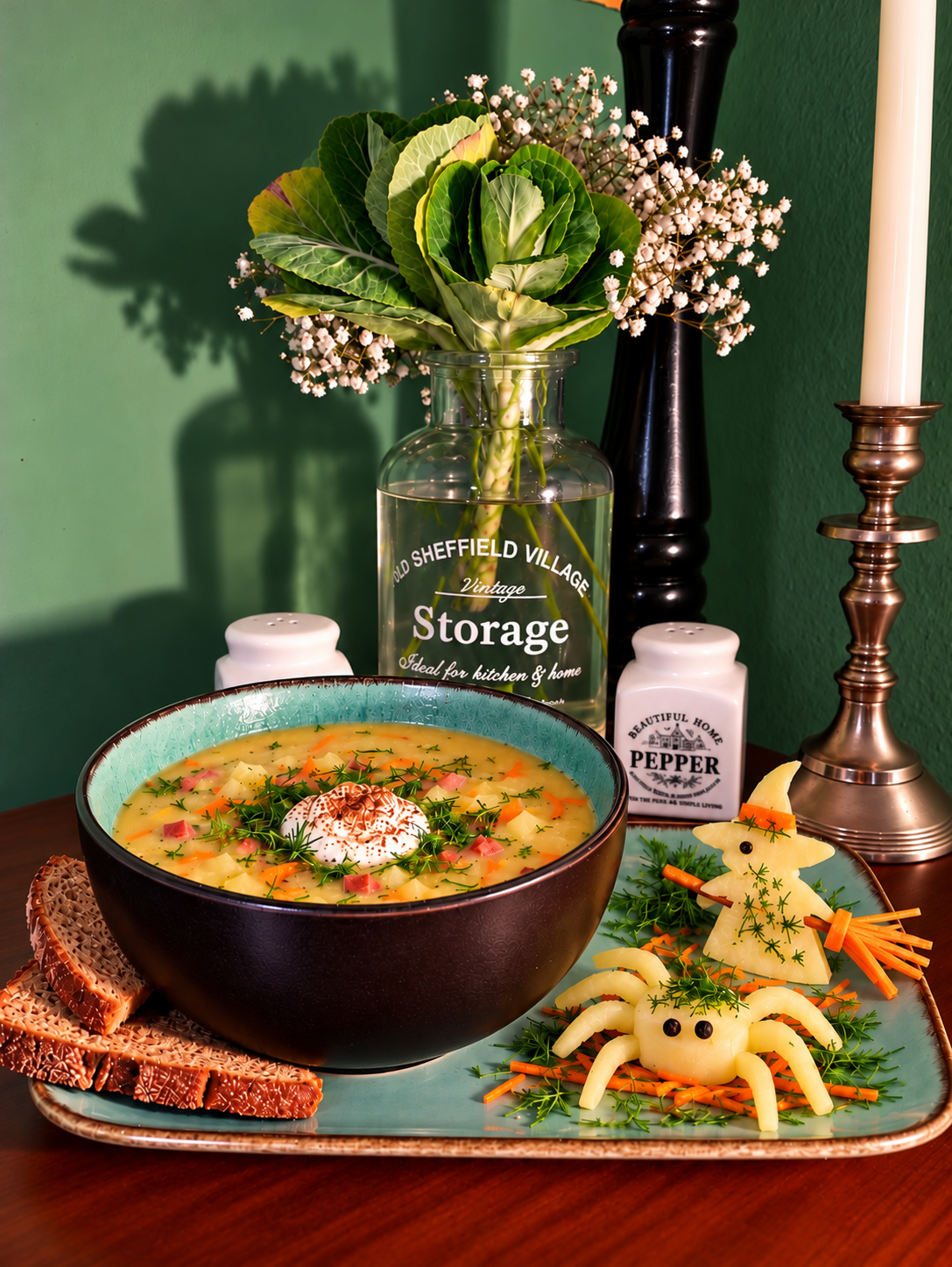
This Estonian-inspired Kohlrabisupp draws on the region's love of seasonal vegetables, potatoes and fresh dill rather than reproducing a specific traditional national dish. Kohlrabi and potatoes are simmered in vegetable stock and blended with soy cooking cream to create a smooth, comforting soup. Finely grated carrots provide a delicate texture, while nutritional yeast, crispy vegan bacon-style cubes and plant-based sour cream add savory richness. For Halloween, cooked kohlrabi is transformed into a handmade witch and spider, bringing a playful Via Veggie Vegan twist to this Baltic-inspired autumn recipe.
▣ Ingredients (2 servings)
- 400 g kohlrabi
- 100 g potatoes
- 1/2 carrot
- 1/2 onion
- 500 ml vegetable broth
- 100 ml soy cooking cream
- 75 g vegan bacon cubes
- 1 tbsp nutritional yeast
- 1 tsp sugar
- 1 tsp lemon zest
- 2 tsp vegan sour cream
- 1 tsp vegan butter
- 1 handful fresh dill
- 1 pinch ground nutmeg
- 2 pretzel sticks (for the witch's broom handle)
- 6 black peppercorns (for the witch's and spider's eyes)
- to taste salt & Freshly ground black pepper
♨ Preparation
- Prepare the Kohlrabi
Wash and peel the kohlrabi.
Cut one large, thick slice from the whole vegetable for the witch and another slice for the spider's legs.
Reserve enough kohlrabi to form a small ball for the spider's body.
Cut the remaining kohlrabi into small cubes. - Prepare the Potatoes and Onion
Peel the potatoes and cut them into small cubes.
Peel and finely chop the onion.
Set the vegetables aside. - Simmer the Vegetables
Pour the vegetable stock into a medium-sized saucepan.
Add the diced kohlrabi, the reserved kohlrabi slices and the chopped onion and potatoes.
Bring to a boil, reduce the heat and simmer gently until the vegetables are tender.
The kohlrabi slices should become soft enough to cut and shape while still holding together.
Carefully remove the pieces intended for the Halloween decorations.
Continue simmering the remaining vegetables until completely tender. - Blend the Soup
Add the salt, sugar, nutritional yeast, soy cooking cream and freshly grated lemon zest.
Blend everything with an immersion blender until smooth and creamy.
Avoid blending the potatoes for longer than necessary, as excessive processing can make the soup sticky.
Reduce the heat and keep the soup warm. - Add the Fresh Carrot
Peel the carrot and grate it very finely.
Stir the freshly grated carrot into the blended soup.
Allow it to warm through gently over low heat for approximately 3–5 minutes.
Avoid vigorous boiling to preserve the delicate texture of the grated carrot. - Fry the Vegan Bacon
Melt the vegan butter alternative in a frying pan over medium heat.
Add the vegan bacon-style cubes and fry until golden brown and slightly crispy.
Remove from the heat and set aside. - Prepare the Kohlrabi Witch
Place the large cooked kohlrabi slice on a cutting board.
Use a witch-shaped Halloween cookie cutter to cut out the witch.
Carefully press one whole black peppercorn into the head to create an eye. - Prepare the Witch's Broom
Use a pretzel stick as the broom handle.
Cut a few thin carrot strips to create the broom bristles.
Arrange the carrot strips at one end of the pretzel stick.
Place the broom alongside the witch so that she appears to be holding it.
Add a little fresh dill for decoration. - Prepare the Spider's Body
Take a portion of the completely cooked kohlrabi.
Carefully shape it into a small, round ball.
The kohlrabi should be soft enough to shape but still firm enough to hold together.
Cut the remaining cooked kohlrabi slice into narrow strips to make the spider's legs. - Prepare the Spider's Nest
Arrange a few thin carrot strips and some fresh dill on the serving plate.
Create a small decorative nest for the spider.
Carefully place the round kohlrabi body on top.
Gently press two whole black peppercorns into the front of the body to create the spider's eyes.
Attach the Spider's Legs
Using a small wooden stick or the end of a wooden spoon, carefully make small openings around the spider's body.
Gently insert one end of each kohlrabi strip into the openings.
Work carefully to avoid breaking the soft kohlrabi.
Shape the Spider's Legs
Use the rounded handle of a wooden spoon to bend the kohlrabi strips into curved spider legs.
Carefully shape each strip over the handle, applying as little pressure as possible.
Cooked kohlrabi is delicate, and the thin strips can break very easily.
Work slowly and patiently until the legs have the desired shape.
Arrange them around the spider's body. - Prepare the Fresh Dill
Wash the fresh dill and shake off any excess water.
Finely chop most of the dill, reserving a few delicate sprigs for the Halloween decorations. - Serve the Soup
Divide the hot kohlrabi soup between two deep bowls.
Scatter the crispy vegan bacon-style cubes over the soup.
Add the freshly chopped dill.
Finish each serving with a small spoonful of vegan sour cream alternative.
Sprinkle freshly grated nutmeg over the sour cream and season with freshly ground black pepper. - Complete the Halloween Presentation
Arrange the finished kohlrabi witch with her pretzel-stick broom and carrot bristles alongside the soup.
Place the kohlrabi spider on its decorative nest of carrot strips and fresh dill.
Add a few fresh dill sprigs around the figures.
Serve immediately, preferably with rustic rye bread.
Remove the whole peppercorns before eating.
Food Story
Some People See a Kohlrabi. I See a Witch.
There are perfectly normal things you can do with a kohlrabi. Peel it. Chop it. Cook it. Turn it into a delicious soup. And then there’s what happens in my kitchen during October. I look at a perfectly innocent kohlrabi and start wondering whether it might make a good witch. Or a spider. Preferably both. Apparently, Spooky Season has reached the point where even my vegetables are expected to dress up for dinner.
Once a Suppenkasper, Always a Suppenkasper!
I’m a self-confessed Suppenkasper. Give me a good bowl of homemade soup, and I’m happy. Creamy, chunky, spicy or comforting – there are so many wonderful possibilities. So when my culinary journey around the world brought me to Estonia, a warming vegetable soup inspired by Baltic flavors sounded like an excellent idea. Kohlrabi, potatoes, fresh dill and a little soy cream became the base, while grated carrot, crispy vegan bacon and plant-based sour cream made it even more delicious.
A Witch, a Spider and a Wooden Spoon
Of course, a simple bowl of soup wasn’t quite enough for my October kitchen. The witch was easy enough: one cooked kohlrabi slice, a cookie cutter and a little imagination. But the spider? That little creature demanded considerably more attention! I shaped a ball from cooked kohlrabi, added peppercorn eyes and carefully inserted the legs. Then came the real challenge: bending those delicate little legs over the handle of a wooden spoon without breaking them. Who knew that making a spider could require so much patience? Apparently, Halloween cooking is also a test of fine motor skills!
My Kitchen Apparently Needs a Guest List
By the time everything was arranged, the plate was getting rather crowded. The witch had her pretzel-stick broom with carrot bristles, the spider was sitting on its little carrot-and-dill nest, and the soup was waiting patiently in its bowl. Perhaps I need bigger dishes. Or perhaps I should stop inviting so many edible Halloween characters to dinner. But where would the fun be in that? I love cooking, I love experimenting, and I especially love giving simple ingredients a little personality. Welcome to Spooky Season – Via Veggie Vegan style!
♨ Nutrition per serving
Nutritional values are approximate and may vary depending on the ingredients and products used.
Good to Know
Estonia – A Northern European Baltic Country
Estonia is the northernmost of the three Baltic states, alongside Latvia and Lithuania. Its landscape includes forests, lakes, islands and a long Baltic coastline. The climate has influenced the country's food traditions, with seasonal vegetables, preserved foods, grains and potatoes playing important roles. Estonian cuisine reflects both local agricultural traditions and historical influences from neighboring regions. Simple, warming dishes are particularly characteristic of everyday home cooking.
What Is Traditional Estonian Cuisine Like?
Traditional Estonian cooking often features potatoes, rye bread, cabbage, root vegetables, legumes and seasonal produce. Soups and stews are familiar parts of the culinary tradition, especially during colder months. Dairy products, fish and meat also appear in many historical recipes, but vegetables and grains provide a strong foundation for plant-based adaptations.
Is Kohlrabi Soup a Traditional Estonian Dish?
Kohlrabi soup is not widely recognized as a distinct Estonian national specialty. This recipe is best described as Estonian-inspired because it draws on the region's use of seasonal vegetables, potatoes, dill and comforting soups. The creamy vegan preparation and Halloween decorations are personal Via Veggie Vegan additions rather than traditional Estonian elements.
What Is Kohlrabi?
Kohlrabi belongs to the Brassica family, which also includes cabbage, broccoli, cauliflower and Brussels sprouts. Despite its turnip-like appearance, the edible round portion is a swollen stem rather than a root. Kohlrabi has a mild, slightly sweet flavor and can be eaten raw or cooked.
Why Is Kohlrabi Ideal for Creamy Soup?
Kohlrabi becomes tender when cooked and has a relatively mild flavor that combines well with other vegetables. Its natural sweetness balances the savory vegetable stock, while potatoes and soy cooking cream create a smooth, velvety consistency.
What Nutrients Does Kohlrabi Provide?
Kohlrabi provides vitamin C, dietary fiber and potassium while being relatively low in calories. Vitamin C contributes to normal immune function and helps protect cells from oxidative stress. Fiber supports normal digestive function, while potassium contributes to normal muscle and nerve function.
Can You Eat Kohlrabi Leaves?
Yes. Young, tender kohlrabi leaves are edible and can be prepared similarly to other leafy brassica vegetables. Wash them thoroughly, remove tough stems if necessary and add them to soups, stir-fries or sautéed vegetable dishes. Using the leaves is also a simple way to reduce food waste.
Why Add Potatoes to the Soup?
Potatoes contain starch, which helps give blended soups a naturally creamy consistency. When the potatoes are cooked until tender and blended with the kohlrabi and liquid, they contribute body without requiring a separate flour-based thickener.
Why Should You Avoid Overblending Potatoes?
Potatoes contain starch that can become excessively released during vigorous or prolonged blending. This may produce a sticky or glue-like texture, particularly with certain potato varieties. Blend the soup just until smooth and creamy rather than processing it for longer than necessary.
Why Add Carrots After Blending?
Adding finely grated carrot after blending preserves a little natural texture and creates attractive orange flecks throughout the soup. The carrot also contributes mild sweetness without overwhelming the delicate flavor of the kohlrabi.
Do Cooked Carrots Have a Higher Glycemic Index?
Cooking can change the structure of carrots and make some of their carbohydrates easier to digest. However, the glycemic index alone does not describe a food's overall effect on blood glucose. Carrots contain relatively little digestible carbohydrate in an ordinary serving, so their glycemic load is generally low. In this recipe, only a small amount of carrot is used per portion.
What Is Beta-Carotene?
Carrots contain beta-carotene, a pigment that the body can convert into vitamin A. Vitamin A contributes to normal vision, immune function and the maintenance of skin and mucous membranes. Beta-carotene is fat-soluble, so the presence of some dietary fat can help its absorption.
Why Use Soy Cooking Cream?
Soy cooking cream adds richness and creates a smooth texture without dairy products. Depending on the brand, soy-based cooking creams may also contribute some protein. Choose an unsweetened product suitable for savory dishes.
What Does Nutritional Yeast Add?
Nutritional yeast contributes a savory, slightly nutty and cheese-like flavor that complements creamy vegetable soups. It is frequently used in vegan cooking to enhance sauces, dressings and soups. Some products are fortified with vitamin B12, but not all, so the packaging should be checked.
Why Is Dill So Popular in Baltic Cooking?
Fresh dill is widely used in Estonia and other Baltic countries, particularly in potato dishes, soups, salads and sauces. Its delicate, slightly sweet and grassy aroma works particularly well with mild vegetables and creamy ingredients.
Why Add Dill at the End?
Fresh dill contains delicate aromatic compounds that can become less noticeable during prolonged cooking. Adding it shortly before serving preserves its fresh flavor and bright appearance.
What Is Hapukoor?
Hapukoor is the Estonian word for sour cream, a familiar ingredient in Estonian home cooking. It is often served with soups, potatoes and other savory dishes. This recipe uses a vegan sour cream alternative to provide a similar creamy, slightly tangy contrast.
Why Add Lemon Zest?
Lemon zest contains aromatic oils that contribute a fresh citrus fragrance without making the soup noticeably sour. This helps balance the richness of the soy cooking cream and vegan bacon-style topping. Grate only the colored outer peel, avoiding the bitter white pith.
Why Use Nutmeg?
Nutmeg has a warm, slightly sweet aroma that complements potatoes, creamy sauces and mild vegetables. A small pinch adds depth without dominating the delicate flavor of the soup.
What Makes Vegan Bacon Crispy?
Vegan bacon-style products vary considerably in their ingredients and texture. Some are based on soy or wheat protein, while others use different plant-based ingredients. Frying helps evaporate surface moisture and encourages browning, creating a more appealing texture and roasted flavor. The exact result depends on the product.
Does Vegan Bacon Contain Less Saturated Fat?
Not necessarily. The fat content and fatty acid composition of vegan bacon alternatives depend on their ingredients. Some products contain mostly unsaturated vegetable oils, while others use fats with higher proportions of saturated fatty acids. Comparing nutrition labels is more reliable than assuming every plant-based alternative has the same nutritional advantages.
HDL, LDL and Cholesterol – What's the Difference?
Cholesterol is a substance the body needs for cell membranes and the production of certain hormones. LDL particles transport cholesterol through the bloodstream. Elevated LDL cholesterol is an established cardiovascular risk factor because LDL-containing particles can contribute to plaque formation in blood vessels. HDL particles participate in cholesterol transport, but higher HDL cholesterol alone does not guarantee protection against cardiovascular disease.
Saturated and Unsaturated Fatty Acids
Saturated and unsaturated fatty acids differ in their chemical structure and can have different effects on blood cholesterol. Replacing some saturated fats with unsaturated fats can help reduce LDL cholesterol. Plant-based foods can contain both types, so the specific ingredients matter. For this soup, the composition of the vegan bacon, soy cooking cream and vegan butter alternative influences the final fat profile.
Why Does Soup Feel So Comforting?
Warm soups combine familiar aromas, soft textures and hydration in a convenient meal. They are also versatile: ingredients can be adjusted according to the season, personal preferences and available vegetables. This makes soup an especially practical way to use seasonal produce.
Halloween and the Tradition of Dressing Up
Modern Halloween celebrations include costumes, carved decorations and playful spooky imagery. Many Halloween customs have historical connections with traditions in Ireland and Scotland, although modern celebrations have evolved through several cultural influences. Turning kohlrabi into a witch and spider is a contemporary food-art idea rather than an Estonian culinary tradition.
Why Witches and Spiders?
Witches and spiders are familiar figures in modern Halloween imagery. Witches are associated with folklore and supernatural stories, while spiders and webs create an atmosphere of mystery and abandoned places. Using vegetable cutouts turns these spooky symbols into edible decorations.
Why Cook the Kohlrabi Before Cutting the Shapes?
Raw kohlrabi can be quite firm, making detailed cookie-cutter shapes difficult to create. Briefly simmering the slices softens them enough to cut while allowing them to retain their structure. The finished shapes can then be assembled and decorated without requiring separate ingredients for their main structure.
Why Are the Spider's Legs So Delicate?
Cooking softens the structure of kohlrabi. Thin strips become flexible enough to bend slightly, but they can also tear or break if too much pressure is applied. Using the rounded handle of a wooden spoon helps create a gentle curve. The strips should be bent gradually rather than folded sharply.
Why Use a Pretzel Stick for the Broom?
A pretzel stick provides a ready-made edible broom handle. Thin carrot strips resemble broom bristles, while the pale kohlrabi witch creates an attractive contrast with the orange carrots and green dill. The decoration is simple in principle, although assembling the smaller details requires patience.
Why Return the Kohlrabi Cuttings to the Soup?
Cookie cutters inevitably leave small pieces of vegetable behind. Returning these trimmings to the saucepan makes use of the edible portion and prevents unnecessary food waste. Once blended, the leftover pieces become part of the creamy soup.
Whole Peppercorns Are Decoration, Not a Topping
Whole black peppercorns are useful for creating small dark eyes on edible Halloween figures. However, they are hard and intensely flavored. Remove the decorative peppercorns before eating, especially when serving the dish to children.
Zero Waste – Save Suitable Vegetable Trimmings
Clean, sound vegetable scraps can be collected for homemade vegetable stock. Kohlrabi trimmings, carrot peels, onion ends and suitable herb stems can contribute flavor. Avoid spoiled scraps, green or sprouted potato parts, and anything heavily contaminated with soil. Freezing suitable scraps promptly is a practical way to collect enough for a batch of stock.
Homemade Vegetable Stock Granules
Homemade vegetable stock granules can be prepared by finely chopping suitable vegetables and thoroughly dehydrating them before grinding. A low oven temperature, such as approximately 50°C with fan circulation, can be used for drying, although the time required varies significantly depending on the vegetables, moisture content, oven and thickness of the mixture. The vegetables must become completely dry and brittle before grinding and storage. If the mixture still contains moisture, it should not be stored at room temperature.
A Rainy Sunday, Netflix and Zero Waste
Preparing homemade vegetable stock granules can be a satisfying kitchen project for a rainy Sunday. While the vegetables dry, there is time for other household activities or a relaxing afternoon. However, the oven should be checked regularly, and the vegetables must be stirred and monitored throughout the drying process. Follow the oven manufacturer's instructions for low-temperature operation and ventilation.
How Should Homemade Stock Granules Be Stored?
Only completely dehydrated granules should be stored in clean, dry, airtight containers. Residual moisture can encourage spoilage, and appearance alone may not establish shelf stability. For homemade mixtures without a validated drying process, refrigerated or frozen storage is the safer option.
Can You Prepare This Soup in Advance?
Yes. The creamy kohlrabi soup can be prepared ahead and refrigerated. For the best result, store the vegan bacon and Halloween decorations separately. Reheat the soup gently and add the fresh dill, sour cream and crispy toppings immediately before serving.
How Should Leftovers Be Stored?
Cool the soup promptly and transfer it to a clean, airtight container. Refrigerate and use within approximately 2–3 days. Reheat until thoroughly hot, stirring regularly.
Can You Freeze Kohlrabi Soup?
The blended soup base can be frozen, although soy cooking cream may change texture slightly after thawing. For the best results, freeze the soup without the fresh dill, vegan sour cream, crispy bacon and Halloween decorations. Thaw safely, reheat thoroughly and stir or briefly blend if needed to restore a creamy consistency.
What Bread Goes Well with Kohlrabi Soup?
Rustic rye bread is a natural accompaniment to a Baltic-inspired vegetable soup. Its robust flavor and firm texture contrast nicely with the creamy soup. Toasting the bread adds crunch and makes it particularly enjoyable for dipping.
One Vegetable, Two Halloween Characters
The best part of this recipe is that the Halloween decorations are made from the same vegetable used in the soup. There is no need for complicated ingredients or artificial decorations. A couple of kitchen tools and a little imagination are enough to turn a simple dinner into a playful seasonal creation.
Zero Waste, Full Flavor – and a Little Halloween Magic!
This Estonian-inspired soup brings together seasonal vegetables, creamy comfort food and playful Halloween creativity. From the tender kohlrabi in the soup to the handmade witch and spider beside the bowl, nearly every part of the vegetable has a purpose. A little imagination turns ordinary ingredients into something memorable – and that's exactly what Via Veggie Vegan is all about.
You may also like
♡
You may also like
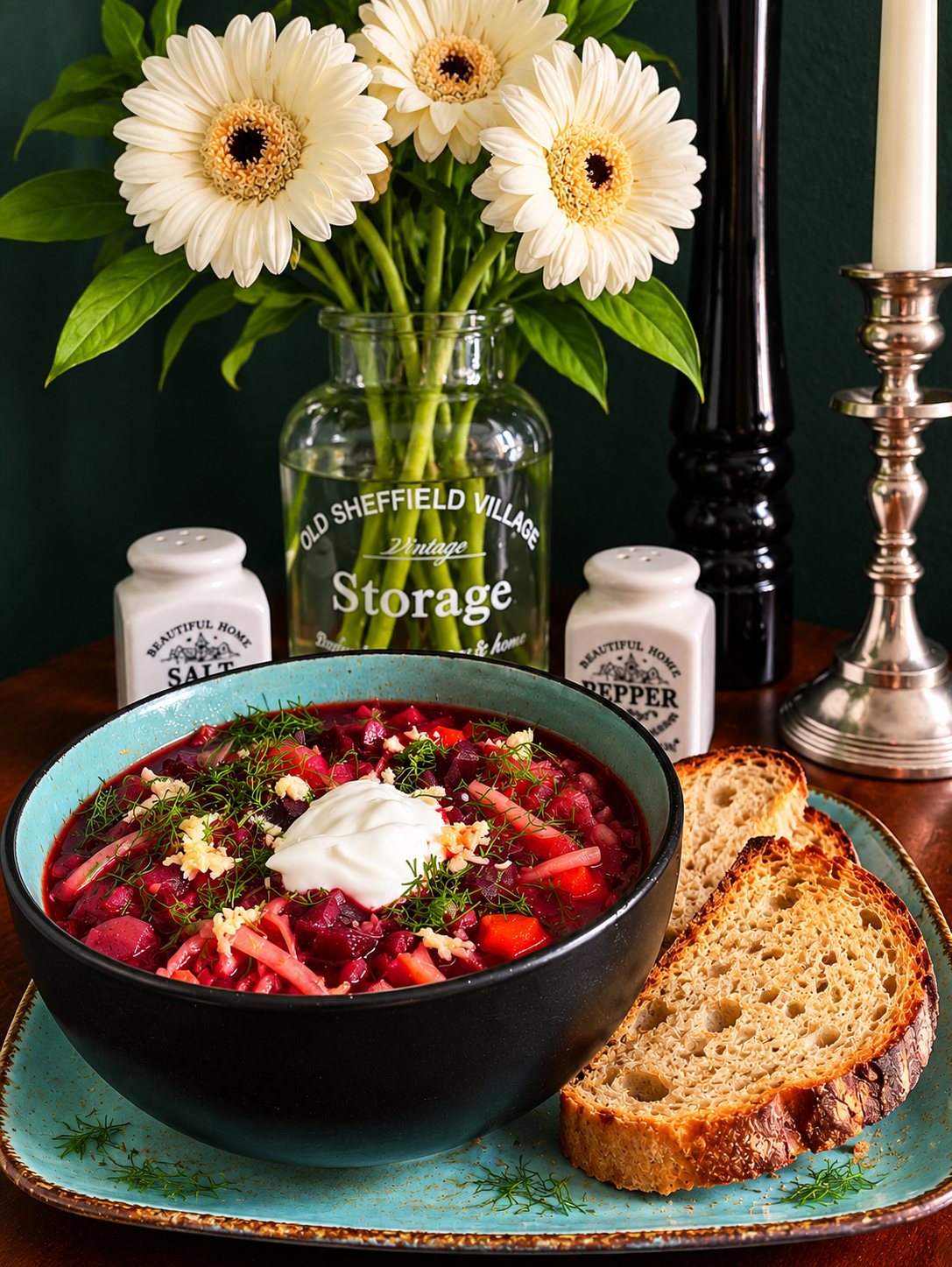
Vegan Ukrainian Borscht – Traditional Beetroot & Cabbage Soup with Dill and Sour Cream
You may also like
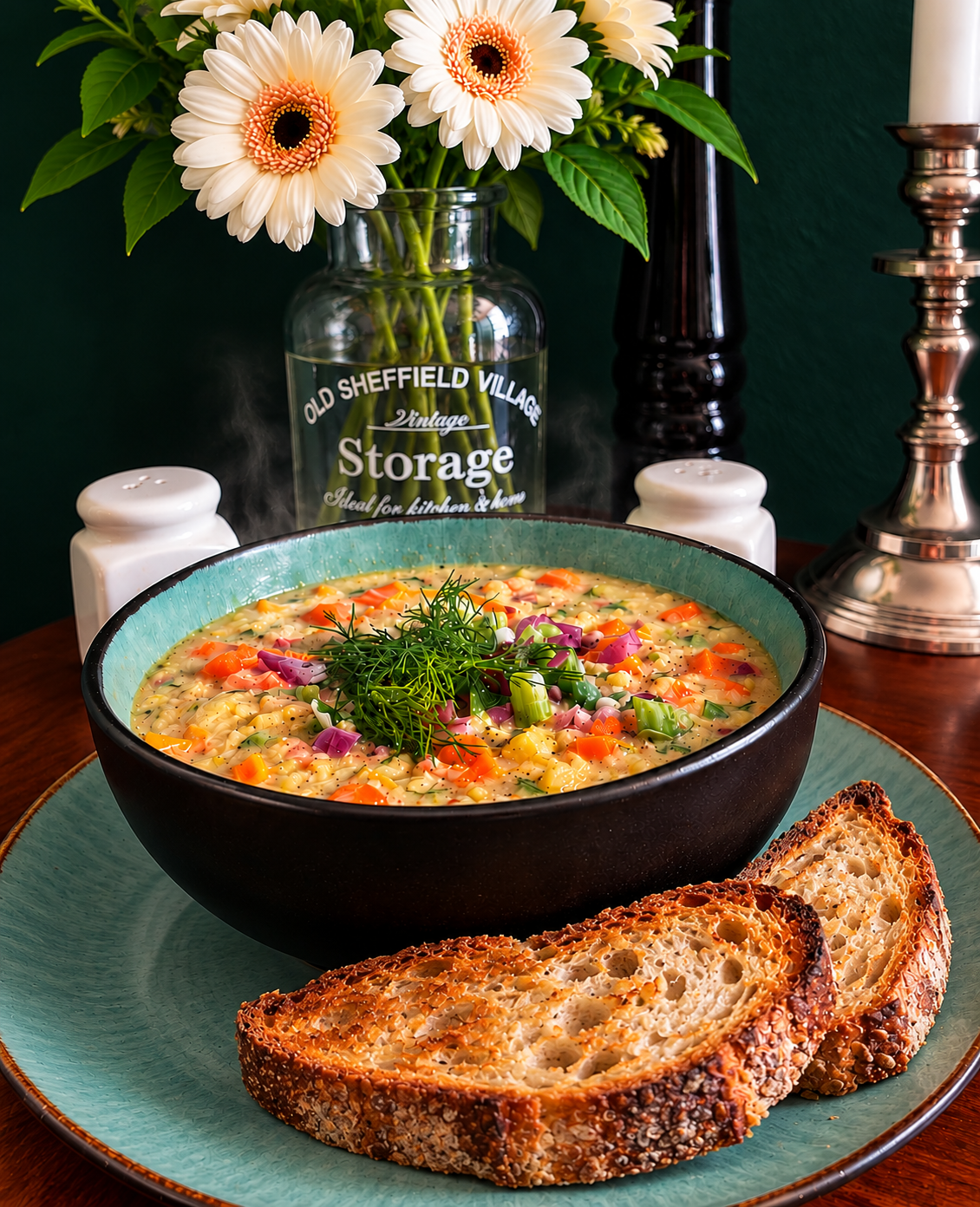
Vegan Lohikeitto – Finnish Salmon Soup with Carrot Lox
You may also like