
Via Veggie Vegan Vunderland – A Culinary Destination Beyond Borders
Not every destination on my culinary journey needs a passport. Via Veggie Vegan Vunderland is my very own little wonderland, where creativity, imagination and personal memories are just as important as the ingredients on the plate. It exists alongside the 195 countries of Via Veggie Vegan as a special destination for recipes that cannot be assigned to one particular country. Here, familiar dishes become personal creations, seasonal ingredients inspire playful food art, and the stories behind a recipe are sometimes even more meaningful than the recipe itself. Because some culinary journeys take us around the world, while others lead us straight back to the people and animals we love.
What Makes Smurfy’s Magic Pumpkin Orange Soup Special?
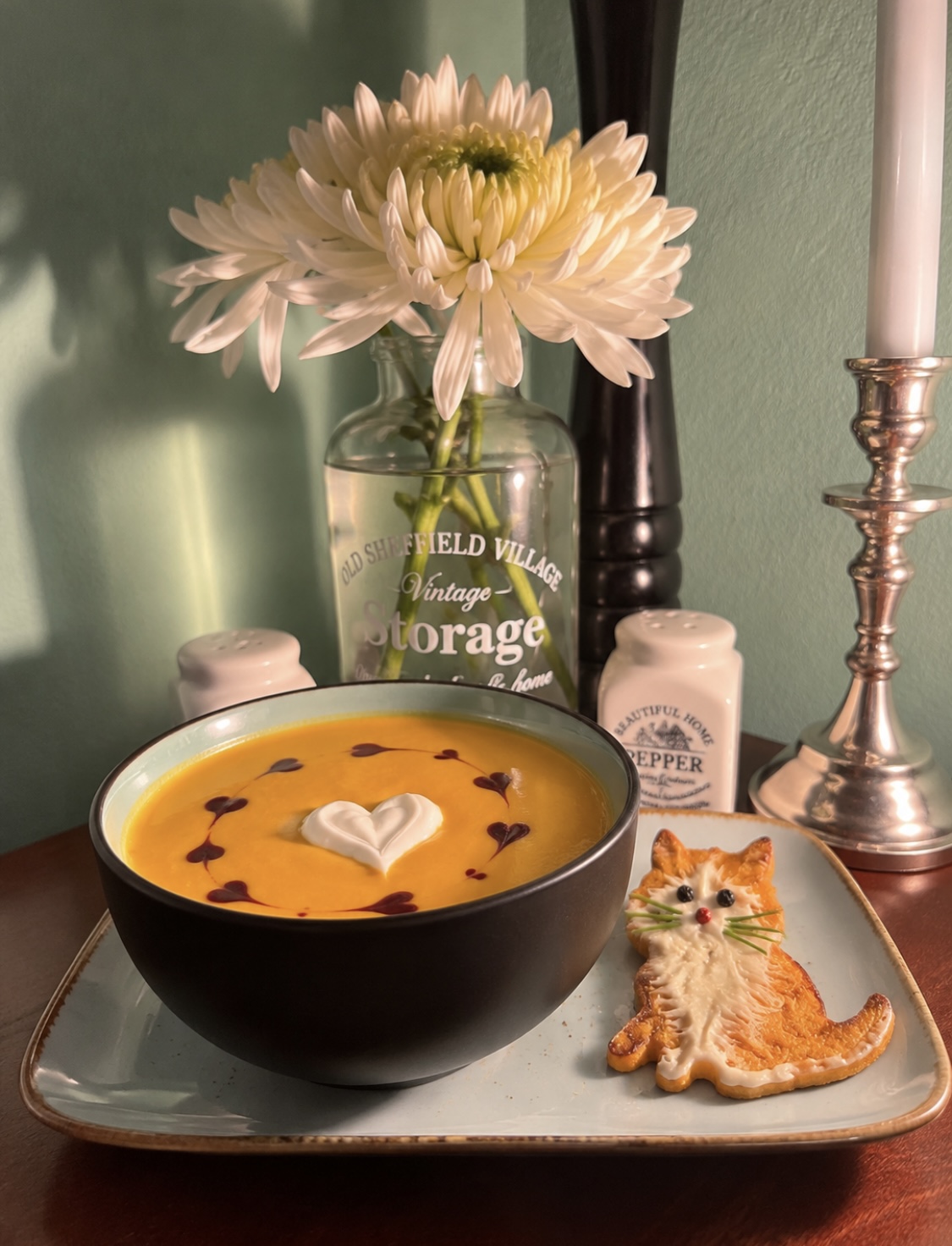
Smurfy’s Magic Pumpkin Orange Soup combines roasted Hokkaido pumpkin with fragrant Madras curry, fresh ginger, garlic and the bright citrus aroma of orange. A touch of oat cream gives the soup its beautifully velvety consistency, while vegan sour cream and nutty pumpkin seed oil add a delicious finishing touch. Homemade pumpkin fritters shaped into little cats transform the garnish into a loving tribute to Smurfy, my beloved feline companion who gave this recipe its name. Inspired by a memorable visit to Leipzig, years of experimenting in my kitchen and an extraordinary friendship during a difficult time, this completely plant-based soup is much more than autumn comfort food. It's a bowl full of love, gratitude and precious memories.
▣ Ingredients (2 servings)
- 1 medium Hokkaido pumpkin (approximately 1 kg whole, including 120 g reserved for the fritters)
- 1 yellow onion
- 2 cloves garlic
- 1 thumb-sized piece of fresh ginger
- 1 fresh orange
- 1 orange
- 1/2 tsp ground tumeric
- 1 tbsp Madras curry powder
- 1/4 tsp cayenne pepper
- 4 black peppercorns for decoration
- 4 fresh chives
- 50 ml oat creme
- 400 ml vegetable stock, just enough to barely cover the pumpkin
- 1 tsp tbsp chili oil, plus a little extra for roasting
- 2 tsp pumpkin seed oil
- 2 tbsp vegan sour cream
- 2 tbsp all-purpose flour for the pumpkin fritters
- to taste salt & freshly ground black pepper
♨ Preparation
- 8. Prepare the Hokkaido Pumpkin
Preheat the oven to 200°C (conventional heat).
Wash the Hokkaido pumpkin thoroughly, cut it into quarters and remove the seeds.
Reserve approximately 120 g of raw pumpkin flesh for the homemade pumpkin fritters.
Brush the remaining pumpkin pieces lightly with chili oil and roast for approximately 20 minutes, until they begin to soften and develop a delicious roasted aroma. - 2. Prepare the Aromatics
Finely chop the yellow onion.
Heat 1 tbsp chili oil in a large saucepan and gently sauté the onion until translucent.
Grate the garlic cloves and fresh ginger directly into the saucepan. Stir briefly until fragrant. - 3. Cook the Pumpkin Soup
Add the roasted pumpkin to the saucepan.
Pour in enough vegetable stock to barely cover the pumpkin.
Bring to a gentle simmer and cook for approximately 10 minutes, until the pumpkin is completely tender. - 4. Blend and Season
Blend the soup until smooth and velvety.
Stir in the oat cream, Madras curry powder, turmeric and cayenne pepper.
Add the freshly squeezed orange juice and approximately 1 tsp finely grated orange zest.
Season with salt and freshly ground black pepper.
Adjust the consistency with a little additional vegetable stock if necessary. - 5. Prepare the Pumpkin Fritters
Finely grate the reserved 120 g raw Hokkaido pumpkin.
Mix with approximately 2 tbsp flour and a small pinch of salt until the mixture holds together. Add a little more flour if necessary.
Shape into small, thin pumpkin fritters.
Pan-fry in a lightly oiled frying pan over medium heat until golden brown on both sides and cooked through. - 6. Garnish and Serve
Divide the hot pumpkin orange soup between two bowls.
Add a spoonful of vegan sour cream to each serving.
Drizzle with pumpkin seed oil.
Decorate with the homemade pumpkin fritters, fresh chives and black peppercorns.
Serve immediately.
Food Story
One Soup, a Pumpkin Message and a Very Unexpected Train Journey
The very first time I tasted this pumpkin soup was at the home of a very dear friend in Leipzig. I was only stopping by for half a day before catching an evening regional train to Berlin. My friend picked me up at the railway station, and we headed straight to her home, where a rather adorable surprise was waiting in the kitchen. She had apparently instructed her husband to cut the pumpkin in advance. And he had taken his assignment very seriously – with a wonderfully creative twist. Instead of simply leaving a pile of chopped pumpkin on the cutting board, he had used the pumpkin pieces to spell out “Guten Appetit” across the entire kitchen counter! I still smile when I think about it. And then came the soup. One bowl. Another bowl. And another. I simply couldn’t stop eating! By the time I boarded the completely packed regional train to Berlin, my belly was so ridiculously full and round that someone actually offered me a seat. Apparently, my enthusiasm for pumpkin soup had made me look rather pregnant! I accepted the kindness and took that unforgettable memory home with me.
How a Little Pumpkin Soup Became Smurfy’s Soup
Ever since that wonderful visit to Leipzig, I’ve been making this soup regularly, changing little things here and there, experimenting with spices and gradually turning it into my own recipe. But about two years ago, it became something far more meaningful. My beloved cat Smurfy was seriously ill with FIP, and a wonderful friend from animal rescue came to help me with his daily injections for more than three months. It was an incredibly difficult time, and her support meant more than words can express. During those months, she completely fell in love with my pumpkin soup. And somewhere between the daily injections, our conversations and the bowls of warming soup, a little running joke was born: “Oh, Smurfy has cooked pumpkin soup for me again!” From then on, it wasn’t simply my pumpkin soup anymore. It was Smurfy’s soup. And somehow, that made it taste even more special.
Made with Love, Memories and a Little Pumpkin Magic
Smurfy sadly crossed the Rainbow Bridge almost two years ago, but his soup is here to stay. Every time I prepare it, I remember my wonderful friend in Leipzig, her husband’s sweet pumpkin message, that unforgettable train journey and the incredible kindness of the friend who helped me care for Smurfy. And of course, I remember my little furry chef himself. That’s why this soup now comes with homemade pumpkin fritters shaped into tiny cats. A little tribute to the one who gave this recipe its name. Some recipes warm your stomach. Others warm your heart. This one does both. And while Smurfy may no longer be sitting beside me in the kitchen, I like to think that a little piece of his magic is still there in every bowl. Thank you, Smurfy, for all the love, the memories and the pumpkin soup.
♨ Nutrition per serving
Nutritional values are approximate and may vary depending on the ingredients and products used.
Good to Know
What Is Hokkaido Pumpkin?
Hokkaido pumpkin is a small, round winter squash with bright orange-red skin and dense, sweet flesh. It is particularly popular in European kitchens because of its rich flavor, creamy texture and convenient preparation. Unlike many other winter squash varieties, Hokkaido usually does not need to be peeled before cooking.
Why Can You Eat Hokkaido Pumpkin Skin?
Hokkaido pumpkin skin becomes tender during roasting, simmering and blending. When the pumpkin is thoroughly washed and cooked, the skin can be incorporated into soups and purées. Keeping it reduces preparation time and food waste while contributing additional plant material and dietary fiber.
Where Does Hokkaido Pumpkin Come From?
The name Hokkaido refers to Japan's northernmost main island, where the Kuri-type squash became associated with local cultivation. The squash belongs to the species Cucurbita maxima, whose domestication history traces back to South America. Its modern culinary identity therefore connects different parts of the world through agricultural history.
Why Roast Pumpkin Before Making Soup?
Roasting exposes the pumpkin to dry heat, encouraging moisture evaporation and the development of more concentrated flavors. Browning reactions can contribute additional roasted aromas, especially on exposed surfaces. Compared with boiling alone, roasting often produces a deeper and more complex flavor.
Why Does Pumpkin Become So Creamy When Blended?
Cooking softens pumpkin's plant cell structures, allowing the flesh to break down into a smooth purée. Its natural starches, soluble fiber and soft texture help create body in soups. This makes pumpkin particularly suitable for creamy plant-based recipes without requiring large amounts of added cream.
Pumpkin and Beta-Carotene
Orange pumpkin flesh contains carotenoids, including beta-carotene, which the body can convert into vitamin A as needed. Vitamin A contributes to normal vision, immune function and the maintenance of healthy skin and mucous membranes. The intense orange color of Hokkaido pumpkin reflects the presence of these naturally occurring pigments.
Why a Little Fat Helps with Carotenoid Absorption
Carotenoids are fat-soluble compounds. Consuming pumpkin with a small amount of dietary fat can help improve the absorption of certain carotenoids. The chili oil, oat cream and pumpkin seed oil in this recipe contribute fat alongside the pumpkin.
What Is Madras Curry Powder?
Madras curry powder is a spice blend associated with British interpretations of South Indian flavors. Its composition varies between manufacturers but often includes turmeric, coriander, cumin, fenugreek and chili. The name refers to Madras, now Chennai, although the standardized commercial powder should not be confused with a single traditional Indian recipe.
Why Does Madras Curry Work So Well with Pumpkin?
Pumpkin has a naturally sweet and earthy flavor that pairs beautifully with warm spices. Madras curry introduces aromatic complexity, gentle bitterness and varying degrees of heat. These qualities balance the sweetness of roasted pumpkin and the bright citrus notes of orange.
Turmeric – The Golden Spice
Turmeric is a rhizome widely used in South and Southeast Asian cuisines. Its characteristic golden color comes primarily from curcuminoids, including curcumin. Turmeric contributes earthy flavor and color to curry blends and soups.
Curcumin and Black Pepper
Curcumin has been studied for its biological properties, although its absorption by the human body is relatively limited. Piperine, a compound found in black pepper, can increase curcumin bioavailability under certain conditions. However, the effects observed in supplement studies cannot automatically be applied to ordinary culinary portions, and turmeric should not be regarded as a medical treatment.
Ginger – A Warming Aromatic Ingredient
Fresh ginger contains pungent compounds, including gingerols, that contribute to its characteristic warmth and flavor. Ginger complements pumpkin particularly well because its gentle sharpness balances the vegetable's natural sweetness. Heating also changes some of ginger's aromatic compounds, creating a rounder flavor.
Orange – Sweetness, Acidity and Freshness
Fresh orange juice contributes natural sugars, organic acids and aromatic compounds. In pumpkin soup, it brightens the flavor and balances the richness of the roasted squash and oat cream. The juice should be added carefully so the soup remains pleasantly aromatic rather than noticeably sour.
Why Use Orange Zest?
Orange zest contains aromatic oils concentrated in the outer colored layer of the peel. These oils contribute a fresh citrus fragrance without adding as much acidity as orange juice. Finely grated zest can therefore intensify the orange aroma while preserving the soup's creamy, warming character.
Orange and Vitamin C
Oranges provide vitamin C, which contributes to normal immune function, collagen formation and the protection of cells from oxidative stress. Vitamin C is sensitive to prolonged heating, so adding fresh orange juice towards the end of preparation helps limit unnecessary heat exposure.
What Is Cayenne Pepper?
Cayenne pepper is made from dried, ground chili peppers and is known for its pungent heat. Its intensity comes largely from capsaicinoids, including capsaicin. Even a small quantity can add noticeable warmth to a creamy soup.
Capsaicin – Why Chili Feels Hot
Capsaicin activates sensory receptors associated with heat and irritation. This creates the familiar burning sensation of chili peppers without necessarily increasing the food's temperature. Individual sensitivity varies, which is why the same amount of cayenne can taste mild to one person and quite spicy to another.
Oat Cream – A Plant-Based Alternative
Oat cream is a plant-based cooking product typically made with water, oats and added fat, sometimes with stabilizers or emulsifiers. It provides a mild flavor and creamy consistency without dairy ingredients. Nutritional values and cooking behavior vary depending on the product.
Vegan Sour Cream – Creaminess with a Tangy Finish
Vegan sour cream can be made from soy, oats, nuts or other plant ingredients. Its creamy texture and gentle acidity complement the sweetness of pumpkin and orange. A spoonful added at serving creates both a visual contrast and an additional layer of flavor.
Pumpkin Seed Oil – A Nutty Finishing Touch
Pumpkin seed oil is produced from pumpkin seeds and is particularly associated with culinary traditions in parts of Central Europe, including Austria and Slovenia. It has a distinctive nutty flavor and a dark green to reddish-brown appearance. In this recipe, it is used as a finishing oil rather than a cooking oil.
Pumpkin Seed Oil and Unsaturated Fats
Pumpkin seed oil contains unsaturated fatty acids, including linoleic acid and oleic acid. Replacing some saturated fat in the diet with unsaturated fat can help improve blood lipid profiles. Because oils are energy-dense, moderate portions remain appropriate even when they provide predominantly unsaturated fats.
Saturated and Unsaturated Fatty Acids
Saturated and unsaturated fats differ in their chemical structures and effects on blood cholesterol. Diets that replace a portion of saturated fats with unsaturated fats can help reduce LDL cholesterol. Plant-based products are not automatically low in saturated fat, as coconut- and palm-based ingredients can contain substantial amounts.
LDL and HDL Cholesterol – What Is the Difference?
LDL and HDL are lipoproteins that transport cholesterol through the bloodstream. Elevated LDL cholesterol contributes to atherosclerosis and increases cardiovascular risk. HDL participates in transporting cholesterol back toward the liver, but higher HDL levels do not automatically guarantee cardiovascular protection. Overall dietary patterns, physical activity and other factors influence cardiovascular health.
Why Pumpkin Fritters Need a Firm Dough
Finely grated raw pumpkin contains moisture, which can make a fritter mixture soft and difficult to shape. Flour absorbs some of that moisture and helps bind the pumpkin together. For decorative shapes such as cats, the mixture needs to be firm enough to hold distinct contours while remaining thin enough to cook through in the pan.
Why Thin Pumpkin Fritters Work Better
Thin fritters allow heat to reach the center more quickly and evenly. They also develop a larger proportion of golden surface compared with their interior. This is particularly helpful for decorative shapes, where thick sections may remain soft while delicate edges brown too quickly.
Cooking with the Whole Pumpkin – A Zero-Waste Approach
Hokkaido pumpkin is particularly suitable for low-waste cooking because its skin is edible after cooking. The flesh can be used in soups, fritters, curries and baked dishes. Pumpkin seeds can also be cleaned, dried and roasted for a crunchy snack, reducing unnecessary food waste.
Are Pumpkin Seeds Nutritious?
Pumpkin seeds provide plant-based protein, unsaturated fats and minerals such as magnesium and zinc. Their nutritional composition varies according to variety and preparation. Roasted pumpkin seeds can be used as a topping for soups, salads and other savory dishes.
Autumn Vegetables and Seasonal Cooking
Pumpkins are strongly associated with autumn harvests in many parts of Europe and North America. Their relatively good storage properties make them useful ingredients during cooler months. Seasonal cooking can encourage variety and make use of produce when it is naturally abundant.
Hokkaido – Japan's Northern Island
Hokkaido is known for its cooler climate, agricultural landscapes, volcanic mountains and extensive natural areas. The island produces a variety of crops, including potatoes, corn and pumpkins. Its agricultural traditions have helped make the Hokkaido name familiar to cooks far beyond Japan.
Japan's Red-Crowned Crane
The red-crowned crane is one of the most recognizable birds associated with Hokkaido. It inhabits wetlands and is culturally linked with longevity and good fortune in Japan. Conservation efforts have helped protect important habitats, although the species remains vulnerable to environmental pressures.
Hokkaido's Brown Bears
Hokkaido is home to a population of brown bears, which inhabit forested and mountainous regions. These animals play ecological roles as omnivores and seed dispersers. Managing interactions between bears and human communities is an important conservation and safety issue.
Autumn, Memories and the Comfort of Familiar Food
Food can become closely associated with people, places and meaningful experiences. Familiar aromas and flavors may evoke autobiographical memories because sensory processing interacts with brain systems involved in emotion and memory. A treasured recipe can therefore become more than a collection of ingredients: it can serve as a personal connection to moments and relationships that remain important over time.
Cooking as an Expression of Care
Preparing food for someone can be a meaningful way of offering comfort and companionship. During stressful or difficult periods, familiar routines such as sharing a warm meal may provide moments of connection and normality. This does not replace medical or emotional support, but it can contribute to a sense of care and togetherness.
Feline Infectious Peritonitis – What Is FIP?
Feline infectious peritonitis, commonly known as FIP, is a serious disease associated with feline coronavirus infection. It develops in a small proportion of infected cats and can affect different organs. Antiviral treatments have significantly improved outcomes for many affected cats, although veterinary diagnosis, treatment and monitoring remain essential. Smurfy's story is a personal memory, not a recommendation for any particular medical treatment.
Why Some Recipes Become Family Traditions
Recipes often develop gradually through repetition, experimentation and personal preference. Ingredients may change, cooking methods may evolve and new memories become attached to the dish. Over time, the recipe can become part of a family's or friendship group's shared history, even when its original inspiration came from somewhere else.
Zero Waste – Save Your Pumpkin Scraps
Clean, usable pumpkin flesh can be incorporated into soups, fritters or vegetable dishes. The edible Hokkaido skin can remain on the pumpkin during cooking. Pumpkin seeds may be cleaned and roasted separately. Avoid using spoiled or unsuitable trimmings.
How to Store Leftover Pumpkin Orange Soup
Cool leftover soup promptly and refrigerate it in an airtight container. Consume within approximately 2–3 days and reheat thoroughly but gently. Store the pumpkin fritters separately where possible to help preserve their texture. A splash of vegetable stock can be added if the soup thickens during storage.
You may also like
♡
You may also like
Saint Lucia – Soupe de Citrouille – Caribbean Pumpkin Curry Soup with Orange
You may also like
Brazilian Celeriac Moqueca – Vegan Moqueca de Salsão-Raiz
You may also like