Cyprus – A Mediterranean Island with a Rich Culinary Heritage
Cyprus is an island in the eastern Mediterranean, famous for its beautiful coastline, mountainous landscapes and a cuisine shaped by centuries of Greek, Turkish and wider Mediterranean influences. Olive oil, potatoes, pulses, fresh herbs, citrus fruits and sesame-based sauces play important roles in Cypriot cooking. Sharing several small dishes, known as meze, is an especially cherished part of the island's food culture.
Patátes Antinahtés – Cyprus's Famous Shaken Potatoes
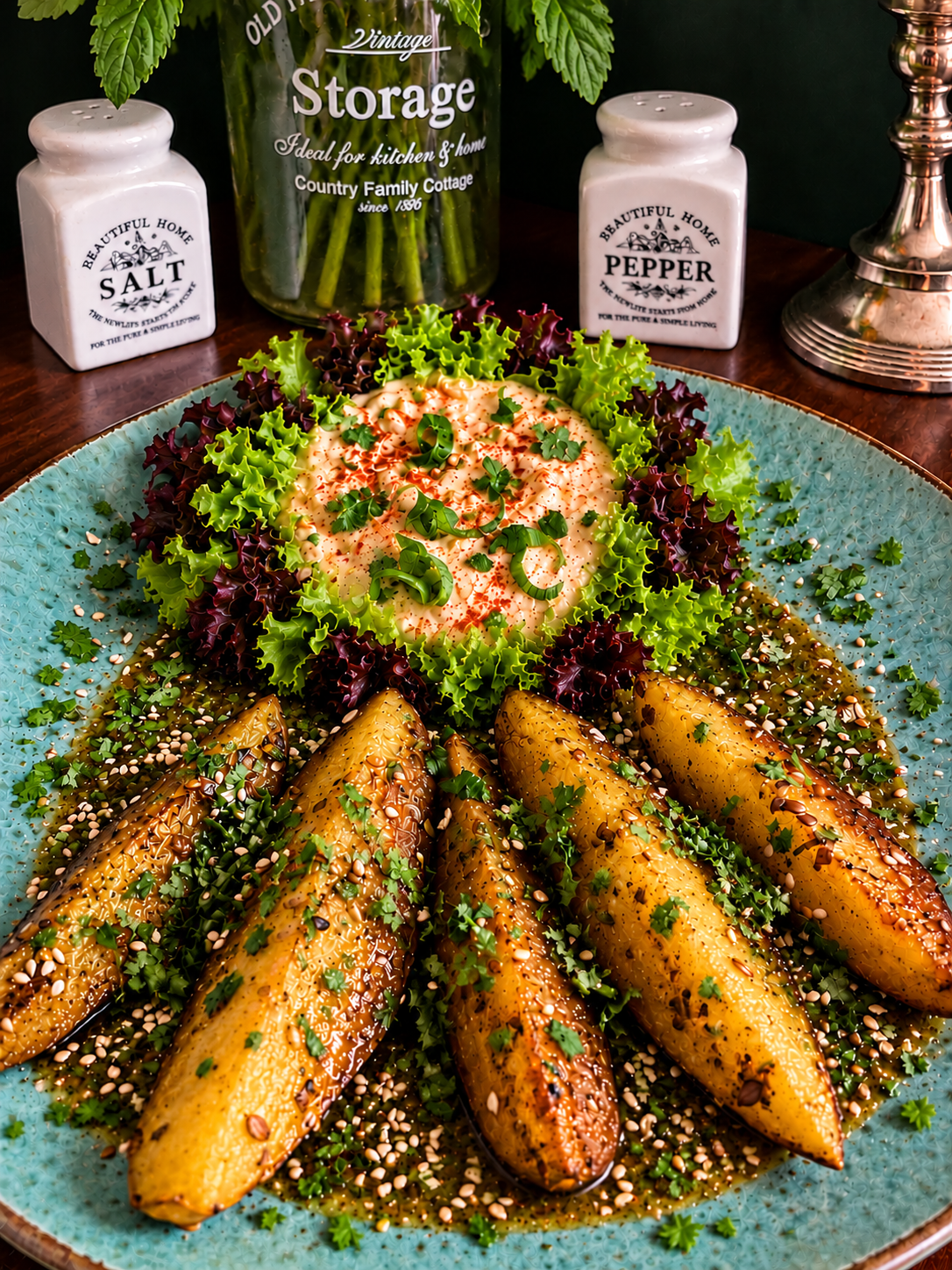
Patátes Antinahtés are a traditional Cypriot potato speciality, typically prepared with crushed coriander seeds and dry red wine. The name refers to the shaking or tossing technique used to coat the potatoes in their aromatic cooking juices. My Via Veggie Vegan interpretation replaces the wine with pomegranate juice and balsamic vinegar, roasts the potatoes in the oven and pairs them with a creamy soy yoghurt and tahini dip. The result is a colourful, completely plant-based variation inspired by this beloved Cypriot classic.
▣ Ingredients (2 servings)
- 4 medium waxy or all-purpose potatoes
- 2 cloves garlic
- 1/2 lemon
- 4 sprigs fresh coriander
- 2 springs onions
- 2 tbsp coriander seeds
- 1 tbsp black peppercorn
- 1 tsp coarse salt
- 1 tsp salt
- 2 tsp toasted sesame seeds
- to taste chili flakes
- 3 tbsp olive oil
- 1 tbsp dark balsamic vinegar
- 100 ml vegetable stock, preferably homemade
- 50 g tahini
- 200 ml unsweetened soy yoghurt
- 1 splash ice-cold water
- to taste salt & freshly ground black pepper
♨ Preparation
- 8. Prepare the Tahini Dip
Add the tahini, soy yoghurt, garlic, lemon juice, salt and a small splash of ice-cold water to a blender.
Blend until completely smooth and creamy. If the dip is still too thick, add another small splash of ice-cold water and blend again.
Taste and adjust with a little more salt, lemon juice or tahini if needed.
Transfer to the fridge and chill until ready to serve. - 2. Prepare the Potatoes
Preheat the oven to 180°C fan.
Thoroughly wash and scrub the potatoes, leaving the skins on. Cut the potatoes lengthwise into quarters.
Bring a pot of water to the boil and add the vegetable stock. Add the potato wedges and parboil for approximately 5 minutes. Drain thoroughly.
Coarsely crush the coriander seeds and black peppercorns using a mortar and pestle. - 3. Fry and Season the Potatoes
Heat the olive oil gently over medium heat – it should be hot, but never smoking.
Add the potatoes and fry, turning regularly, until lightly golden on all sides.
Add the crushed coriander seeds, black pepper and coarse salt and toast for approximately 1 minute, until wonderfully fragrant. - Add the Pomegranate Glaze
Deglaze with the dark balsamic vinegar and allow it to simmer for another minute.
Pour in the pomegranate juice and gently shake or toss the pan to coat the potatoes evenly. - 5. Roast the Potatoes
Transfer the ovenproof pan to the preheated oven.
Roast for approximately 20–30 minutes, until the potatoes are tender inside and crisp and beautifully coated on the outside.
Carefully shake the pan during roasting to redistribute the aromatic glaze. - 6. Finish the Tahini Dip
Remove the tahini dip from the fridge.
Spoon it into a serving bowl or onto fresh lettuce leaves and garnish with spring onion rings, toasted sesame seeds and a few chilli flakes. - 7. Garnish and Serve
Finish the hot potatoes generously with fresh coriander.
Arrange them on a serving plate alongside the cool tahini dip.
Scatter over a little extra toasted sesame and fresh coriander, then serve immediately.
Food Story
A Little Mediterranean Love Affair
I absolutely love Cypriot cuisine! There is something about Mediterranean cooking that makes me happy: beautiful vegetables, fresh herbs, olive oil, citrus fruits and so many wonderful flavours. Unfortunately, I have never actually been to Cyprus. Not yet, anyway! But that certainly hasn’t stopped me from bringing a little taste of the island into my kitchen. And these Cypriot Roasted Potatoes are a delicious place to start!
When Children Spread Their Wings
One of my very good friends has a son who has grown up, spread his wings and moved to Cyprus. And while that might mean she now has to travel a little farther to visit him, I see a rather delicious opportunity developing. After all, my chances of travelling to Cyprus together with my friend have suddenly improved considerably. Sometimes life opens doors in the most unexpected places – and occasionally those doors lead straight to the Mediterranean!
Potatoes, Sunshine and a Future Travel Plan
Until that day comes, I’ll continue exploring Cypriot food from my own kitchen. These fragrant Cypriot Roasted Potatoes, coated in crushed coriander seeds and a fruity pomegranate glaze, are a wonderful way to celebrate the island’s culinary traditions. And when I finally make it to Cyprus, I sincerely hope to try one of its delicious traditional potato dishes for myself. Preferably sitting somewhere in the sunshine, with a beautiful view and a very generous plate of potatoes in front of me. Some travel plans are simply too delicious to ignore!
♨ Nutrition per serving
Nutritional values are approximate and may vary depending on the ingredients and products used.
Good to Know
Why Are Potatoes So Important in Cypriot Cuisine?
Potatoes are one of Cyprus's important agricultural products, and the island is especially known for its red-soil potato-growing regions. The mineral-rich red earth of southeastern Cyprus provides favourable conditions for potato cultivation. Cypriot potatoes are appreciated for their flavour and texture and are used in roasted dishes, stews, salads and traditional family meals.
What Makes Patátes Antinahtés Different?
Unlike ordinary roasted potatoes, Patátes Antinahtés are strongly associated with crushed coriander seeds and a technique of shaking or tossing the potatoes during cooking. Traditional recipes often use dry red wine, which contributes acidity and depth. My alcohol-free version uses pomegranate juice and dark balsamic vinegar instead. It is an adaptation rather than an exact reproduction of the traditional flavour.
Coriander Seeds and Fresh Coriander – Two Distinct Flavours
Although they come from the same plant, coriander seeds and fresh coriander leaves have very different flavour profiles. The seeds taste warm, citrusy and slightly nutty, while the leaves have a fresh, green aroma. Crushing the seeds just before cooking releases more of their aromatic oils. Using both in this recipe creates a wonderful contrast between deep roasted flavours and fresh herbal notes.
Potatoes – Nutrients, Starch and Blood Sugar
Potatoes provide carbohydrates, potassium, vitamin C and dietary fibre. They are naturally low in fat and contain no cholesterol. Their effect on blood sugar depends on the variety, cooking method, portion size and accompanying foods. When cooked potatoes cool, some starch becomes resistant starch, which is less readily digested in the small intestine and can be fermented by gut bacteria. Serving potatoes with protein-rich soy yoghurt, tahini and vegetables helps create a more balanced meal.
Why Keep the Potato Skins On?
Potato skins contribute fibre, add texture and reduce unnecessary food waste. Scrub the potatoes thoroughly before cooking and remove damaged areas. Green or heavily sprouted potatoes should be discarded because they may contain elevated levels of naturally occurring glycoalkaloids. Cooking does not reliably eliminate these substances. Leaving suitable skins on also saves preparation time and gives the roasted wedges a rustic appearance.
Tahini – A Mediterranean and Middle Eastern Staple
Tahini is a paste made from ground sesame seeds and is widely used in eastern Mediterranean and Middle Eastern cuisines. It contains predominantly unsaturated fats, along with some protein, fibre and minerals such as calcium, magnesium and iron. Its exact nutritional composition depends on the sesame seeds used. Tahini is energy-dense, but even a relatively small amount provides a wonderfully rich, nutty flavour. Combined with lemon, garlic and unsweetened soy yoghurt, it creates a creamy plant-based dip.
Unsaturated Fats, Saturated Fats and Cholesterol
Olive oil and sesame seeds provide mainly unsaturated fatty acids. Replacing some saturated fats with unsaturated fats can help lower LDL cholesterol as part of a balanced diet. Persistently elevated LDL cholesterol is a recognised cardiovascular risk factor. HDL particles participate in transporting cholesterol away from tissues, although HDL levels alone do not determine cardiovascular health. The olive oil and tahini in this recipe contribute flavour and nutritional value, but also a substantial proportion of its calories.
Pomegranate Juice and Balsamic Vinegar – An Aromatic Glaze
Pomegranate juice contributes natural sweetness, acidity, ruby-red colour and plant compounds called polyphenols. Combined with balsamic vinegar, it creates a glossy glaze that clings beautifully to the potatoes. Pomegranate juice contains naturally occurring sugars and generally less fibre than whole pomegranate seeds. Balsamic vinegar may contain traces of residual alcohol from fermentation, and heating does not guarantee their complete removal. Anyone avoiding even trace amounts should check the product information or substitute lemon juice.
Why Parboil, Fry and Roast the Potatoes?
Parboiling begins softening the potato interior before roasting. Thorough draining reduces surface moisture and encourages browning. Brief pan-frying develops flavour, while the final oven-roasting stage creates golden edges and allows the pomegranate-coriander glaze to concentrate. Gently shaking the pan helps distribute the seasonings evenly. Toasted sesame seeds add a nutty finishing touch, but remember that sesame is a recognised food allergen.
Zero Waste – More Flavour, Less Waste
Leaving suitable potato skins on reduces waste, while tender coriander stems can be finely chopped and used alongside the leaves. Leftover tahini dip makes a delicious dressing for salads, roasted vegetables or grain bowls. Unused spring onions can be added to soups and stir-fries. Store leftovers promptly in the refrigerator and use them while fresh. Small kitchen habits like these help make the most of every ingredient. Zero Waste, Full Flavour!