Bolivia – Andean Traditions and the Love of Pumpkin
Bolivia is a landlocked country in South America, known for its spectacular Andean landscapes, rich Indigenous heritage and diverse regional food traditions. Potatoes, corn, legumes and squash have played an important role in local cooking for generations. In southern Bolivia, particularly around Tarija, hearty vegetable preparations reflect the region's culinary traditions. Pumpkin, known as zapallo in Spanish, is a popular ingredient in comforting dishes that combine seasonal vegetables, aromatic spices and locally available produce.
What Is Carbonada de Zapallo?
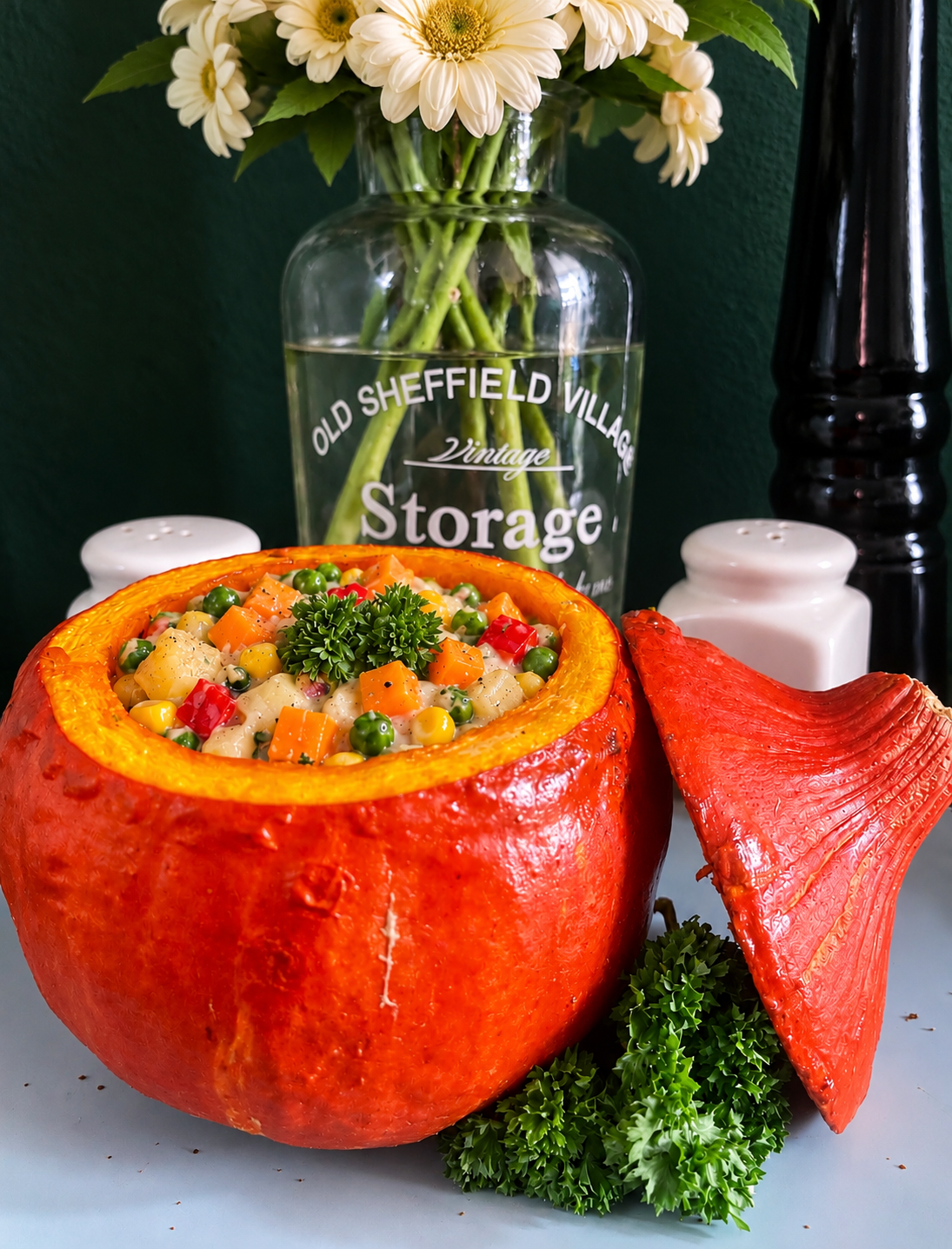
Carbonada de Zapallo is a pumpkin-based stew associated with Bolivian and broader South American culinary traditions. Related dishes, including Locro de Zapallo, combine pumpkin with ingredients such as potatoes, corn, peas and other vegetables, although recipes vary considerably between regions and households. My Via Veggie Vegan interpretation transforms this hearty vegetable stew into a colourful plant-based main course served inside two roasted Hokkaido pumpkins. Brushed with chili oil and filled with potatoes, corn, peas, aromatic vegetables, cumin, oregano and melted vegan cheese, the pumpkins become edible serving bowls. Their naturally sweet flesh and tender skin complement the savoury, spicy filling, creating a delicious zero-waste dish inspired by Bolivia.
▣ Ingredients (2 servings)
- 2 hokkaido pumpkins
- 2 tbsp chili oil
- 2 potatoes (medium sized)
- 150 g corn
- 75 g peas
- 350 ml vegetable stock
- 1 red onion
- 2 cloves garlic
- 1 tomato
- 1/2 red bell pepper
- 1 chili
- 1/2 tsp ground cumin
- 1/2 tsp dried oregano
- 2 tbsp vegetable oil
- 100 g vegan cheddar
- 1 handful fresh parsley
- to taste salt & pepper
♨ Preparation
- Prepare the Hokkaido Pumpkins
Preheat the oven to 180°C fan/convection. Wash the Hokkaido pumpkins thoroughly and cut a lid from the top of each one. Scoop out the seeds and fibrous centers, leaving the flesh and outer shells intact. Brush the insides of the pumpkins, the cut edges and the insides of the lids lightly with chili oil. For a milder version, use neutral vegetable oil instead. - Roast the Pumpkins
Place the hollowed-out pumpkins and their lids on a baking tray. Roast for approximately 30–40 minutes, depending on their size and the thickness of the flesh. Check regularly towards the end of the cooking time. A small knife should slide fairly easily into the pumpkin flesh, but the shells should remain firm enough to hold their shape when filled. Meanwhile, prepare the Carbonada. - Prepare the Vegetables
Peel the potatoes and cut them into approximately 2 cm cubes. Peel and finely dice the red onion. Finely chop the garlic and fresh chili. Dice the tomato and red bell pepper into small pieces. - Make the Sofrito
Heat the vegetable oil in a large saucepan over medium heat. Add the diced red onion and sauté gently until soft and translucent. Add the garlic, red bell pepper, tomato and fresh chili. Season with ground cumin, dried oregano, salt and freshly ground black pepper. Cook for approximately 5 minutes, stirring occasionally, until the vegetables have softened and developed a rich aromatic base. - Cook the Carbonada
Add the diced potatoes, corn and peas to the saucepan. Pour in the vegetable stock and stir thoroughly. Bring to a gentle boil, then reduce the heat, cover and simmer for approximately 20 minutes until the potatoes are tender. Stir occasionally. As the potatoes soften, gently press a few pieces against the side of the saucepan with a wooden spoon. Their natural starch helps thicken the stew and creates a creamy consistency without additional flour. - Add the Vegan Cheese
Taste the Carbonada and adjust the seasoning with salt and freshly ground black pepper. Remove the saucepan from the heat and fold in the vegan cheese. Cover and allow the filling to rest for approximately 2 minutes so the cheese can soften and melt into the hot vegetables. Stir gently until creamy and evenly combined. - Fill the Roasted Pumpkins
Carefully remove the roasted Hokkaido pumpkins from the oven once their flesh is tender but their shells are still holding their shape. Place each pumpkin on a serving plate. Spoon the hot Carbonada generously into the hollowed-out pumpkins, filling them almost to the rim. - Garnish and Serve
Roughly chop the fresh parsley and scatter it over the filling. Place the roasted pumpkin lids alongside the pumpkins or slightly on top. Serve immediately while the filling is hot. The tender Hokkaido flesh and softened skin can be eaten together with the vegetable stew.
Food Story
The Pumpkin and I – A Never-Ending Love Story
Some love stories have a happy ending. Mine apparently has no ending at all! As long as there are pumpkins in the world, there will always be another recipe I simply HAVE to try. Roasted, stuffed, mashed, turned into soup or even transformed into spaghetti – I thought I’d explored just about every possibility. But then my culinary journey brought me to Bolivia and its Carbonada de Zapallo, and suddenly my beloved pumpkin became an edible serving bowl. A pumpkin filled with delicious food? How could I possibly resist? Apparently, my pumpkin obsession has officially reached a whole new level!
Double Pumpkin, Double Happiness
For this Via Veggie Vegan creation, I roasted two beautiful little Hokkaido pumpkins, brushed them with chili oil and filled them with a colourful mixture of potatoes, corn, peas, red onion, garlic, tomato, bell pepper and fresh chili. A little cumin, some oregano and melted vegan cheese turned everything into a wonderfully creamy, spicy stew. And because one pumpkin per serving apparently wasn’t enough, I even came up with the idea of adding extra pumpkin flesh to the filling. Pumpkin inside a pumpkin! Some might call that excessive. I call it commitment. Team Spicy certainly approves, and Team Garlic wasn’t about to miss this party either!
No Bowl to Wash, No Pumpkin Left Behind
And the best part? You can eat the entire creation, including the tender Hokkaido flesh and its softened skin. Just grab a spoon, dig into the colourful filling and scrape a little roasted pumpkin from the sides with every bite. Sweet, savoury, spicy, creamy – everything I love in one edible package. No ordinary serving bowl, hardly any waste and absolutely no reason to stop loving pumpkins. Bolivia, you’ve just added another delicious chapter to my never-ending pumpkin romance. And something tells me the next chapter is already waiting in my kitchen. Via Veggie Vegan – A Culinary Journey Around the World.
♨ Nutrition per serving
Nutritional values are approximate and may vary depending on the ingredients and products used.
Good to Know
Pumpkin in Bolivian and Andean Food Culture
Pumpkins and squash have been cultivated in the Americas for thousands of years and remain important ingredients in Andean cooking. In Bolivia, zapallo is used in hearty dishes alongside potatoes, corn, legumes and aromatic vegetables. Related preparations, such as Locro de Zapallo, reflect culinary traditions shared across several South American countries. This Carbonada de Zapallo is a Bolivian-inspired interpretation, with roasted Hokkaido pumpkins serving as edible bowls rather than representing one definitive traditional preparation.
What Does Carbonada de Zapallo Mean?
The Spanish word zapallo refers to pumpkin or squash, while carbonada describes a family of hearty stews found in parts of South America. Recipes vary between countries, regions and households, with different combinations of vegetables, seasonings and sometimes meat. This Via Veggie Vegan version focuses entirely on plant-based ingredients, combining potatoes, corn, peas, tomatoes, peppers and aromatic spices in a creamy vegetable filling.
Hokkaido Pumpkin – An Edible Bowl with Natural Sweetness
Hokkaido pumpkins are particularly suitable for stuffed pumpkin recipes because their skin becomes tender and edible when cooked. Their naturally sweet, slightly nutty flesh complements savoury ingredients and spicy seasonings. Roasting the pumpkins separately allows the flesh to soften while the outer shells retain enough structure to hold the filling. Choosing two small, similarly sized pumpkins helps ensure even cooking and creates attractive individual portions.
Beta-Carotene – The Secret Behind Pumpkin's Orange Colour
The vibrant orange colour of pumpkin comes from natural pigments called carotenoids, particularly beta-carotene. The body can convert beta-carotene into vitamin A, which contributes to normal vision, immune function and the maintenance of healthy skin. Beta-carotene is fat-soluble, meaning that consuming pumpkin with some dietary fat can improve its absorption. The chili oil used to brush the Hokkaido pumpkins therefore contributes both flavour and a useful nutritional function.
Potatoes, Corn and Peas – A Nourishing Combination
Potatoes, corn and green peas are important ingredients in many South American vegetable dishes. Potatoes provide carbohydrates and potassium, corn contributes carbohydrates and carotenoids such as lutein and zeaxanthin, and green peas supply dietary fibre and plant-based protein. Together, they create a filling vegetable stew with different textures and flavours. Their combination also makes the Carbonada satisfying without requiring meat or other animal-derived ingredients.
Cumin, Oregano and Chili – Building Layers of Flavour
Ground cumin adds earthy warmth, while dried oregano contributes a slightly herbal, aromatic note. Fresh chili provides heat and balances the natural sweetness of the pumpkin and corn. Cooking these seasonings with onion, garlic, tomato and red bell pepper creates a flavourful base for the stew. The intensity of fresh chili varies considerably, so the amount can be adjusted according to personal preference. My version reaches Heat Level 3/4 – Hot, making it a perfect choice for Team Spicy!
Why Potatoes Naturally Thicken the Stew
Potatoes contain starch that softens and gelatinises during cooking. Gently pressing a few tender potato pieces against the side of the saucepan releases starch into the vegetable stock, helping create a thicker, creamier consistency. This technique avoids the need for additional flour or starch. The result is a hearty vegetable filling that holds together beautifully inside the roasted pumpkins without becoming overly liquid.
Vegan Cheese – Creaminess Without Dairy
A melting vegan cheese alternative adds richness and a creamy texture to the hot Carbonada. Plant-based cheese products may contain different combinations of vegetable oils, starches, nuts or plant proteins, and their nutritional composition varies considerably. Some alternatives contain relatively high amounts of saturated fat or salt, so checking the nutrition label can be useful. Adding the cheese after removing the saucepan from the heat allows it to soften gently without unnecessary prolonged cooking.
Dietary Fibre and the Benefits of a Vegetable-Rich Meal
Pumpkin, potatoes, corn, peas, onions and peppers all contribute dietary fibre to this dish. Fibre supports normal bowel function and forms an important part of a varied, balanced diet. The vegetables also provide different vitamins, minerals and naturally occurring plant compounds. The exact nutritional values depend on the pumpkin size, the amount of edible flesh consumed and the vegan cheese alternative used. Enjoying the roasted pumpkin together with the filling makes this meal especially satisfying.
Zero Waste – Use the Entire Hokkaido Pumpkin
One of the best features of this recipe is its edible presentation. The roasted Hokkaido flesh and tender skin can be enjoyed together with the vegetable filling, reducing the need for a separate serving bowl. Additional pumpkin flesh removed while shaping the opening can be diced and added to the stew. The seeds can also be cleaned, dried and roasted separately for a crunchy snack. Refrigerate leftover filling promptly in an airtight container and consume it within approximately two days. Less waste, more flavour – exactly the Via Veggie Vegan philosophy!