
India – A Land of Spices and Culinary Traditions
India is a country of extraordinary culinary diversity, shaped by regional traditions, climate, agriculture, history and centuries of cultural exchange. From the aromatic dishes of North India to the coconut-rich cuisines of the south, spices play an important role in creating distinctive flavors. Cumin, coriander, turmeric, ginger, garlic and countless spice blends appear in a wide variety of regional preparations. Chickpeas are another important ingredient in Indian cooking, used in curries, snacks, salads, stews and soups. Their versatility makes them particularly suitable for satisfying plant-based dishes.
Chana Shorba – Indian Chickpea Soup
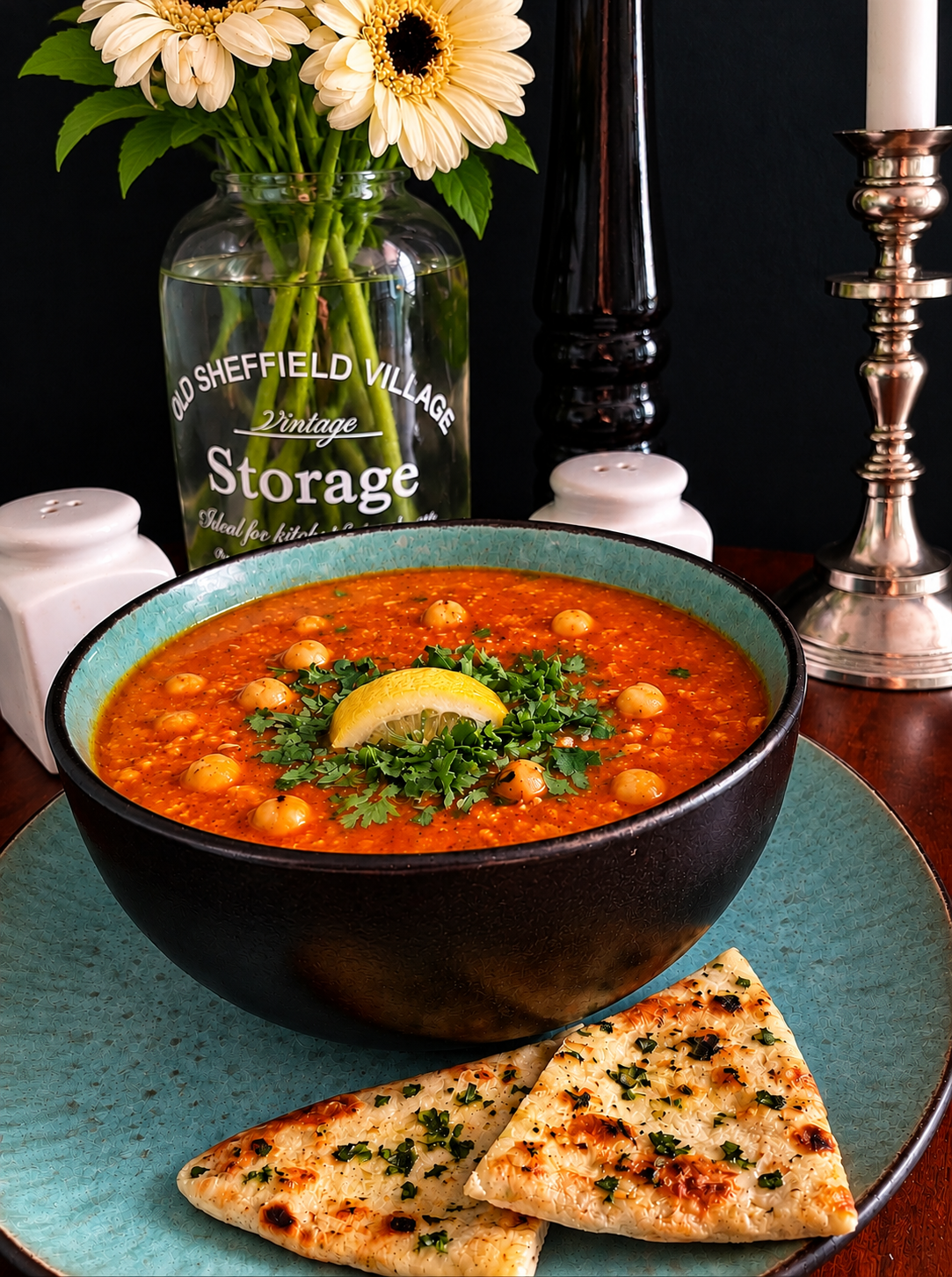
Chana means chickpeas, while shorba refers to soup or broth. Chana Shorba, also known as Chane Ka Shorba, is an Indian-style chickpea soup that can be prepared in several ways. Some versions are smooth and creamy, while others contain whole chickpeas in a fragrant broth. This Via Veggie Vegan interpretation combines chickpeas, tomatoes, onion, garlic, ginger, chili and aromatic spices. Blending a small portion of the soup creates natural creaminess without dairy or added cream. Fresh coriander and lemon bring brightness to the finished dish, while homemade Garlic Naan turns the soup into a delicious, satisfying meal.
▣ Ingredients (2 servings)
- 1 can chickpeas, approximately 240 g drained weight
- 1 onion
- 2 cloves garlic
- 2 cm fresh ginger
- 1 red chili
- 200 g canned chopped tomatoes
- 1 tsp tomato paste
- 1/2 lemon
- 1-2 cloves garlic, for the Naan topping
- 1 tsp cumin seeds
- 1/2 tsp ground coriander
- 1/2 tsp ground tumeric
- 1/2 tsp garam masala
- 1/2 tsp Madras curry powder
- 3,5 g dry yeast
- 1 tsp sugar
- 1/2 tsp salt, for the Naan dough
- 1 bunch fresh coriander
- 300 g wheat or spelt flour, Type 630, for the Naan
- 1 tbsp vegetable oil
- 400 ml vegetable stock
- 120 ml lukewarm water, for the Naan
- 60 g unsweetened vegan yogurt
- 1 tbsp olive oil or rapeseed oil, for the Naan
- 2 tbsp vegan butter alternative, for the Naan topping
- to taste salt & freshly ground black pepper
♨ Preparation
- 1. Prepare the Naan Dough
Combine the lukewarm water, sugar and dry yeast in a mixing bowl.
Leave for approximately 5 minutes until the yeast begins to activate and the mixture becomes slightly foamy.
Add the flour, salt, vegan yogurt and oil.
Knead for approximately 5–10 minutes until a smooth, supple dough forms.
Cover the bowl with a clean kitchen towel and leave the dough in a warm place for approximately 1 hour, or until roughly doubled in size. - 2. Prepare the Chickpeas
Drain the canned chickpeas, reserving the liquid for another recipe if desired.
Rinse the chickpeas thoroughly under cold running water.
Allow them to drain.
Set aside a few whole chickpeas for garnish if desired. - 3. Prepare the Vegetables and Aromatics
Peel and finely dice the onion.
Peel and finely chop the garlic cloves.
Peel and finely chop or grate the fresh ginger.
Slice the chili into thin rings.
Wash the fresh coriander and shake off excess water.
Finely chop the coriander, including the tender stems.
Wash the organic lemon and finely grate the zest.
Set everything aside. - 4. Toast the Cumin Seeds
Heat the vegetable oil in a medium-sized saucepan over medium heat.
Add the whole cumin seeds.
Toast briefly, stirring gently, until fragrant.
Avoid burning the seeds. - 5. Sauté the Onion
Add the finely diced onion.
Sauté until softened and lightly golden.
Stir regularly to prevent sticking. - Add the Garlic, Ginger and Chili
Add the chopped garlic, ginger and sliced chili.
Cook briefly, stirring continuously, until the aromatics release their fragrance. - 7. Add the Ground Spices
Add the ground coriander, turmeric and Madras curry powder.
Stir gently until the spices become fragrant.
Avoid overheating, as ground spices can burn quickly.
Reserve the garam masala for the end of cooking. - 8. Add the Tomato Paste
Stir in the tomato paste.
Cook briefly while stirring continuously.
This helps deepen the tomato flavor and combine the spices with the aromatic base. - 9. Add the Chickpeas and Tomatoes
Add the drained chickpeas and canned chopped tomatoes.
Stir thoroughly until the chickpeas are coated with the aromatic tomato and spice mixture. - 10. Add the Vegetable Stock
Pour in the vegetable stock.
Stir well and bring the soup to a boil.
Reduce the heat to a gentle simmer. - 11. Simmer the Chana Shorba
Allow the soup to simmer uncovered for approximately 15–20 minutes.
Stir occasionally.
The tomatoes should soften further, the broth should reduce slightly and the chickpeas should absorb the aromatic flavors. - 12. Blend a Small Portion
Carefully remove one small ladleful of the hot soup.
Transfer it to a heatproof container suitable for blending.
Blend until smooth, taking appropriate precautions with the hot liquid. - 13. Thicken the Soup Naturally
Return the blended mixture to the saucepan.
Stir thoroughly.
The puréed chickpeas will naturally thicken the broth while leaving most of the chickpeas whole.
If the soup becomes too thick, add a small splash of hot vegetable stock or water. - 14. Finish with Garam Masala and Lemon
Switch off the heat.
Stir in the garam masala.
Add the freshly grated lemon zest and a small squeeze of fresh lemon juice.
Cover the saucepan and allow the soup to rest briefly so the flavors can develop. - 15. Season the Soup
Season with salt and freshly ground black pepper.
Taste and adjust the seasoning if necessary.
Add more lemon juice gradually if you prefer a brighter flavor. - 16. Add the Fresh Coriander
Stir most of the chopped fresh coriander into the soup shortly before serving.
Reserve a little for garnish.
Avoid prolonged boiling after adding the coriander to preserve its fresh aroma. - 17. Shape the Garlic Naans
Transfer the risen dough to a lightly floured work surface.
Knead briefly and divide into six equal portions.
Roll each portion into a small oval or teardrop shape approximately 5 mm thick.
Keep the remaining dough portions covered while shaping the Naans. - 18. Cook the Garlic Naans
Heat a dry non-stick or cast-iron frying pan over medium-high to high heat.
Place one Naan in the hot pan and cook for approximately 2–3 minutes until bubbles appear and the underside develops dark golden spots.
Turn carefully and cook for another 1–2 minutes.
Repeat with the remaining dough portions.
Alternatively, preheat the oven and a baking tray to 230–250°C conventional heat.
Bake the Naans for approximately 5–7 minutes until puffed and lightly browned. - 19. Prepare the Garlic Butter
Melt the vegan butter alternative gently.
Add the finely chopped or pressed garlic.
Stir in fresh coriander or other finely chopped herbs.
Brush the freshly cooked Naans generously with the garlic mixture.
Keep them warm beneath a clean kitchen towel until serving. - 20. Serve the Chana Shorba
Divide the hot chickpea soup between two bowls.
Garnish with the reserved whole chickpeas, fresh coriander and optional chili rings.
Add a small lemon wedge.
Serve immediately with warm homemade Garlic Naan.
Allow any remaining Naans to cool completely before freezing.
Food Story
India – My Personal Spice Paradise
For me, India is the land of a thousand spices. Or perhaps ten thousand. I honestly wouldn’t be surprised. Every time I travel there, I fall in love with the aromas all over again. Cumin, coriander, cardamom, turmeric, cinnamon, cloves, chili – the list seems endless. And naturally, I always end up buying far more spices than I originally intended. Unfortunately, it’s been quite a long time since my last visit. But one particular shopping experience has stayed with me.
Shopping for Spices – With a Cow in the Courtyard
During one of my trips to India, I found myself buying spices from a local family in Varanasi, the famous city on the banks of the Ganges. Not in a fancy shop or a colorful tourist market, but right in their courtyard. And sharing that courtyard was a cow! A real, living, breathing cow, casually keeping me company while I stocked up on Indian spices. For someone who loves animals as much as I do, that was an added bonus. Only in India could a simple spice-shopping trip turn into such a memorable little adventure!
A Very Generous Tourist Price
Now, looking back, I’m fairly certain I paid considerably more than the local price. Let’s just say my bargaining skills weren’t quite as impressive as my enthusiasm for spices. But when I compared what I’d spent with the prices back home in Germany, it was still a bargain. The family earned some extra money, I came home with wonderful spices, and the cow provided excellent company. A win-win situation, if you ask me. Although the cow probably had no idea she’d been part of a business transaction.
Back Home, the Spice Adventure Continues
That is one of the things I love most about cooking Indian food. A handful of spices can transform simple ingredients into something extraordinary. Take this Chana Shorba: chickpeas, tomatoes, onion, ginger, garlic and chili. Nothing complicated. But add toasted cumin, turmeric, coriander, Madras curry powder and garam masala, and suddenly the whole kitchen smells like a little Indian spice market. Well, almost. Sadly, there’s no cow in my kitchen.
Chickpeas, Coriander and Garlic Naan – What More Could I Want?
I like my Chana Shorba somewhere between chunky and creamy. Most of the chickpeas stay whole, while a small blended portion gives the tomato broth a lovely texture. Then comes plenty of fresh coriander – naturally, because Team Coriander is always welcome in my kitchen – followed by lemon and homemade Garlic Naan. And as I sit down to eat, I can’t help thinking about that courtyard in Varanasi. Wonderful spices, a lovely family, a cow and a slightly overenthusiastic tourist. Some travel memories are simply priceless. Even when the spices weren’t.
♨ Nutrition per serving
Nutritional values are approximate and may vary depending on the ingredients and products used.
Good to Know
What Is Chana Shorba?
Chana Shorba is an Indian-style chickpea soup made with chickpeas, vegetables and aromatic spices. The name is also written as Chane Ka Shorba. Chana refers to chickpeas, while shorba describes a soup or broth. Recipes vary widely, with some versions blended until smooth and others retaining whole chickpeas. This Via Veggie Vegan version combines both textures by blending only a small portion of the soup.
Shorba – A Soup Beyond India
The word shorba is connected to a wider family of soup-related terms found in Persian, Arabic and other languages. Related culinary traditions extend across South Asia, Central Asia and the Middle East. Depending on the region and recipe, shorba can describe a clear broth, a vegetable soup or a more substantial preparation. The term reflects centuries of cultural and culinary exchange rather than a dish belonging exclusively to one country.
Chana and Kala Chana – What's the Difference?
Chana is a general term for chickpeas, but Indian cooking uses several varieties. Kabuli Chana refers to the larger, pale-colored chickpeas commonly sold canned in European supermarkets. Kala Chana refers to smaller, darker chickpeas with a firmer texture and a more earthy flavor. Both can be used in soups and curries, although cooking times and textures differ. This recipe uses pale Kabuli-style chickpeas from a can.
Why Are Chickpeas So Nutritious?
Chickpeas provide plant-based protein, complex carbohydrates, dietary fiber and several important minerals, including iron, magnesium and phosphorus. They also contain folate, which contributes to normal cell division. Their combination of protein and fiber can make meals more satisfying. As with other legumes, their nutritional value depends on the portion size and preparation method. Canned chickpeas are a convenient option, and rinsing them can help reduce some of the sodium from the canning liquid.
Whole Spices vs. Ground Spices
Whole and ground spices behave differently during cooking. Whole cumin seeds are added to hot oil to release their aromatic compounds gradually. Ground spices have a larger exposed surface area, allowing them to release flavor quickly but also making them more vulnerable to burning. Adding ground coriander, turmeric and Madras curry powder after the onion, garlic and ginger helps develop their aroma without exposing them to excessive heat.
What Is Madras Curry Powder?
Madras curry powder is a commercially popular spice blend associated with South Indian-inspired flavors. Its ingredients vary between manufacturers but commonly include coriander, cumin, turmeric, chili and other aromatic spices. Despite the name, it is not one standardized traditional blend used throughout Chennai, formerly known as Madras. In this soup, it contributes color, warmth and additional complexity. Its heat level depends on the particular product.
Why Add Garam Masala at the End?
Garam masala is an aromatic Indian spice blend that may contain ingredients such as cumin, coriander, cinnamon, cardamom, cloves and black pepper. Its composition varies between regions and households. Adding it after switching off the heat helps preserve some of its more delicate aromatic notes. This is particularly effective in a soup where the finished fragrance is just as important as the underlying spice base.
Why Blend Only Part of the Soup?
Cooked chickpeas contain starch and other components that help thicken a liquid when blended. Puréeing a small portion of Chana Shorba creates a creamier broth while leaving most of the chickpeas intact. This provides a pleasant contrast between smooth and chunky textures. It also avoids the need for added flour, dairy or plant-based cream. The same technique works well with many other legume-based soups.
What Is Aquafaba?
Aquafaba is the liquid left over from cooking chickpeas and other legumes. The liquid from canned chickpeas can often be used as a plant-based alternative to egg whites in certain recipes. Its mixture of dissolved starches, proteins and other compounds gives it useful foaming, binding and thickening properties. Aquafaba can be whipped for vegan mousses and meringues or used in selected baking recipes. Its performance varies depending on the chickpeas and the concentration of the liquid. Refrigerate unused aquafaba promptly or freeze it in small portions for later use.
Zero Waste – Use Every Ingredient
There are several simple ways to reduce food waste when preparing Chana Shorba. Save the chickpea liquid for another recipe, use the tender stems of fresh coriander together with the leaves, and freeze any extra lemon zest. Leftover soup can be refrigerated promptly and used within approximately 2–3 days. If it thickens during storage, add a little vegetable stock when reheating. The Garlic Naan recipe makes six small breads, so any extras can be cooled completely and frozen for future meals. One batch of dough, several delicious dinners!
You may also like
♡
You may also like
Moroccan Carrot Soup – Vegan Shorba al-Ghazar
You may also like
Vegan Palak Shorba – Indian Spinach Soup with Garlic Naan
You may also like