
Poland – A Country of Hearty Traditions and Regional Cuisine
Poland is a Central European country with a rich culinary heritage shaped by regional traditions, seasonal produce and generations of home cooking. Polish cuisine is particularly well known for its comforting soups, potato dishes, cabbage preparations, dumplings and hearty stews. Vegetables such as carrots, potatoes, onions, beetroot and kohlrabi have long played an important role in everyday meals. From the Baltic coast to the mountainous south, Polish cooking celebrates familiar ingredients transformed into satisfying dishes that bring families together around the table.
Silesian Oberiba – A Traditional Kohlrabi Soup
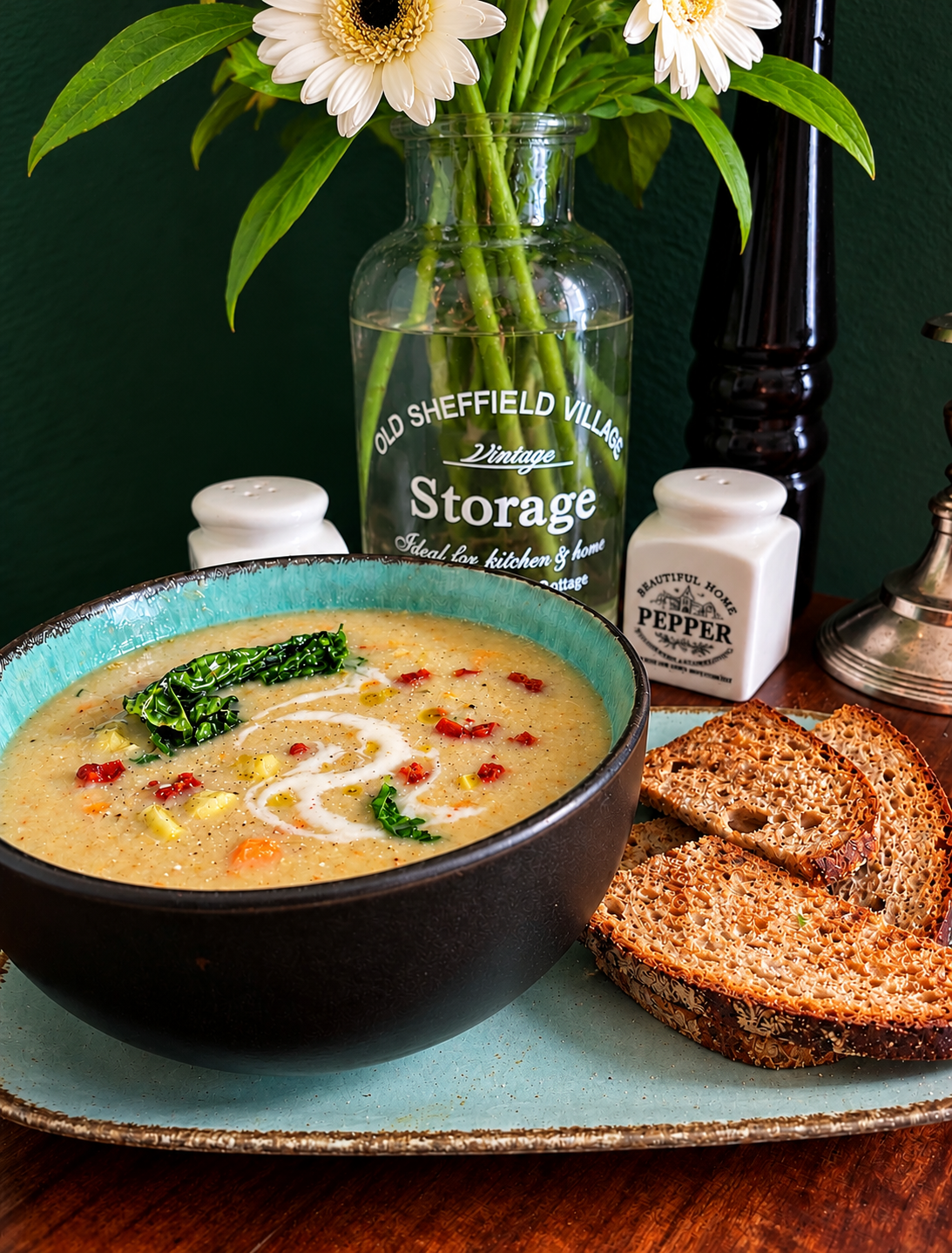
Oberiba is a regional name associated with kohlrabi in Silesian culinary traditions. Kohlrabi soup, known more generally in Polish as zupa z kalarepy, is a rustic vegetable preparation that can feature tender kohlrabi, potatoes, carrots, broth and cream. In traditional versions, meat-based broth may provide additional depth, while the tender young kohlrabi leaves can be cooked alongside the vegetables. My Via Veggie Vegan interpretation replaces animal-based ingredients with homemade vegetable broth, oat cream and vegan ham cubes. Crispy kohlrabi leaves and a little vegan sour cream give this comforting Silesian-inspired soup a delicious finishing touch.
▣ Ingredients (2 servings)
- 1 large kohlrabi, approximately 350–400 g, including fresh young green leaves
- 2 medium potatoes, approximately 300 g, preferably waxy
- 1 carrot
- 1/2 onion
- 2 sprigs fresh parsley
- 1 pinch freshly grated nutmeg
- 50 g vegan ham cubes
- 1 tsp plain wheat flour
- 1 tbsp vegan butter alternative
- 1 tsp neutral vegetable oil, for frying the kohlrabi leaves
- 750 ml strong homemade vegetable broth
- 4 tbsp oat cream, approximately 60 ml
- 1 tbsp vegan sour cream, for garnish
- 2 slices rustic bread, preferably lightly toasted (optional)
- to taste salt& freshly ground black pepper
♨ Preparation
- Prepare the Kohlrabi
Wash the kohlrabi thoroughly and remove the leaves. Set aside a few attractive, tender leaves for the crispy garnish. Finely slice the remaining young leaves. Peel the kohlrabi, removing any tough or woody areas, particularly around the base. Cut the tender flesh into bite-sized cubes. - Prepare the Remaining Vegetables
Peel the potatoes and carrot and cut them into small, evenly sized cubes. Finely dice the onion. Wash and chop the fresh parsley. - Sauté the Vegetables
Melt the vegan butter alternative in a large saucepan over medium heat. Add the finely diced onion and sauté until translucent. Add the kohlrabi, potato and carrot cubes and cook for approximately 3–4 minutes, stirring occasionally. - Add the Homemade Vegetable Broth
Pour the hot homemade vegetable broth into the saucepan. Add the finely sliced young kohlrabi leaves and stir gently. Bring to a boil, then reduce the heat and cover with a lid. - Simmer the Soup
Allow the vegetables to simmer gently for approximately 15–20 minutes, until the kohlrabi, potatoes and carrots are tender but still hold their shape. - Prepare the Creamy Thickener
In a small bowl, whisk the flour together with the oat cream until completely smooth and free from lumps. If necessary, add a spoonful of cool water to create a pourable mixture. - Thicken the Soup
Slowly pour the oat cream and flour mixture into the gently simmering soup while stirring continuously. Simmer for another 2–3 minutes, allowing the flour to cook through and the broth to thicken slightly. The soup should become delicately creamy while retaining its vegetable pieces. - – Prepare the Vegan Ham Cubes
Place the vegan ham cubes in a non-stick frying pan and cook over medium heat until lightly browned and aromatic. Stir occasionally to prevent burning. Remove from the pan and set aside. - Crisp the Kohlrabi Leaves
Wash and thoroughly dry the reserved kohlrabi leaves. Remove any particularly tough stems and tear larger leaves into manageable pieces. Heat the neutral vegetable oil in a frying pan over medium heat. Add the leaves and fry briefly, turning carefully, until they become lightly crisp around the edges. Transfer to a plate and season with a small pinch of salt. - Season the Soup
Remove the saucepan from the heat. Season with salt, freshly ground black pepper and a generous pinch of freshly grated nutmeg. Stir in a little of the chopped parsley. - Arrange the Garnish
Divide the hot soup between two bowls. Scatter the golden vegan ham cubes over the surface and add the crispy kohlrabi leaves. Divide the tablespoon of vegan sour cream between the bowls and gently swirl it into the soup. - Serve
Finish with the remaining fresh parsley and a little freshly ground black pepper. Serve immediately, accompanied by lightly toasted rustic bread if desired.
Food Story
Kohlrabi – One of My Favourite Vegetables
Some vegetables will always have a special place in my kitchen, and kohlrabi is definitely one of them. I absolutely love its delicate sweetness, slightly nutty flavour and wonderful versatility. Whether it’s roasted, sautéed, served raw or transformed into a comforting soup, kohlrabi never disappoints me. So when I came across this Silesian-inspired Polish soup, I immediately knew it was going to be another delicious stop on my Via Veggie Vegan journey.
Why I Love Polish Comfort Food
I’ve always had a soft spot for Polish cuisine. There’s something wonderfully honest about it: hearty, down-to-earth dishes made from familiar ingredients, without unnecessary fuss. Potatoes, vegetables, warming soups and generous portions – that’s exactly the kind of cooking that makes me happy. Of course, I gave this traditional-style Kohlrabi Soup my usual vegan makeover. Homemade vegetable broth replaced the meat-based version, oat cream brought the creaminess, and vegan ham cubes added a lovely savoury touch. Simple ingredients, plenty of flavour and a bowl full of comfort.
Don’t Forget the Leaves!
And here’s my favourite little detail: the kohlrabi leaves! Why throw away something so delicious when you can turn it into a crispy topping? I used the tender leaves in the soup and fried a few separately until lightly crisp. Add a spoonful of vegan sour cream, a scattering of parsley and some golden vegan ham cubes, and suddenly this humble vegetable soup looks ready for a proper dinner invitation. That’s what I love about cooking: a little creativity can make even the most down-to-earth dish feel special. Poland, you’ve done it again!
♨ Nutrition per serving
Nutritional values are approximate and may vary depending on the ingredients and products used.
Good to Know
Where Is Silesia?
Silesia is a historical region in Central Europe, most of which lies in present-day southwestern Poland, with smaller parts extending into the Czech Republic and Germany. Its culinary traditions reflect centuries of regional exchange, local agriculture and changing political borders.
What Does Oberiba Mean?
Oberiba is a regional Silesian term associated with kohlrabi. The vegetable also appears in regional soup preparations. The broader Polish term for kohlrabi soup is zupa z kalarepy. Names and recipes can vary between households and communities.
Why Are Polish Soups So Popular?
Soup has an important place in Polish home cooking and is frequently served as a first course or as a substantial meal in its own right. Traditional favourites include barszcz, żurek, ogórkowa and various vegetable soups. Broth, root vegetables, herbs and creamy additions are common elements in many regional preparations.
What Makes This Soup Silesian-Inspired?
The combination of kohlrabi, potatoes, carrots, broth and a lightly creamy consistency reflects the character of rustic regional vegetable soups. The use of tender kohlrabi leaves is especially fitting for a preparation that makes practical use of seasonal produce. Individual family recipes may differ considerably.
Kohlrabi – A Member of the Cabbage Family
Kohlrabi belongs to the Brassicaceae family, alongside cabbage, broccoli, cauliflower and Brussels sprouts. Despite its rounded appearance, the edible bulb is actually a swollen stem rather than a root vegetable.
Why Does Kohlrabi Sometimes Become Woody?
Kohlrabi can develop tougher, fibrous tissue as it matures or ages in storage. This is particularly noticeable near the base of the bulb. Smaller, freshly harvested specimens are generally more tender, although certain varieties are specifically bred to remain tender at larger sizes.
Green or Purple Kohlrabi?
Kohlrabi varieties may have pale green or purple outer skin. The flesh is generally pale regardless of the skin colour. Both types can be used in soups, although their flavour and tenderness may vary depending on the variety, maturity and growing conditions.
Are Kohlrabi Leaves Edible?
Yes. Kohlrabi leaves are edible and can be prepared in ways similar to other leafy brassicas. Young leaves are particularly suitable for soups, salads and quick sautéing. Larger leaves may need longer cooking and the removal of tough stems.
Why Use the Young Heart Leaves?
The small inner leaves are generally more tender than older outer leaves. Their delicate texture makes them suitable for adding directly to soup during cooking. They also contribute a slightly stronger cabbage-like flavour that complements the mild kohlrabi bulb.
Kohlrabi Leaves and Nutrients
Kohlrabi leaves provide vitamins, minerals and dietary fibre. Like many leafy vegetables, they can be nutritionally valuable rather than merely decorative. Their exact nutrient content varies according to growing conditions, maturity and preparation.
Vitamin C in Kohlrabi
Kohlrabi is a source of vitamin C, which contributes to normal immune function and collagen formation. Vitamin C also helps improve the absorption of non-haem iron from plant foods. Some vitamin C is lost during prolonged cooking, so gentle preparation and sensible cooking times are useful.
Potatoes – The Comforting Foundation
Potatoes provide carbohydrates, potassium and some dietary fibre. In this soup, they also contribute natural starch, helping create a satisfying texture without requiring large quantities of flour or cream.
Why Use Waxy Potatoes?
Waxy and predominantly waxy potatoes generally hold their shape better during cooking than very floury varieties. This makes them particularly suitable for soups where the potato pieces should remain visible rather than disintegrating.
Carrots Add Natural Sweetness
Carrots contribute a gentle sweetness that balances the mild, slightly cabbage-like flavour of kohlrabi. Their orange colour comes from carotenoids, including beta-carotene, which the body can convert into vitamin A as needed.
Why Homemade Vegetable Broth Matters
A well-prepared vegetable broth provides depth and savouriness without animal ingredients. Onion, carrot, celery and suitable herb stems can all contribute flavour. Homemade broth also allows better control over salt and seasoning.
How Does Flour Thicken Soup?
Wheat flour contains starch, which absorbs liquid and swells when heated. When flour is mixed with a cool liquid before being added to hot soup, it disperses more evenly and is less likely to form lumps. Brief simmering helps develop the final texture and removes the raw flour taste.
Oat Cream as a Dairy-Free Alternative
Oat cream can add a smooth, creamy texture to soups without dairy ingredients. Its flavour is generally mild, allowing the vegetables to remain prominent. The fat and nutritional composition vary between brands.
What Does Vegan Sour Cream Add?
Vegan sour cream provides a tangy, creamy contrast to the mild vegetables and savoury broth. Depending on the product, it may be made from soy, oats, nuts or other plant ingredients. A small swirl is enough to finish the soup without overpowering its flavour.
Vegan Ham Cubes – A Savoury Twist
Plant-based ham or bacon-style cubes can add smoky, salty and savoury notes to vegetable soups. Their ingredients vary widely, so check the label for allergens such as soy or wheat and for salt content. They are an optional modern addition rather than an essential part of traditional kohlrabi soup.
Nutmeg – A Little Goes a Long Way
Freshly grated nutmeg has a warm, aromatic flavour that pairs particularly well with creamy vegetable preparations and potatoes. A small pinch is usually sufficient. Too much can overwhelm the delicate flavour of kohlrabi.
Fresh Parsley in Polish-Inspired Cooking
Parsley is widely used in Central European cuisine. Its fresh, slightly peppery flavour adds brightness to rich soups and vegetable dishes. Adding some at the end helps preserve its aroma and vibrant green appearance.
Cholesterol – Understanding LDL and HDL
Cholesterol is transported through the bloodstream by lipoproteins. LDL carries cholesterol to body tissues, but elevated LDL levels are associated with an increased risk of cardiovascular disease. HDL helps transport cholesterol from tissues towards the liver. Keeping LDL cholesterol within a healthy range is an important part of cardiovascular health.
Saturated and Unsaturated Fats
Some plant-based cream products, vegan butter alternatives and processed meat substitutes contain considerable amounts of saturated fat, depending on their ingredients. Replacing saturated fats with unsaturated fats, such as those found in rapeseed or olive oil, can help lower LDL cholesterol as part of a balanced diet.
Is This Soup a Source of Dietary Fibre?
Kohlrabi, potatoes, carrots and leafy greens all contribute dietary fibre. Fibre supports normal bowel function and helps make meals satisfying. The amount in a serving depends on the vegetable sizes and whether bread is served alongside the soup.
Why a Chunky Soup Can Be More Satisfying
A soup containing tender vegetable pieces offers more variety in texture than a completely smooth purée. The need to chew the vegetables can also make the eating experience feel more substantial, although fullness depends on the overall meal composition.
Zero Waste – Use the Whole Kohlrabi
Kohlrabi offers an excellent opportunity for low-waste cooking. The tender bulb becomes the main ingredient, young leaves go into the broth and selected leaves become a crispy garnish. Suitable clean vegetable trimmings can also be used when preparing homemade vegetable stock.
What About the Kohlrabi Peels?
Tough, woody or damaged peel should be discarded. Clean, suitable trimmings from a fresh kohlrabi may be used to flavour vegetable broth, although the outer peel can be fibrous. Strain the broth before serving if the trimmings remain tough.
How to Store Fresh Kohlrabi
Remove the leaves before storing the bulb for several days, as the greenery continues to draw moisture from it. Keep the bulb in the refrigerator's vegetable compartment and use the tender leaves promptly. Fresh kohlrabi generally keeps for about a week under suitable conditions.
Can the Soup Be Prepared Ahead?
Yes. The soup can be cooked in advance, cooled promptly and refrigerated in a covered container. Reheat gently until thoroughly hot. Prepare the crispy kohlrabi leaves and vegan ham cubes separately when possible, adding them just before serving.
Can Kohlrabi Soup Be Frozen?
The soup can be frozen in suitable airtight containers after cooling. However, potatoes and creamy ingredients may change texture after thawing. Reheat gently and stir thoroughly to restore a more even consistency. Fresh garnishes are best added after reheating.
Why Rustic Bread Works So Well
A slice of hearty bread complements the mild vegetables and creamy broth. Toasting bread briefly can restore some crispness to bread that has become slightly stale, making it a useful accompaniment and helping reduce food waste.
Is This Recipe Naturally Vegan?
Traditional versions may contain meat broth, dairy cream or butter. This Via Veggie Vegan interpretation uses homemade vegetable broth, oat cream, vegan butter alternative, plant-based ham cubes and vegan sour cream. It is therefore a vegan adaptation rather than a naturally vegan original.
You may also like
♡
You may also like
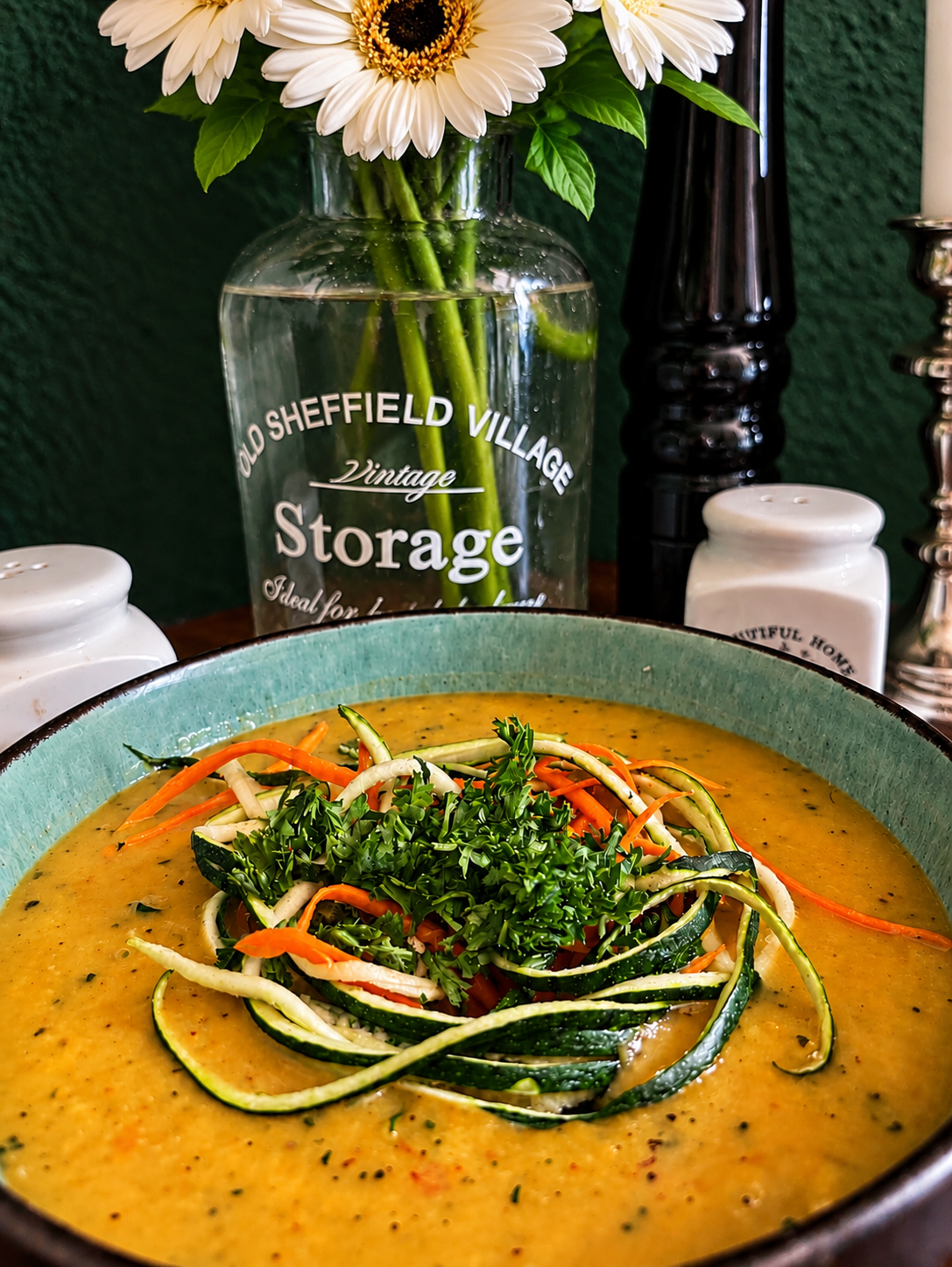
Serbian Zucchini & Carrot Soup – Vegan Čorba sa Tikvicama i Šargarepom
You may also like
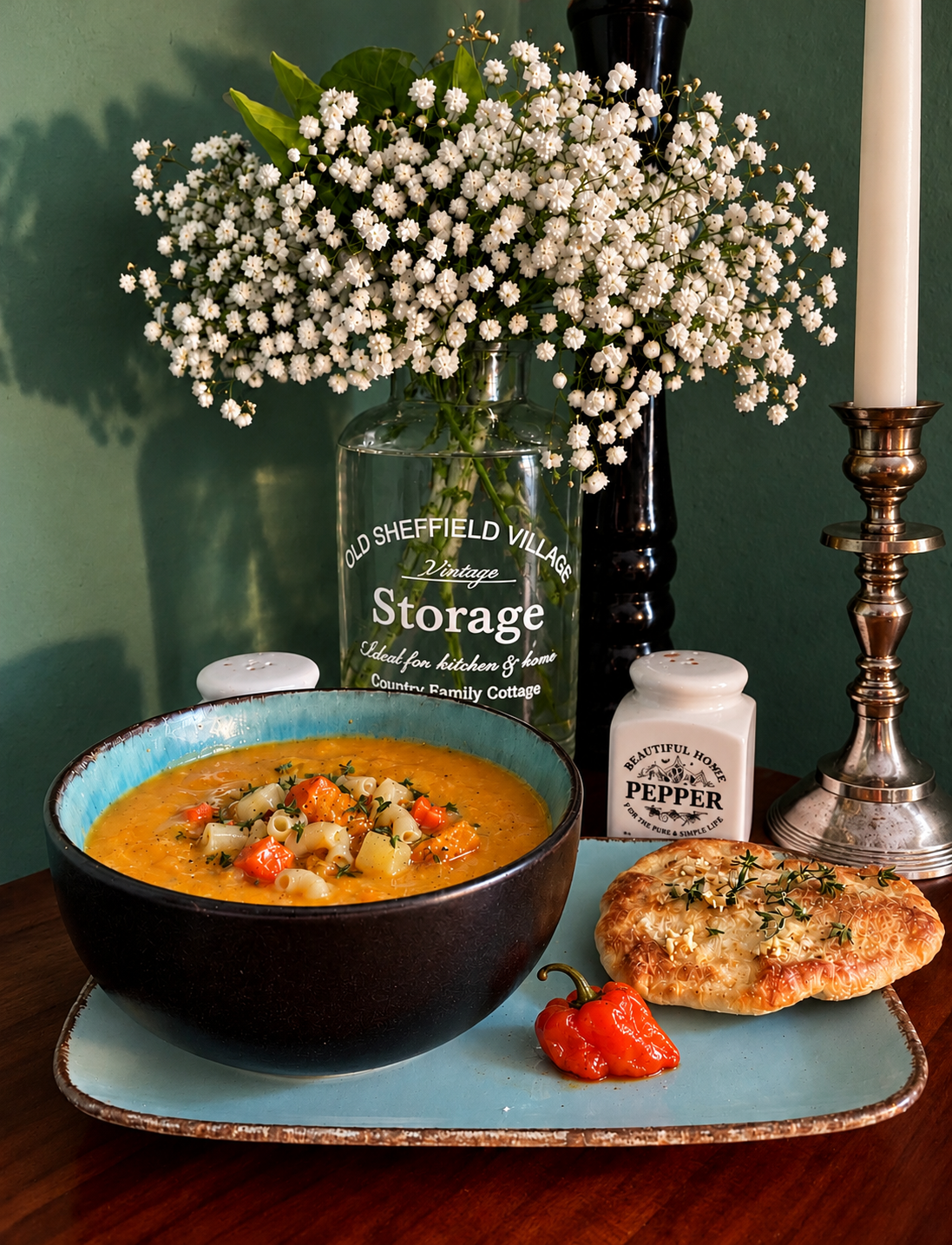
Vegan Soup Joumou – Haitian Freedom Soup
You may also like