
Malaysia – A Country of Tropical Rainforests, Islands and Culinary Diversity
Malaysia is a Southeast Asian country divided between Peninsular Malaysia and Malaysian Borneo. Its culinary traditions reflect centuries of cultural exchange between Malay, Chinese, Indian and Indigenous communities, alongside influences from regional trade routes. Coconut milk, lemongrass, turmeric, ginger, galangal and chili are important ingredients in many Malaysian dishes. From bustling street-food markets to traditional family kitchens, Malaysian cuisine is celebrated for its aromatic spice combinations, rich sauces and remarkable regional diversity.
What Is Sayur Lodeh?
Sayur Lodeh is a vegetable dish cooked in a fragrant coconut milk broth, particularly associated with Indonesian and Malaysian cuisine. In Malaysia, it is also commonly known as Sayur Lemak Lodeh, referring to its rich, creamy character. Depending on the region and household, it may contain cabbage, long beans, carrots, tofu, tempeh and other vegetables. Some traditional preparations include shrimp-based seasonings for additional umami. This Via Veggie Vegan version uses white miso instead, creating a completely plant-based interpretation with a homemade rempah spice paste, golden coconut broth and a colorful mixture of vegetables.
▣ Ingredients (2 servings)
- 3 shallots
- 1 cm fresh ginger
- 1 red chili
- 1 stalk lemongrass
- 1 leaf pandan (optional)
- 100 g firm tofu
- 50 g tempeh
- 1/2 carrot
- 5-6 long beans
- 2 leaves white cabbage
- 250 ml vegetable broth
- 150 ml full-fat coconut milk
- 1 tbsp vegetable oil
- to taste fresh coriander
- to taste read chili threads
- 1 pinch brown sugar
- to taste warm vegan flatbread
- to taste salt & freshly ground black pepper
♨ Preparation
- Prepare the Rempah
Peel and roughly chop the shallots.
Peel the garlic cloves and ginger or galangal.
Slice the fresh turmeric and red chili.
Place the shallots, garlic, ginger, turmeric, chili and white miso in a food processor or mortar.
Add a very small splash of water if necessary.
Blend or pound until a relatively smooth, fragrant spice paste forms. - Prepare the Vegetables and Protein
Cut the firm tofu and tempeh into bite-sized cubes.
Slice the carrot into thin rounds or short sticks.
Trim the long beans and cut them into approximately 4 cm pieces.
Cut the cabbage leaves into large, bite-sized pieces.
Remove the tough outer layer of the lemongrass stalk and lightly bruise the lower section with the back of a knife.
If using pandan, tie the leaf into a loose knot. - Brown the Tofu and Tempeh
Heat a little of the vegetable oil in a frying pan over medium-high heat.
Add the tofu and tempeh cubes.
Fry until lightly golden on several sides.
Remove from the pan and set aside. - Fry the Spice Paste
Heat the remaining vegetable oil in a saucepan over medium heat.
Add the prepared rempah, bruised lemongrass and optional pandan leaf.
Cook for approximately 3–4 minutes, stirring regularly.
The spice paste should become fragrant and slightly darker in color.
Avoid burning the garlic or turmeric. - Cook the Vegetables
Pour the water or vegetable broth into the saucepan.
Stir well to distribute the spice paste.
Bring the mixture to a gentle simmer.
Add the carrot and long beans.
Cook for approximately 3–4 minutes.
Add the cabbage, browned tofu and tempeh.
Continue simmering for another 3–5 minutes, until the vegetables are tender but still retain a pleasant bite. - Add the Coconut Milk
Reduce the heat to low.
Pour in the coconut milk and stir gently.
Warm the curry for approximately 2–3 minutes without allowing it to boil vigorously.
Season with salt and a small pinch of sugar.
Taste and adjust the seasoning if necessary. - Remove the Aromatics
Remove the lemongrass stalk and pandan leaf before serving.
Check the consistency.
For a thinner broth, add a little more hot water or vegetable stock.
For a richer, creamier curry, allow it to warm gently for another minute or two. - – Serve
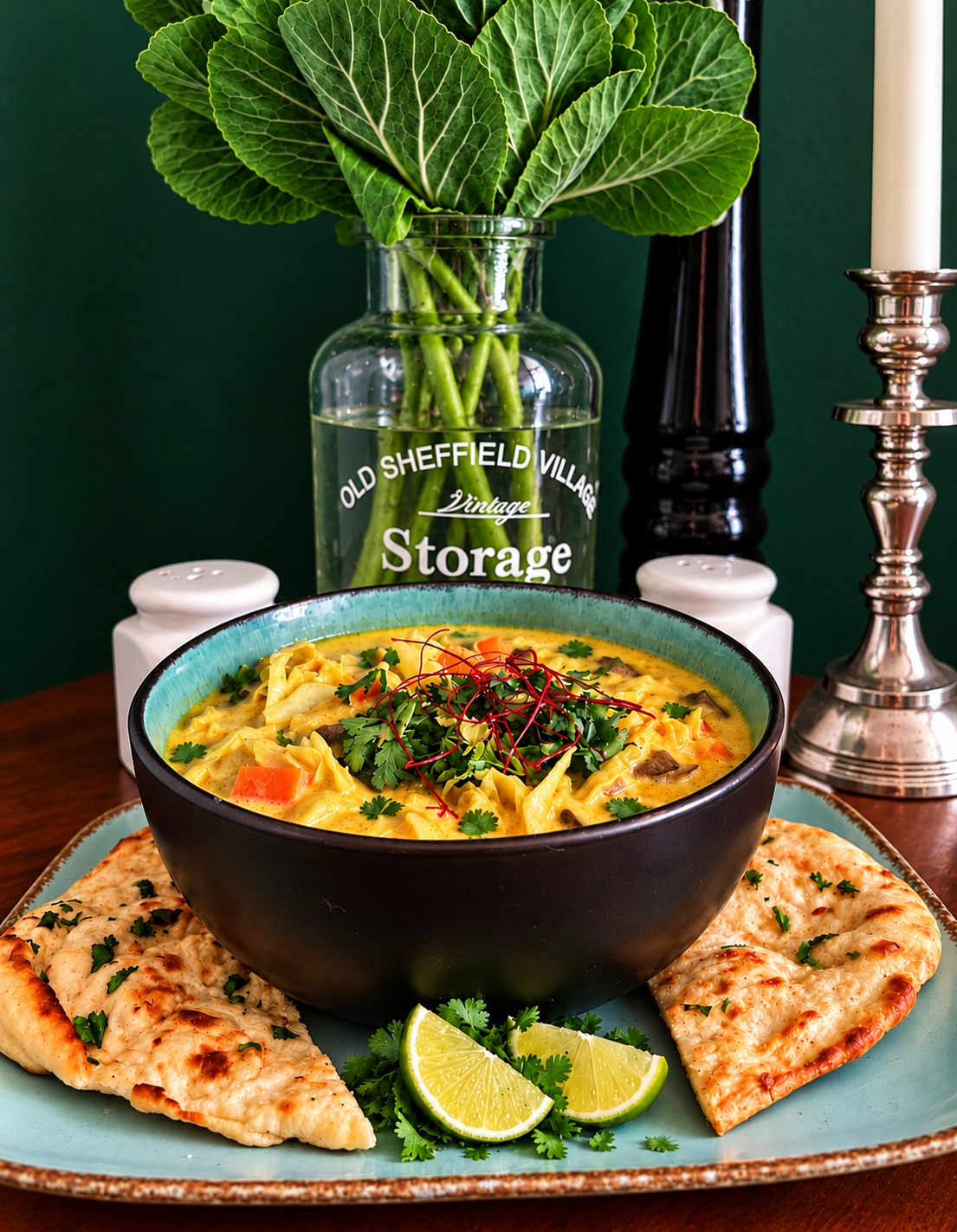
Divide the Sayur Lodeh between two bowls.
Make sure each serving contains a generous mixture of vegetables, tofu, tempeh and coconut broth.
For the Via Veggie Vegan presentation, garnish with fresh coriander and a few red chili threads.
Serve with lime wedges and warm flatbread. - Serving Suggestion
Serve Malaysian Sayur Lodeh in a deep bowl, allowing the golden coconut broth to surround the vegetables and tofu.
Finish with fresh coriander and delicate red chili threads.
Arrange warm, lightly toasted flatbread around the bowl and add lime wedges for a fresh finishing touch.
This flatbread accompaniment is a Via Veggie Vegan variation; lontong rice cakes are a more traditional Malaysian pairing.
Food Story
A Little Malaysian Sunshine in My Kitchen
Some dishes immediately make you feel as though you have traveled somewhere warmer, even when you have not left your own kitchen. Sayur Lodeh is definitely one of them. Golden coconut broth, fragrant spices, colorful vegetables and enough garlic to make Team Garlic very happy. For my Malaysian stop on the Via Veggie Vegan journey, I wanted to capture those wonderful Southeast Asian flavors while keeping everything completely plant-based. The secret lies in the rempah, a homemade spice paste combining shallots, garlic, ginger, turmeric and chili. Once it hits the warm oil, the kitchen fills with the kind of aroma that makes waiting for dinner particularly difficult.
A Little Miso Magic
Some traditional versions of Sayur Lodeh use shrimp-based seasonings to add savory depth. Naturally, that was not going to happen in my kitchen. Instead, I reached for white miso, which brings a wonderfully rich fermented umami flavor without any animal-derived ingredients. Then came the tofu, tempeh, carrots, long beans and cabbage, all surrounded by creamy coconut milk and fragrant lemongrass. The result was beautifully golden, gently spicy and wonderfully comforting. I particularly love the combination of tofu and tempeh because they bring different textures to the same dish. One is soft and delicate, the other firmer and pleasantly nutty.
Team Coconut Meets Team Coriander
And because I apparently have a habit of giving traditional dishes my own little Via Veggie Vegan twist, I served my Sayur Lodeh with warm flatbread instead of the more traditional lontong rice cakes. A generous handful of fresh coriander, a few delicate red chili threads and fresh lime wedges completed the presentation. The flatbread turned out to be particularly useful for scooping up every last drop of that fragrant coconut broth. No complicated culinary tricks, just a wonderful combination of creamy, spicy, fresh and savory flavors. Malaysia, you have officially joined Team Coconut. And Team Garlic and Team Coriander are delighted to welcome you!
♨ Nutrition per serving
Nutritional values are approximate and may vary depending on the ingredients and products used.
Good to Know
What Does Sayur Lodeh Mean?
Sayur is the Malay and Indonesian word for vegetables, while lodeh refers to this style of vegetable dish cooked in a seasoned coconut milk broth. The recipe is especially associated with Java in Indonesia but is also well established in Malaysian food culture. Its ingredients and preparation vary considerably between regions and households.
What Is Sayur Lemak Lodeh?
In Malaysian cooking, the word lemak often refers to the richness and creaminess created by coconut milk. Sayur Lemak Lodeh therefore emphasizes the dish's rich coconut-based character. The golden color commonly comes from turmeric, while the flavor is developed through a combination of aromatic ingredients and spices.
What Is Rempah?
Rempah is a fragrant spice paste widely used in Malaysian and other Southeast Asian cuisines. It commonly combines ingredients such as shallots, garlic, chili, turmeric, ginger or galangal. The paste is usually fried in oil before liquid ingredients are added, helping release aromatic compounds and create a flavorful foundation for the finished dish.
Why Fry the Spice Paste First?
Heating the rempah in oil helps release fat-soluble aromatic compounds and reduces the raw taste of ingredients such as shallots and garlic. Gentle frying also allows moisture to evaporate, concentrating the flavor. This step is essential for developing the characteristic depth of many Southeast Asian curries.
What Is Belacan?
Belacan is a fermented shrimp paste used in Malaysian cooking to provide a distinctive salty, savory flavor. It is commonly incorporated into spice pastes and sambals. Because it contains shrimp, it is not vegan. White miso provides a plant-based alternative with fermented umami notes, although the two ingredients do not taste identical.
White Miso – A Fermented Plant-Based Ingredient
White miso is a Japanese fermented seasoning generally made from soybeans, salt and koji, sometimes with rice or other grains. Its fermentation process creates complex savory flavors. Compared with darker miso varieties, white miso often has a milder and slightly sweeter taste, making it suitable for delicate coconut-based dishes.
What Is Lontong?
Lontong is a preparation of compressed rice cakes found in several Southeast Asian cuisines. In Malaysia, it is frequently served with coconut vegetable gravy or Sayur Lodeh. The rice cakes absorb the flavorful broth and turn the dish into a satisfying meal. This Via Veggie Vegan version uses warm flatbread as a personal alternative.
Malaysia – A Meeting Point of Culinary Cultures
Malaysia's cuisine reflects the traditions of Malay, Chinese, Indian and Indigenous communities, alongside influences from centuries of regional trade. These cultural connections have contributed to an extraordinary variety of ingredients, cooking methods and flavor combinations. Dishes often combine aromatic spices, coconut milk, fresh herbs and fermented seasonings.
Peninsular Malaysia and Malaysian Borneo
Malaysia consists of two main geographical regions separated by the South China Sea. Peninsular Malaysia occupies part of the Malay Peninsula, while the states of Sabah and Sarawak lie on the island of Borneo. These regions have distinct landscapes, communities and culinary traditions, contributing to the country's remarkable cultural diversity.
Malaysia's Tropical Rainforests
Malaysia is home to some of Southeast Asia's most biologically diverse tropical rainforests. These ecosystems support extraordinary numbers of plant and animal species and provide important environmental services, including carbon storage, water regulation and habitat protection. Forest conservation remains essential for protecting this biodiversity.
The Orangutan – An Icon of Borneo
Bornean orangutans live in the forests of Borneo, including parts of Malaysian Sabah and Sarawak. These highly intelligent great apes spend much of their lives in trees and play an important ecological role through seed dispersal. Habitat loss, fragmentation and other human pressures threaten their survival.
The Malayan Tiger – A Critically Endangered Predator
The Malayan tiger inhabits parts of Peninsular Malaysia and is critically endangered. Habitat loss, declining prey populations and poaching have contributed to its severe population decline. Conservation programs focus on habitat protection, anti-poaching measures and maintaining suitable forest corridors.
Proboscis Monkeys – Borneo's Unusual Primates
Proboscis monkeys are native to Borneo and are particularly associated with mangrove forests, riverbanks and coastal habitats. Adult males are recognizable by their unusually large noses. These monkeys are strong swimmers and depend on healthy forest ecosystems for food and shelter.
Rafflesia – One of the World's Most Remarkable Flowers
Several Rafflesia species occur in Malaysia. These unusual parasitic plants produce enormous flowers, some of which are among the largest individual flowers in the world. Certain species emit an odor resembling decaying material, attracting insects that may assist with pollination. Rafflesia plants depend on specific host vines and are vulnerable to habitat disturbance.
Mount Kinabalu – A Biodiversity Hotspot
Mount Kinabalu, located in Sabah on Malaysian Borneo, is one of Southeast Asia's best-known mountains. Its changing elevations support a remarkable variety of habitats, from tropical forests to montane vegetation. Kinabalu Park is recognized as a UNESCO World Heritage Site for its exceptional biological diversity.
Mangrove Forests and Coastal Protection
Malaysia's mangrove ecosystems provide important habitats for fish, crustaceans, birds and other wildlife. Their complex root systems help stabilize coastlines and reduce erosion. Mangroves also store significant quantities of carbon and support coastal communities through fisheries and other ecosystem services.
Coconut Milk – What Makes It So Creamy?
Coconut milk is produced by extracting liquid from grated coconut flesh. Its creamy texture comes from a mixture of water and coconut fat. Full-fat coconut milk creates a rich mouthfeel and carries aromatic spices particularly well, making it a common ingredient in Southeast Asian curries.
Coconut Milk and Saturated Fat
Coconut milk contains a relatively high proportion of saturated fatty acids. Although coconut products are plant-based, their fat composition differs from oils rich in unsaturated fats. Frequent consumption of large amounts of saturated fat can raise LDL cholesterol in some people. Portion size and overall dietary pattern are therefore important considerations.
LDL and HDL Cholesterol – Understanding the Difference
LDL and HDL are lipoproteins that transport cholesterol through the bloodstream. Elevated LDL cholesterol contributes to atherosclerosis and increases cardiovascular risk. HDL participates in transporting cholesterol back toward the liver, but high HDL levels alone do not guarantee protection against cardiovascular disease. Replacing saturated fats with unsaturated fats can help lower LDL cholesterol.
Tofu – A Versatile Source of Plant Protein
Tofu is made by coagulating soy milk and pressing the resulting curds into blocks. Firm tofu contains protein and can contribute calcium when prepared using calcium-based coagulants. Its mild flavor makes it particularly suitable for absorbing aromatic curry sauces.
Tempeh – Fermented Soybeans with Character
Tempeh is traditionally made by fermenting cooked soybeans with a culture of Rhizopus fungi. The fermentation process binds the beans into a firm cake with a distinctive nutty flavor. Tempeh provides protein and dietary fiber and is an important ingredient in Indonesian cuisine, with growing popularity in plant-based cooking worldwide.
Tofu and Tempeh – Why Combine Them?
Tofu and tempeh provide contrasting textures. Tofu is relatively smooth and delicate, while tempeh is firmer and more substantial. Combining both ingredients adds variety to the curry and contributes plant-based protein.
Turmeric – The Spice Behind the Golden Color
Turmeric contains curcuminoids, including curcumin, which contribute to its characteristic yellow-orange color. These compounds are being studied for their biological properties, but culinary turmeric should not be regarded as a treatment for disease. In this dish, turmeric primarily contributes color and a warm, earthy flavor.
Ginger and Galangal – Similar but Different
Ginger and galangal are related rhizomes commonly used in Asian cooking. Ginger has a warm, pungent flavor, while galangal often tastes sharper, more citrus-like and slightly piney. Both contribute aromatic complexity to spice pastes, but they are not identical in flavor.
Lemongrass – A Signature Southeast Asian Aroma
Lemongrass contains aromatic compounds, including citral, responsible for its characteristic lemon-like fragrance. Bruising the stalk helps release these aromas into the broth. The tough stalk is generally removed before serving.
Pandan – The Fragrant Leaf of Southeast Asia
Pandan leaves are used throughout Southeast Asia to flavor sweet and savory dishes. They have a distinctive aroma often described as floral, nutty and slightly vanilla-like. In this recipe, pandan is optional and contributes a subtle additional fragrance to the coconut broth.
Long Beans – A Popular Southeast Asian Vegetable
Long beans, also known as yardlong beans, are widely used in Southeast Asian cooking. They are related to cowpeas rather than common European green beans. Their firm texture makes them suitable for curries and stir-fries, and they contribute dietary fiber and several micronutrients.
Carrots and Beta-Carotene
Carrots contain beta-carotene, which the body can convert into vitamin A according to its needs. Vitamin A supports normal vision, immune function and the maintenance of healthy skin and mucous membranes. The fat in coconut milk can help support the absorption of fat-soluble carotenoids.
White Cabbage – A Humble but Nutritious Vegetable
White cabbage belongs to the Brassica family and provides vitamin C, fiber and naturally occurring plant compounds. Its mild flavor and tender texture make it suitable for absorbing aromatic sauces. Adding cabbage towards the end of cooking helps prevent it from becoming excessively soft.
Fresh Coriander – More Than Just a Garnish
Fresh coriander adds a bright, citrus-like herbal note that balances the richness of coconut milk. Its flavor comes from a mixture of naturally occurring aromatic compounds. Coriander is widely used in Southeast Asian cuisine, although individual preferences for its taste vary considerably.
Lime – Balancing Richness with Acidity
Fresh lime juice adds acidity and brightness, helping balance the creamy coconut broth. Acidic ingredients can make a rich dish taste fresher without requiring additional salt. Serving lime wedges separately allows everyone to adjust the flavor to their preference.
Why Coconut Curries Should Simmer Gently
Coconut milk contains an emulsion of fat and water. Vigorous boiling can sometimes cause the mixture to separate, particularly when the sauce is reduced for a long time. Gentle heating helps maintain a smooth texture in recipes where a creamy, uniform broth is desired.
Zero Waste – Save Your Vegetable Scraps
Clean, suitable trimmings from carrots, cabbage and shallots can be collected in the freezer and used to prepare homemade vegetable broth. The broth works particularly well as the liquid base for another curry or vegetable soup. Avoid using spoiled or excessively bitter vegetable scraps.
How to Store Leftover Sayur Lodeh
Cool leftovers promptly and transfer them to an airtight container in the refrigerator. Consume within approximately 2 days and reheat thoroughly but gently. Add a splash of water if the coconut broth has thickened. Leftover flatbread can be cut into pieces and toasted until crisp for dipping.
You may also like
♡
You may also like
Spicy Miso Ramen – Japanese-Inspired Vegan Noodle Soup
You may also like
Greek Chickpea Lemon Soup – Creamy Vegan Soup with Fresh Dill
You may also like