Sri Lanka – The Pearl of the Indian Ocean
Sri Lanka is an island nation in South Asia, situated in the Indian Ocean southeast of India. Often called the Pearl of the Indian Ocean, the country is known for its tropical landscapes, tea plantations, diverse wildlife and rich culinary traditions. Sri Lankan cooking makes extensive use of coconut, rice, vegetables, chillies, curry leaves and aromatic spices. Regional and cultural influences have shaped a cuisine that combines bold flavours with everyday ingredients, creating dishes that are both vibrant and deeply comforting.
Carrot Mallum – A Colourful Sri Lankan Vegetable Classic
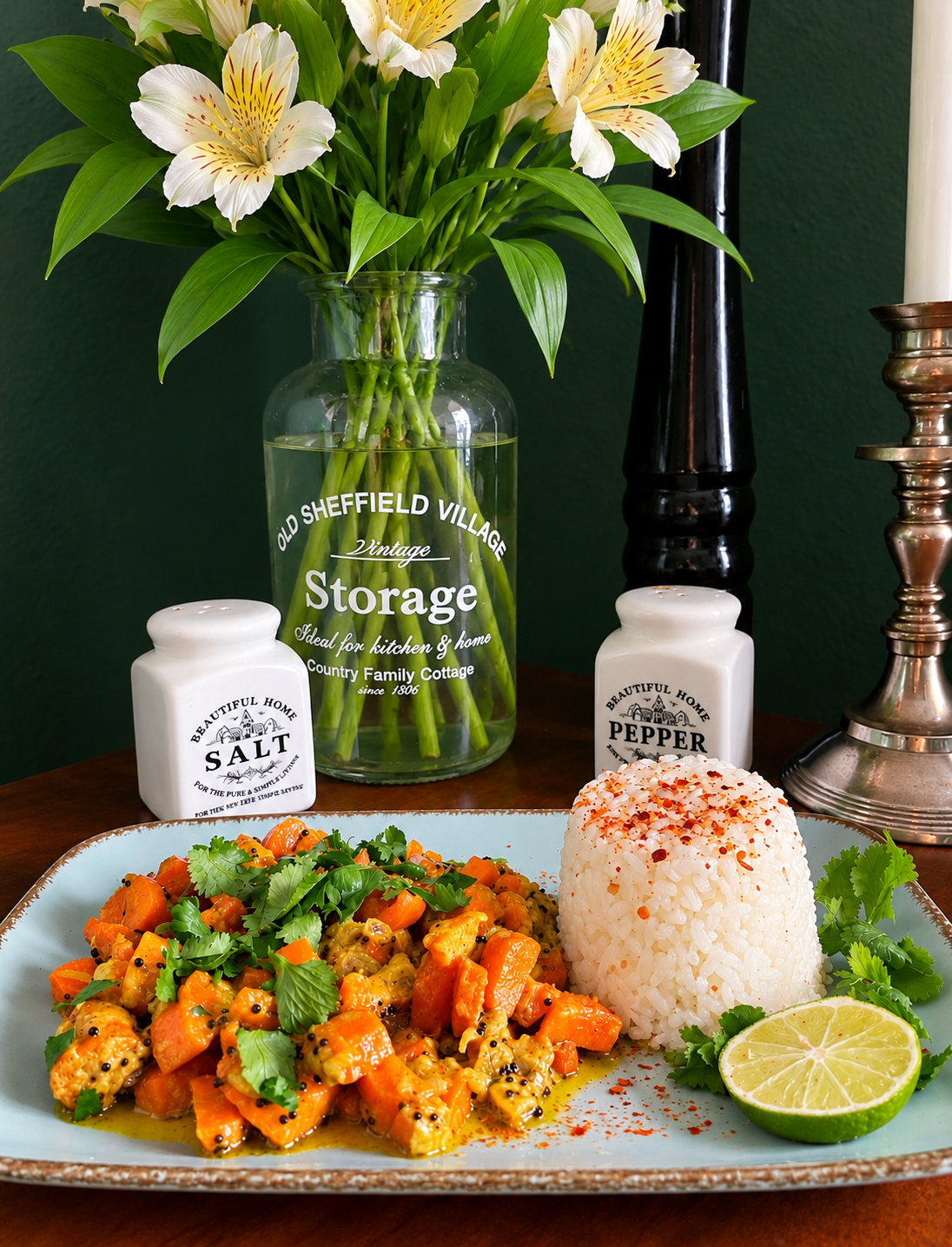
Mallum, also spelled mallung, refers to a Sri Lankan preparation of finely chopped or shredded vegetables or leafy greens mixed with grated coconut and seasonings. Unlike a creamy coconut curry, mallum is generally relatively dry and retains more texture. Carrot Mallum brings together naturally sweet carrots, coconut, mustard seeds, curry leaves and fresh chillies. My Via Veggie Vegan version uses mustard oil for an additional aromatic note and finishes with fresh lime juice. Served alongside rice, it makes a colourful and satisfying plant-based meal.
▣ Ingredients (2 servings)
- 3 carrots
- 1 onion
- 2-3 fresh green or red chilis
- 1/2 lime, for the juice
- 4 sprigs fresh coriander
- 1 srig fresh curry leaves
- 1/2 tsp turmeric
- 1 tsp black mustard seeds
- 1 cup freshly grated coconut or rehydrated desiccated coconut, approximately 80–100 g depending on preparation
- 2 tbsp food-grade mustard oil
- 100 g uncooked white rice, for 2 small portions
- 1 pinch chili flakes
- to taste salt & freshly ground black pepper
♨ Preparation
- Prepare the Vegetables
Wash the carrots thoroughly and grate them coarsely. Thinly slice the onion or shallots and the fresh chillies. Remove the curry leaves from their stem if necessary. - Heat the Mustard Oil
Heat the food-grade mustard oil in a large frying pan over medium heat. - Temper the Mustard Seeds
Add the black mustard seeds and allow them to sizzle and pop briefly. Stir carefully to prevent burning. - Sauté the Aromatics
Add the sliced onion or shallots, fresh chillies and curry leaves. Sauté gently until the onion has softened and become translucent - Add the Turmeric and Carrots
Stir in the turmeric, then add the grated carrots. Toss thoroughly until the carrots are evenly coated with the aromatic spices. - Cook the Carrots
Cook for approximately 5 minutes, stirring occasionally. The carrots should soften slightly while retaining a pleasant bite. - Add the Coconut
Add the freshly grated or rehydrated coconut and mix thoroughly with the carrots and spices. - Finish Cooking
Continue cooking for approximately 3 minutes, just long enough for the coconut to warm through and absorb the aromatic flavours. The mixture should remain relatively dry rather than becoming a creamy sauce. - Season with Lime
Season with salt to taste. Remove the frying pan from the heat and finish with a generous squeeze of fresh lime juice. - Prepare the Optional Rice
If serving with rice, cook the rice separately according to the package instructions. Allow it to rest briefly after cooking so the grains settle and become easier to shape. - Shape the Rice
Lightly moisten the inside of a small espresso cup with water. Fill it firmly with warm cooked rice, pressing gently with a spoon. Place the serving plate over the cup, carefully turn both upside down and lift the cup away to reveal a compact mound of rice. - Serve
Arrange the Spicy Carrot & Coconut Mallum beside the rice. Garnish with fresh coriander, a pinch of chilli flakes and a lime wedge. Serve immediately while the carrots are warm and aromatic.
Food Story
Carrots, Coconut and Chilli – What’s Not to Love?
Sometimes a recipe catches my attention simply because it combines ingredients I absolutely adore. Carrots? Love them. Coconut? Definitely. Chilli? Well, Team Spicy wouldn’t be Team Spicy without a generous helping of heat! When I discovered Sri Lankan Carrot Mallum, I immediately knew that this colourful combination deserved a place on my culinary journey. Sweet, spicy, coconutty and gloriously orange – exactly my kind of food.
Even I Made an Exception for Rice
Now, here’s something that doesn’t happen every day in my kitchen: I voluntarily made rice! I’m really not a big rice fan, and I usually prefer other accompaniments. But this time, something told me that rice simply belonged on the plate. Sri Lankan meals are so closely associated with rice and vegetable dishes that even I couldn’t imagine leaving it out. And because presentation matters too, I packed the cooked rice into a little espresso cup and turned it upside down onto the plate. Voilà – a perfectly shaped little rice tower! Sometimes even my least favourite side dish gets its moment to shine.
Sri Lanka, My Friends and the Brother Behind This Website
Unfortunately, I’ve never been to Sri Lanka myself, although many of my friends have travelled there – including my very dear brother. And speaking of my brother, this feels like the perfect opportunity to say something important: he’s the person who programmed this entire Via Veggie Vegan website for me. Without him, this little culinary journey wouldn’t have its own home on the internet. So while I’m cooking my way around Sri Lanka from my kitchen, I’m also thinking about the people who have explored the country in real life – and especially about my brother, who made it possible for me to share these recipes with the world. Thank you for being part of this adventure!
♨ Nutrition per serving
Nutritional values are approximate and may vary depending on the ingredients and products used.
Good to Know
What Does Mallum Mean?
Mallum, also written mallung, describes a Sri Lankan style of preparing finely chopped or shredded vegetables and leafy greens with grated coconut and seasonings. The dish is usually lightly cooked or gently sautéed and is commonly served as part of a larger rice-based meal.
Is Carrot Mallum a Curry?
Although it contains aromatic spices, Carrot Mallum differs from a typical coconut curry. It does not rely on a generous amount of coconut milk or a thick sauce. Instead, grated coconut is mixed directly with the vegetables, creating a relatively dry preparation with plenty of texture.
Rice and Curry – A Sri Lankan Food Tradition
Rice is central to everyday eating in Sri Lanka. A typical rice-and-curry meal may feature rice accompanied by several vegetable dishes, lentils, sambols, pickles and curries. Mallum is one of the vegetable preparations that can contribute freshness, texture and variety to such a meal.
Coconut in Sri Lankan Cuisine
Coconut is an important ingredient in Sri Lankan cooking and appears in many forms, including freshly grated coconut, coconut milk and coconut oil. Fresh grated coconut contributes a rich texture and mild sweetness to mallum without requiring a creamy sauce.
Fresh Coconut or Desiccated Coconut?
Freshly grated coconut provides a moist, tender texture. Desiccated coconut can be used as a practical alternative, but it should be rehydrated with a little warm water before cooking. This prevents it from making the dish unnecessarily dry or grainy.
Carrots – Naturally Sweet and Colourful
Carrots contain carotenoids, particularly beta-carotene, which gives orange varieties their characteristic colour. The body can convert beta-carotene into vitamin A as needed. Vitamin A supports normal vision, immune function and the maintenance of healthy skin and mucous membranes.
Why Cooking Carrots with Oil Makes Sense
Beta-carotene is fat-soluble, meaning dietary fat can help the body absorb it. Cooking carrots with a moderate amount of oil can also soften their cell structure and make carotenoids more accessible. This recipe combines carrots with mustard oil and coconut, both of which provide dietary fat.
Black Mustard Seeds – Small but Powerful
Black mustard seeds are commonly used in South Asian cooking. Heating them in oil releases their distinctive pungent aroma and adds depth to vegetable dishes. They should be heated carefully because they can pop vigorously and burn if the oil becomes too hot.
What Makes Mustard Oil So Distinctive?
Mustard oil has a characteristic sharp, pungent flavour associated with naturally occurring mustard compounds. Its aroma differs noticeably from neutral vegetable oils and can add complexity to dishes. Food regulations and product suitability vary by country, so only use mustard oil clearly approved and labelled for culinary consumption.
Curry Leaves Are Not Curry Powder
Fresh curry leaves come from the curry leaf tree, Murraya koenigii. They have a distinctive citrusy, herbal and slightly nutty aroma. Despite their name, they are not the same as curry powder, which is a blend of ground spices.
Why Add Lime at the End?
Fresh lime juice provides acidity that balances the natural sweetness of carrots and the richness of coconut. Adding it after cooking preserves more of its fresh citrus character and prevents prolonged heating from dulling its flavour.
Chilli Heat – How Spicy Is Carrot Mallum?
The heat level depends largely on the variety, size and quantity of chillies used. Removing some of the inner membranes can reduce the intensity, while adding more chilli creates a hotter version. For this Via Veggie Vegan recipe, the intended heat level is 3 out of 4.
Turmeric – Colour and Aroma
Turmeric contributes a warm golden colour and an earthy, slightly bitter flavour. Its characteristic yellow pigment is associated with curcuminoids. Although turmeric has been widely studied, ordinary culinary amounts should not be presented as a treatment for medical conditions.
Fresh Coriander – A Bright Finishing Touch
Fresh coriander leaves add a citrusy, herbal freshness that contrasts beautifully with sweet carrots and rich coconut. They are best added shortly before serving to preserve their delicate aroma and vibrant green colour.
Coconut and Saturated Fat
Coconut contains a relatively high proportion of saturated fatty acids. Although it is a plant food, its fat composition differs from oils such as olive or rapeseed oil, which contain more unsaturated fatty acids. A varied diet benefits from choosing a balance of fat sources rather than relying heavily on saturated fats.
HDL and LDL Cholesterol – Understanding the Difference
Cholesterol is transported through the bloodstream by lipoproteins. LDL carries cholesterol to tissues, but elevated LDL levels are associated with a higher risk of cardiovascular disease. HDL participates in transporting cholesterol away from tissues towards the liver. Maintaining healthy LDL levels is especially important for long-term cardiovascular health.
Why Unsaturated Fats Matter
Replacing some saturated fats with unsaturated fats can help reduce LDL cholesterol. Foods such as nuts, seeds, olive oil and rapeseed oil provide useful sources of unsaturated fatty acids. Coconut can still be enjoyed as part of a varied diet, with overall dietary balance and portion sizes taken into account.
Dietary Fibre from Carrots and Coconut
Both carrots and coconut provide dietary fibre. Fibre supports normal bowel function and contributes to a satisfying meal. The amount varies depending on the type and quantity of coconut used.
Is Carrot Mallum Naturally Vegan?
Yes. A vegetable mallum made with carrots, coconut, spices, herbs and plant-based oil contains no animal-derived ingredients. This recipe is naturally vegan rather than requiring replacements for meat, dairy or eggs.
Rice – More Than Just a Side Dish
Rice is an important staple food across much of South and Southeast Asia. It provides carbohydrates for energy and is available in many varieties with different textures and cooking characteristics. For this recipe, a small portion of rice complements the strongly flavoured mallum without overpowering it.
Why Does Rice Hold Its Shape in a Cup?
Cooked rice contains gelatinized starch, which helps grains stick together to varying degrees. The effect depends on the rice variety and cooking method. Rice with a slightly sticky texture is easier to mould into a compact shape than very dry, separate grains.
Food Safety – Cooked Rice
Cooked rice should not be left at room temperature for extended periods because Bacillus cereus spores can survive cooking and may grow if rice is cooled or stored improperly. Cool leftovers promptly, refrigerate them and follow appropriate storage and reheating guidance. Reheating does not reliably destroy all toxins that may form during unsafe storage.
Zero Waste – Don't Throw Away Carrot Peels
Clean carrot peels and suitable vegetable trimmings can be collected for homemade vegetable broth. Freeze them promptly in a suitable container rather than allowing them to accumulate for days at room temperature. Avoid spoiled scraps, wash vegetables thoroughly and use the collected trimmings while still in good condition.
Homemade Vegetable Stock Granules
Suitable vegetable trimmings can be cooked and dehydrated thoroughly before being ground into homemade seasoning powder. For safe storage, the material must be sufficiently dry throughout, as residual moisture can encourage spoilage. Store in a clean, airtight container and discard if moisture, mould or unusual odours develop.
Can Carrot Mallum Be Prepared Ahead?
Yes. The dish can be prepared in advance and refrigerated promptly in a covered container. It tastes best when freshly cooked because the carrots retain more texture and the coconut remains pleasantly aromatic. Reheat gently and add a fresh squeeze of lime before serving.
Serving Suggestions
Carrot Mallum works well as a vegetable side dish in a larger Sri Lankan-inspired meal or as a light main course with rice. It can also be accompanied by lentils or another plant-based protein source for a more substantial meal.