
Japan – A Culinary Tradition of Precision and Umami
Japan is an East Asian island nation celebrated for its diverse regional cuisines, seasonal ingredients and careful attention to flavor and presentation. Japanese cooking frequently highlights the natural character of ingredients, with fermented foods such as miso and soy sauce playing an important role. From traditional noodle shops to modern ramen restaurants, comforting bowls of noodles are an essential part of everyday food culture.
What Is Spicy Miso Ramen?
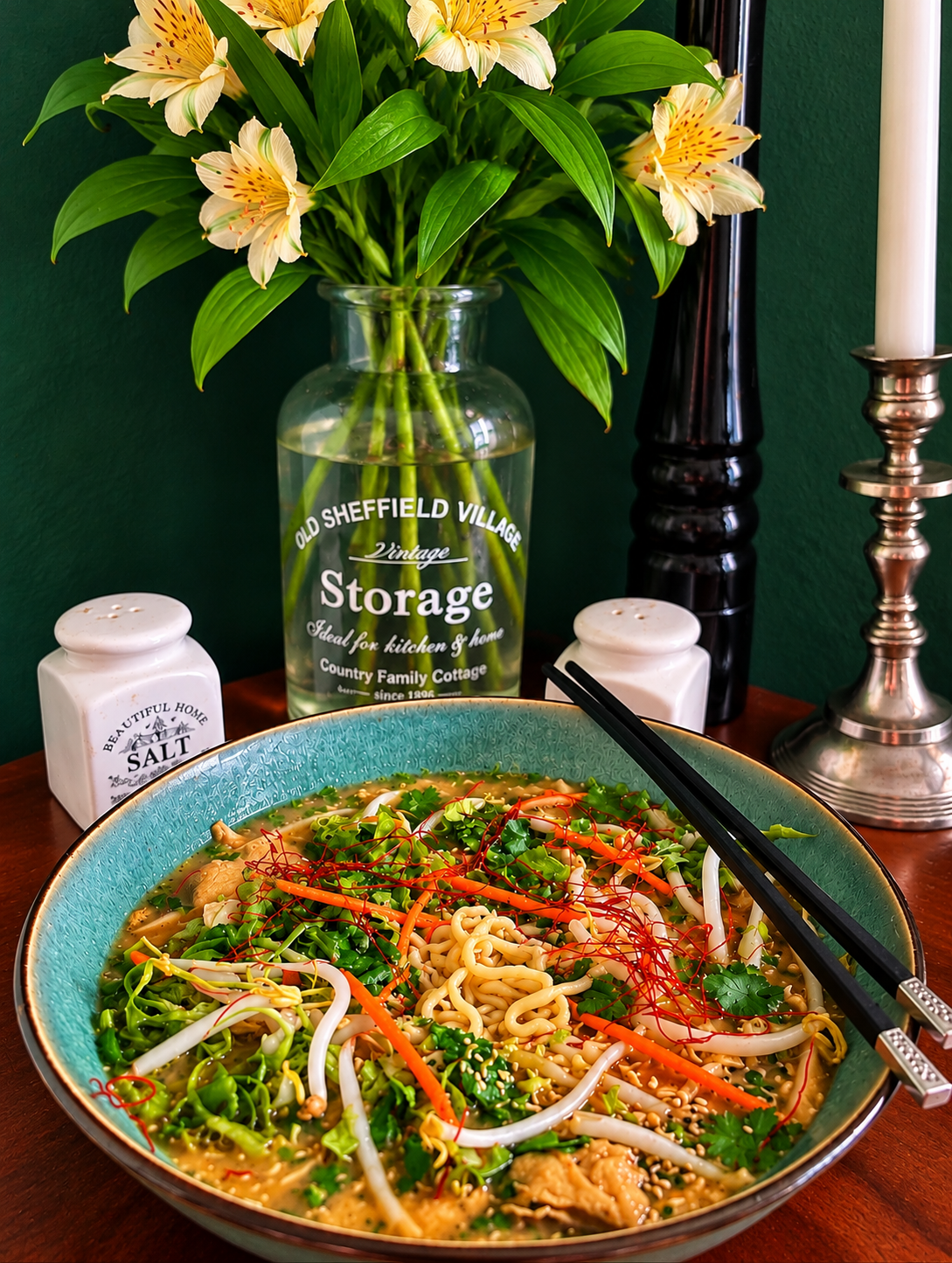
Ramen developed in Japan under the influence of Chinese wheat noodle traditions and has evolved into numerous regional styles. Miso ramen is particularly associated with Sapporo in Hokkaido, where miso-based ramen became popular during the twentieth century. This Via Veggie Vegan interpretation combines white miso, vegetable stock, soy milk, garlic, ginger and chili crisp to create a creamy, spicy broth. Ramen noodles, tofu, plant-based chicken and plenty of vegetables turn it into a generous, satisfying plant-based meal.
▣ Ingredients (2 servings)
- 1 tbsp sesame oil
- 1 onion
- 3-4 cloves garlic
- 2 cm fresh ginger
- 1-2 tsp | sambal oelek or chili crisp
- 1 tbsp white miso paste
- 1 tbsp soy sauce
- 1 tsp maple syrup
- 750 ml vegetable broth
- 150 ml unsweetened soy milk
- 1 tsp rice vinegar (optional)
- 200 g vegan ramen noodles
- 150 g firm tofu
- to taste plant-based mock chicken
- 1 pinch sesam oil (for frying)
- 1 splash soy sauce (for the tofu)
- 1 pak choi
- 1 carrot
- 100 g edamame, shelled
- 2 spring onions
- 1 handful water spinach
- 1 handful fresh bean sprouts
- 1 handful fresh coriander (for the topping)
- 1 handful sesame seeds (for the topping)
- to taste red chili threads (for the topping
- 1 tbsp unsweetened peanut butter
♨ Preparation
- Prepare the Tofu
Pat the tofu dry with kitchen paper or a clean kitchen towel.
Cut it into bite-sized cubes. - Prepare the Mock Chicken
Cut the plant-based mock chicken into bite-sized pieces if necessary.
Follow any specific preparation instructions on the packaging. - Prepare the Vegetables
Peel and finely dice the onion.
Peel and finely chop the garlic.
Peel and grate the ginger.
Cut the carrot into thin strips.
Wash the pak choi and cut it lengthwise into halves or quarters.
Wash the water spinach thoroughly and roughly chop the stems and leaves.
Rinse the bean sprouts thoroughly.
Thinly slice the spring onions.
Wash and roughly chop the fresh coriander. - Fry the Tofu
Heat a little sesame oil in a large frying pan over medium heat.
Add the tofu cubes and fry until golden brown on all sides.
Drizzle with a small splash of soy sauce and toss briefly.
Remove from the pan and set aside. - Prepare the Mock Chicken
Add the mock chicken to the pan.
Fry according to the package instructions until heated through and lightly browned.
Set aside with the tofu. - Build the Miso Broth
Sauté the Onion
Heat 1 tablespoon of sesame oil in a large saucepan.
Add the diced onion.
Sauté over medium heat until soft and translucent. - Add Garlic and Ginger
Add the chopped garlic and grated ginger.
Cook for approximately 1 minute until fragrant. - Add the Chili
Stir in the sambal oelek or chili crisp.
Cook briefly to release its aroma.
Adjust the quantity according to your preferred heat level. - Dissolve the Miso
Place the white miso paste in a small bowl.
Add a few tablespoons of warm vegetable stock.
Stir until the miso forms a smooth paste without lumps. - Add the Vegetable Stock
Pour the remaining vegetable stock into the saucepan.
Add the soy sauce and maple syrup.
Bring to a gentle simmer. - Develop the Broth
Simmer gently for approximately 10 minutes.
This allows the onion, garlic, ginger and chili flavors to develop. - Add the Miso
Reduce the heat.
Stir the dissolved miso paste into the broth.
Avoid prolonged vigorous boiling after adding the miso. - Add the Soy Milk
Pour in the unsweetened soy milk.
Stir gently until completely combined.
The broth should become slightly creamy while retaining its savory character. - Optional Peanut Butter
For an even creamier broth, stir in 1 tablespoon of unsweetened peanut butter.
Mix thoroughly until dissolved.
This is an optional Via Veggie Vegan variation rather than a traditional requirement. - Adjust the Seasoning
Taste the broth.
If desired, add a small amount of rice vinegar for extra brightness.
Use it sparingly so the broth does not become noticeably sour.
Add a little more soy sauce or chili crisp if necessary. - Cook the Vegetables
Add the Carrot
Add the carrot strips to the gently simmering broth.
Cook for approximately 2 minutes. - Add Pak Choi and Edamame
Add the pak choi and edamame.
Continue cooking for approximately 3–4 minutes, or until the vegetables are tender but retain some bite.
If using frozen edamame, ensure they are thoroughly heated and cooked according to the package instructions. - Add the Water Spinach
Stir in the chopped water spinach.
Allow the stems to cook until tender and the leaves to wilt. - . Add the Bean Sprouts
Add the bean sprouts and cook until thoroughly heated through.
They should retain some texture without remaining raw. - Cook the Noodles
Bring a separate saucepan of water to a boil.
Add the ramen noodles.
Cook according to the package instructions until tender. - Drain the Noodles
Drain the cooked ramen noodles thoroughly.
Do not rinse unless recommended by the manufacturer. - Divide the Noodles
Divide the cooked ramen noodles between two large serving bowls. - Add the Broth
Ladle the hot miso broth over the noodles.
Distribute the vegetables evenly between both bowls. - Add the Proteins & Fresh Toppings
Arrange the fried tofu and mock chicken over the noodles.
Scatter the sliced spring onions and fresh coriander over the ramen.
Sprinkle with sesame seeds. - Finish with Chili Crisp
Add chili crisp or chili oil according to taste.
If desired, garnish with red chili threads or nori. - Serve
Serve immediately while the noodles are hot and the vegetables retain their texture.
Itadakimasu!
Food Story
One Bowl. A Thousand Flavors. And Definitely Extra Coriander.
Some days, a bowl of soup simply isn’t enough. You need noodles, vegetables, something spicy and a bowl big enough to hold the whole adventure. Enter my Spicy Miso Ramen! For this Japanese-inspired stop on my Via Veggie Vegan journey, I started with a savory broth made from white miso, garlic, ginger, sesame oil and chili crisp. A little soy milk gives it a lovely creamy finish without making it heavy. So far, so good. But of course, I couldn’t leave it at that.
Half the Vegetable Drawer, Please!
In went the ramen noodles, carrot strips, pak choi, edamame, water spinach and bean sprouts. Then crispy tofu and plant-based chicken for good measure. Because apparently, my definition of a simple noodle soup involves putting half the vegetable drawer into one bowl. And I’m perfectly fine with that! The vegetables bring crunch and color, the miso provides wonderful umami, and the chili crisp turns up the heat. This is comfort food with a serious personality.
Team Coriander Reporting for Duty
And the fresh coriander? Well, you already know the answer. Team Coriander reporting for duty. Again! This isn’t an attempt to recreate one particular traditional Japanese ramen recipe. It’s my own plant-based Via Veggie Vegan interpretation, combining everything I love in one generous bowl. Creamy, spicy, savory, fresh and absolutely loaded. Sometimes the best part of a culinary journey is discovering just how much deliciousness fits into one bowl. Itadakimasu!
♨ Nutrition per serving
Nutritional values are approximate and may vary depending on the ingredients and products used.
Good to Know
What Exactly Is Miso?
Miso is a traditional Japanese fermented seasoning paste commonly made from soybeans, salt and koji, a culture grown on rice, barley or soybeans. During fermentation, enzymes break down proteins and starches, creating complex savory flavors. Miso is especially valued for its umami character and is widely used in soups, sauces, marinades and dressings.
White Miso vs. Red Miso
White miso, also called shiro miso, is generally milder and slightly sweeter than red miso. Red miso, or aka miso, often develops stronger and more complex flavors through longer fermentation, although the exact characteristics vary by product. White miso is particularly suitable for this recipe because it provides savory depth without overpowering the vegetables.
Is Miso Ramen Traditionally Vegan?
Not necessarily. Although miso paste itself is generally plant-based, many ramen broths contain pork, chicken, fish or other animal-derived ingredients. This recipe replaces those components with vegetable stock, soy milk, tofu and plant-based chicken. Always check the ingredients of ramen noodles, prepared broths and seasonings.
Why Add Miso Towards the End?
Miso is already fermented and does not require prolonged cooking. Adding it towards the end helps preserve its delicate aromas. Dissolving the paste in a little warm broth beforehand also prevents lumps and ensures even distribution throughout the soup.
What Creates Umami?
Umami is one of the five basic tastes, alongside sweet, sour, salty and bitter. It is associated with naturally occurring glutamate and certain other compounds found in ingredients such as fermented soy products, mushrooms and tomatoes. Miso and soy sauce contribute considerable savory depth to this ramen without requiring meat-based stock.
Tofu and Plant-Based Protein
Tofu is made from soybeans and provides high-quality plant protein containing all essential amino acids. Plant-based chicken alternatives can contribute additional protein, although their nutritional composition varies considerably depending on the ingredients and manufacturer. Combining tofu, edamame and plant-based chicken makes this ramen particularly satisfying.
Edamame – Young Soybeans with Nutritional Benefits
Edamame are immature soybeans harvested before fully ripening. They provide protein, dietary fiber, folate and several minerals. Their protein and fiber contribute to satiety, while their bright green color and slightly firm texture make them an attractive addition to noodle soups.
Why Use Water Spinach?
Water spinach, also known as kangkong or Ipomoea aquatica, is a leafy vegetable widely used in Southeast Asian cooking. Despite its English name, it is not the same species as ordinary spinach. Its tender leaves and hollow stems are suitable for quick cooking and add freshness and texture to soups and stir-fries.
Bean Sprouts and Food Safety
Bean sprouts add a fresh, lightly crunchy texture to ramen. However, raw sprouts can carry harmful bacteria because the warm, humid conditions required for sprouting also favor bacterial growth. Cooking sprouts thoroughly reduces this risk and is particularly important for pregnant people, older adults and anyone with a weakened immune system.
Sesame Oil and Unsaturated Fats
Sesame oil contains predominantly unsaturated fatty acids, including monounsaturated and polyunsaturated fats. Replacing saturated fats with unsaturated fats can help reduce LDL cholesterol. LDL transports cholesterol through the bloodstream, and elevated levels contribute to cardiovascular risk. HDL participates in returning cholesterol toward the liver, although HDL levels alone do not determine cardiovascular health.
Fiber – Why Vegetables Matter
The combination of pak choi, carrots, water spinach, bean sprouts, edamame and other vegetables contributes dietary fiber. Fiber supports normal bowel function and promotes satiety. The total fiber content also depends on the ramen noodles and plant-based proteins used.
What Is Chili Crisp?
Chili crisp is a condiment made from chili, oil and crispy aromatic ingredients. Depending on the product, it may contain garlic, onion, sesame or soybeans. Unlike plain chili oil, chili crisp adds both heat and texture. Its salt and oil content can vary considerably between brands, so adjust the quantity to taste.
Peanut Butter for Extra Creaminess
A small amount of unsweetened peanut butter can add richness and a subtle nutty flavor to the broth. This is a personal Via Veggie Vegan variation rather than an essential ingredient in traditional Japanese miso ramen. Peanut butter also contributes additional fat, protein and calories, so the nutritional values will vary depending on whether it is included.
Watch the Sodium
Miso paste, soy sauce, vegetable stock, chili crisp and some plant-based meat alternatives can all contribute substantial amounts of sodium. Using reduced-salt vegetable stock and adjusting the soy sauce carefully can help moderate the total salt content without sacrificing the characteristic savory flavor.
Zero Waste – Save Your Vegetable Trimmings
Clean carrot peels, suitable onion scraps and spring onion ends can be collected and frozen for homemade vegetable stock. Tender coriander stems are full of flavor and can be finely chopped into the broth, while the leaves are reserved for garnishing. Leftover ramen broth can be refrigerated promptly and reused with fresh vegetables or noodles.
Storing Leftover Ramen
For the best texture, store leftover noodles separately from the broth. Cool leftovers promptly and refrigerate in covered containers. Reheat the broth thoroughly before serving, then add freshly cooked or reheated noodles. This prevents the noodles from absorbing too much liquid and becoming overly soft.
You may also like
♡
You may also like
Moroccan Carrot Soup – Vegan Shorba al-Ghazar
You may also like
Greek Chickpea Lemon Soup – Creamy Vegan Soup with Fresh Dill

You may also like