
Fiji – A South Pacific Island Nation with a Remarkable Culinary Heritage
Fiji is an island nation in the South Pacific, consisting of more than 300 islands. Its cuisine reflects Indigenous Fijian traditions alongside Indian and other cultural influences. Root vegetables, tropical fruits, leafy greens and coconut feature in many local food traditions, while Indo-Fijian cuisine is especially known for aromatic vegetable curries, roti, dhal and carefully balanced spice mixtures. Beginning in 1879, Indian indentured labourers were brought to Fiji during the British colonial period. Over generations, their culinary traditions evolved alongside local ingredients and food cultures, creating the distinctive Indo-Fijian cuisine enjoyed today.
Kaddu Tarkari – Indo-Fijian Pumpkin Curry with a Creative Halloween Twist
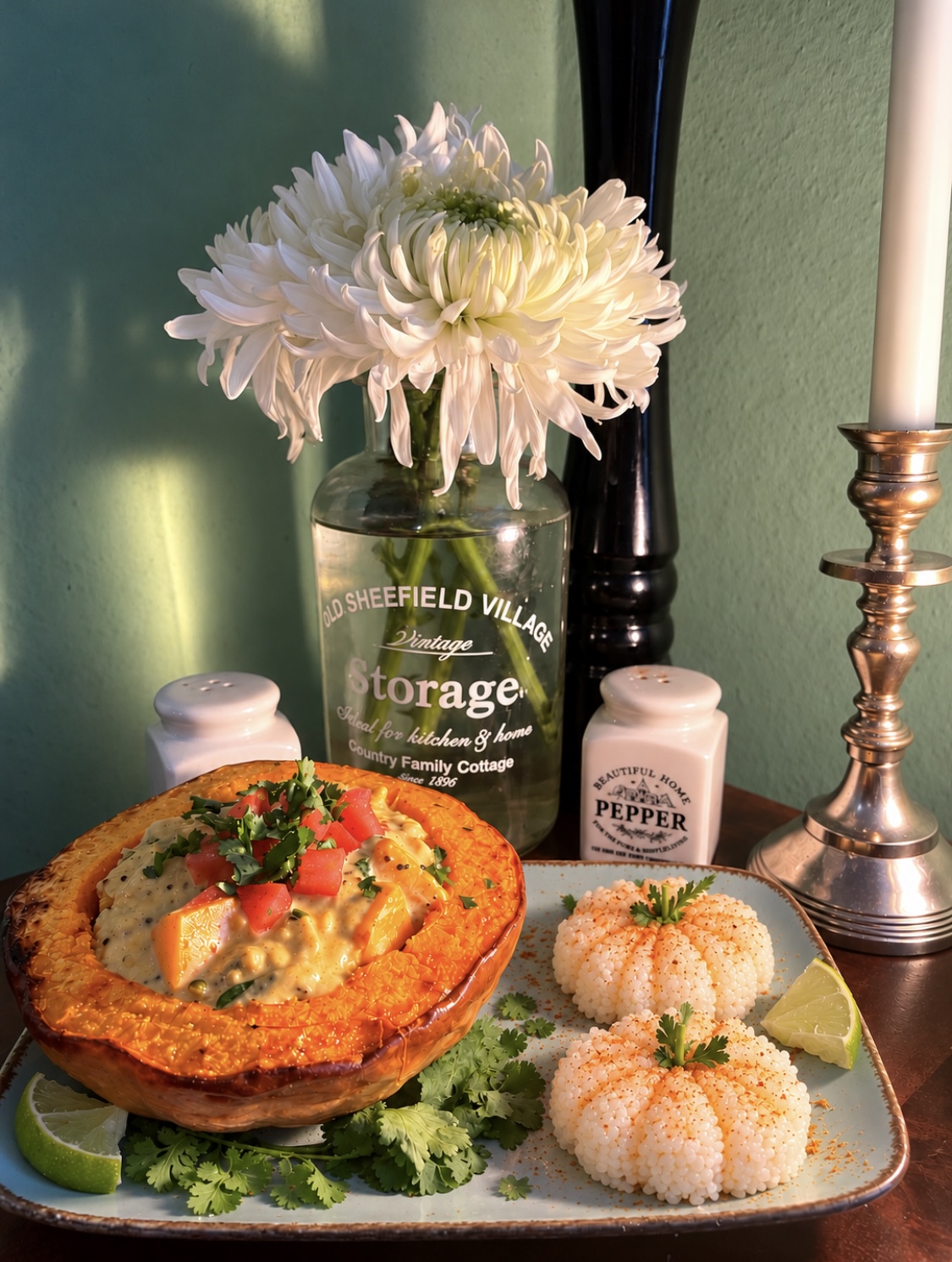
Kaddu means pumpkin or squash in Hindi, while tarkari refers to a vegetable dish or curry. Indo-Fijian pumpkin curry is commonly prepared with pumpkin, onions, garlic, chilli and aromatic spices, often using relatively little liquid. As the pumpkin softens, some of the flesh breaks down and creates a naturally thick texture. My Via Veggie Vegan version takes inspiration from these flavours but introduces a few personal twists: a whole muscat pumpkin roasted with chilli oil, a creamy coconut milk sauce and two decorative pumpkins shaped from leftover basmati rice. The roasted pumpkin becomes both an ingredient and an edible serving vessel. This is a creative Indo-Fijian-inspired interpretation rather than a traditional Fijian presentation.
▣ Ingredients (2 servings)
- 1 muscat pumpkin, approximately 800–1,000 g whole
- 1 onion
- 3 cloves garlic
- 1 cm fresh ginger
- 1 fresh green chili
- 100 g basmati rice, uncooked, or approximately 250–300 g cooked rice from the previous day
- 1 tsp cumin seeds
- 8-10 curry leaves
- 1/2 tsp ground turmeric
- 1 pinch freshly ground black pepper
- 1 pinch sugar
- to taste salt
- 1/2 bunch fresh coriander
- 1 tbsp vegetable oil
- chilli oil, for brushing the pumpkin
- 100 ml coconut milk
- 1 tsp tamarind paste
- 1 tsp vegan butter alternative, for the rice
♨ Preparation
- Prepare the Basmati Rice the Day Before
Rinse 100 g basmati rice thoroughly under cold running water. Transfer the rice to a saucepan or rice cooker and add the appropriate quantity of water for the chosen rice variety. Cook until tender. Stir in approximately 1 tsp vegan butter alternative while the rice is still warm. Allow the rice to cool briefly, then transfer it to a shallow container and refrigerate promptly. Keep refrigerated overnight. If you already have safely refrigerated leftover basmati rice from the previous day, you can use approximately 250–300 g instead. - Prepare the Kitchen String Construction
On the day of serving, prepare two sets of four lengths of sturdy kitchen string. Arrange the four strings for each rice pumpkin in a star-shaped pattern on a clean work surface. The strings should cross in the centre and extend far enough beyond the edges to be tied together later. Place a large sheet of food-safe cling film over each set of strings. Keep both prepared constructions within easy reach. - Shape the First Rice Pumpkin
Remove the refrigerated rice from the refrigerator and divide it into two equal portions. Place the first portion in the centre of one prepared sheet of cling film. Gather the edges of the film around the rice and press the grains together firmly to create a compact ball. Twist the cling film gently at the top to close the package. Flatten the top and bottom slightly to create a rounded pumpkin silhouette. - Create the Pumpkin Segments
Bring the ends of the four kitchen strings up around the wrapped rice ball and tie them carefully at the top. The four crossing strings will create eight visible pumpkin segments. Tighten them gently until the characteristic grooves appear. Avoid pulling too tightly, as this could deform the rice or tear the cling film. - Shape the Second Rice Pumpkin
Repeat the same process with the second portion of rice. Place it in the centre of the prepared cling film and wrap it into a compact ball. Bring the four strings around the package and tie them gently at the top. Adjust the shape until both rice pumpkins have clearly defined segments. - Chill the Rice Pumpkins
Place both wrapped rice pumpkins on a plate and return them to the refrigerator while preparing the curry. The cool temperature helps the shaped rice remain compact. Keep them refrigerated until shortly before serving. Because the rice was cooked the previous day, avoid leaving it at room temperature for an extended period. - Prepare the Muscat Pumpkin
Preheat the oven to 180°C fan. Wash the muscat pumpkin thoroughly and dry it. Cut off the top to create a lid. Remove the seeds and stringy fibres from both the lower pumpkin and the lid. Set the seeds aside for drying and roasting in another recipe. Do not discard them. - Brush the Pumpkin with Chilli Oil
Lightly brush the inside of the pumpkin, the cut edges and the cut surfaces of the lid with a thin layer of chilli oil. Use only enough oil to coat the surfaces. Place the pumpkin and lid on a baking tray. Make sure both pieces are stable and positioned with their cut surfaces accessible to the oven heat. - Roast the Pumpkin
Transfer the baking tray to the preheated oven and roast at 180°C fan for approximately 30 minutes. The pumpkin flesh should become tender while the outer shell remains firm enough to use as a serving vessel. Check the pumpkin towards the end of the cooking time. Depending on the pumpkin's size and thickness, a few additional minutes may be necessary. - Prepare the Aromatic Ingredients
While the pumpkin is roasting, finely dice the onion, peel and chop the garlic, grate the fresh ginger and finely chop the green chilli. Measure the cumin seeds, curry leaves, turmeric, black pepper and tamarind paste. Keep all ingredients ready beside the stove. - Sauté the Onion and Garlic
Heat approximately 1 tbsp vegetable oil in a frying pan over medium heat. Add the diced onion and chopped garlic. Sauté gently until the onion becomes translucent and the garlic is fragrant. Stir regularly to prevent browning or burning. - Add the Curry Leaves and Cumin Seeds
Add the curry leaves and cumin seeds to the pan and stir into the onion and garlic mixture. Toast briefly until the spices release their aroma. Avoid excessive heat, as the garlic and curry leaves can burn quickly. - Add the Ginger and Chilli
Add the freshly grated ginger and chopped green chilli. Stir thoroughly and continue cooking briefly until fragrant. The mixture should smell warm, aromatic and gently spicy. - Add Turmeric and Black Pepper
Sprinkle the ground turmeric and freshly ground black pepper into the pan. Stir thoroughly to distribute the spices and cook gently for approximately 30 seconds. Avoid burning the turmeric, which can become unpleasantly bitter. - Add the Coconut Milk
Pour 100 ml coconut milk into the pan and stir until it combines with the aromatic ingredients. Bring the mixture to a gentle simmer and season with - Add Tamarind and Sugar
Stir in 1 tsp tamarind paste and a small pinch of sugar. Mix thoroughly and allow the sauce to simmer gently for approximately 5 minutes. Taste and adjust the balance of salt, acidity and chilli heat. The sauce should be creamy, aromatic and gently tangy. - Scoop Out the Roasted Pumpkin Flesh
Remove the roasted pumpkin from the oven and allow it to cool slightly until safe to handle. Carefully scoop out some of the softened flesh from both the lower pumpkin and its lid. Leave approximately 1–1.5 cm of flesh against the skin to preserve the shape and stability of the pumpkin shell. Transfer the scooped pumpkin flesh to a bowl. - Mash the Pumpkin Flesh
Use a fork or the back of a wooden spoon to mash the roasted pumpkin flesh gently. Leave a few small pieces intact for texture. The mixture should be soft and slightly chunky rather than completely smooth. - Combine the Pumpkin with the Curry Sauce
Add the mashed roasted pumpkin flesh to the coconut curry sauce and stir gently until everything is thoroughly combined. Allow the mixture to simmer briefly so the flavours come together. The finished Kaddu Tarkari should be thick, creamy and spoonable. If necessary, simmer uncovered for a few additional minutes to reduce excess liquid. - Fill the Roasted Pumpkin
Place the roasted pumpkin shell on a serving plate and carefully spoon the warm pumpkin curry into the hollowed centre. Fill generously without overflowing. Arrange the roasted lid beside the pumpkin or position it decoratively against the filling. Garnish with freshly chopped coriander. If desired, add a few small pieces of fresh tomato for colour. - Unwrap the Rice Pumpkins
Remove the two chilled rice pumpkins from the refrigerator. Carefully cut and remove the kitchen strings, then gently unwrap the cling film. Take your time to preserve the pumpkin grooves. Place both rice pumpkins beside the stuffed pumpkin on the serving plate. The rice pumpkins are intended as a decorative, chilled accompaniment before being mixed into the hot curry. - Decorate the Rice Pumpkins
Add a small piece of fresh coriander stem to the top of each rice pumpkin to resemble a pumpkin stalk. Sprinkle lightly with chilli flakes or mild paprika, if desired. Arrange a little fresh coriander around the pumpkins and add lime wedges to the serving plate for a fresh finishing touch. - Serve the Holy Trinity of Pumpkins
Present the roasted pumpkin filled with creamy Kaddu Tarkari alongside the two handmade rice pumpkins. Enjoy the Halloween arrangement before eating. Once the decorative presentation has been admired, break the rice pumpkins apart and mix the rice into the hot pumpkin curry. Because the rice was cooked the previous day and served chilled, heat the combined rice and curry thoroughly until steaming hot throughout before eating. Serve immediately.
Food Story
All Good Things Come in Threes
Anyone who knows my kitchen knows that I absolutely love pumpkin. Roasted pumpkin, pumpkin soup, pumpkin curry – you name it, I’m probably already reaching for another one. Rice, on the other hand? Well, let’s just say rice and I have a rather complicated relationship. But when I discovered Indo-Fijian Kaddu Tarkari, I knew I wanted to make something special for Halloween. Instead of simply cooking pumpkin pieces in a pan, I roasted a whole muscat pumpkin with a little chilli oil, scooped out its tender flesh and transformed it into a wonderfully fragrant curry with garlic, ginger, curry leaves, cumin, turmeric, coconut milk and tamarind. Then I filled the pumpkin right back up again. A pumpkin filled with pumpkin – honestly, what could be better?
Yesterday’s Rice, Today’s Little Pumpkins
And then there was the rice. I had some leftover basmati rice from the previous day, safely waiting in the refrigerator. Normally, I wouldn’t get particularly excited about leftover rice. But Halloween has a strange effect on my imagination. So out came the kitchen string and cling film. Four strings arranged like a star, a sheet of cling film on top, a portion of rice in the middle and everything carefully tied together into a little pumpkin. Then I made another one. Eight little grooves on each, created with nothing more sophisticated than a few pieces of string! Suddenly, yesterday’s rather unexciting rice had become two adorable Halloween dinner guests. I have to admit, even I was impressed.
Meet the Holy Trinity of Pumpkins
And there they were: one magnificent roasted pumpkin filled with creamy, aromatic Kaddu Tarkari and two tiny rice pumpkins sitting proudly beside it. Three pumpkins on one plate – the holy trinity of my Halloween dinner! Of course, the little rice pumpkins were cold, because they’d been chilling in the refrigerator while I prepared the curry. But that was all part of the plan. First, admire the artwork. Take a picture. Feel ridiculously pleased with yourself. And then break the little pumpkins apart, stir the rice into the steaming-hot curry and enjoy dinner. Fiji-inspired flavours, a little zero-waste kitchen magic and proof that even someone who isn’t particularly enthusiastic about rice can find a way to make it entertaining. All good things really do come in threes!
♨ Nutrition per serving
Nutritional values are approximate and may vary depending on the ingredients and products used.
Good to Know
What Is Kaddu Tarkari?
Kaddu Tarkari is a pumpkin or squash dish associated with Indian and Indo-Fijian cooking traditions. The word "kaddu" means pumpkin or squash in Hindi, while "tarkari" refers to a vegetable dish or curry. Recipes vary between families and regions, but many versions combine pumpkin with onions, garlic, chilli and aromatic spices. The pumpkin is often cooked until soft enough to create a naturally thick consistency.
Indo-Fijian Cuisine – A History of Cultural Exchange
Indo-Fijian cuisine developed through the experiences of Indian communities in Fiji, particularly following the arrival of indentured labourers during the British colonial period. Indian cooking traditions adapted to local ingredients and developed their own regional character over generations. Vegetable curries, roti, dhal and aromatic spice mixtures remain important parts of Indo-Fijian food culture.
Why This Version Is a Creative Interpretation
Traditional Kaddu Tarkari is generally prepared by cooking pumpkin with spices in a pan or pot. Roasting a whole muscat pumpkin, serving the curry inside its shell and adding two decorative rice pumpkins are creative presentation choices. Coconut milk is also an optional personal addition rather than a defining ingredient of every Indo-Fijian pumpkin curry. This recipe celebrates Indo-Fijian flavours while giving them a playful Via Veggie Vegan Halloween makeover.
What Is a Muscat Pumpkin?
Muscat pumpkin belongs to the species Cucurbita moschata, which includes several varieties of winter squash. It is valued for its sweet, aromatic flesh and is suitable for roasting, soups, purées and curries. Depending on the variety, its skin can be relatively thick and firm. A small muscat pumpkin is particularly useful for this recipe because it can serve as an edible bowl after roasting.
Why Roast the Pumpkin at 180°C Fan?
Roasting at 180°C fan allows the pumpkin flesh to soften while helping the outer shell retain its structure. The circulating hot air promotes relatively even cooking and can create lightly browned surfaces. The exact roasting time depends on the pumpkin's size, shape and thickness. Approximately 30 minutes worked for this version, but larger pumpkins may require additional time.
Why Brush the Pumpkin with Chilli Oil?
A thin layer of chilli oil adds flavour to the pumpkin's interior and cut surfaces. It also helps distribute the chilli aroma across the roasted flesh. Only a small amount is necessary because the pumpkin itself contains moisture and becomes tender during roasting. The chilli oil adds an extra layer of warmth without requiring additional liquid in the curry.
Can You Eat the Pumpkin Skin?
The skin of some winter squash varieties becomes tender enough to eat after cooking, while other varieties retain a tougher texture. Muscat pumpkin skin can be relatively firm, depending on the variety and maturity. The roasted shell can therefore be used primarily as a serving vessel, with the tender flesh enjoyed from the inside. Only eat the skin if it is sufficiently soft and pleasant to chew.
Why Is Pumpkin Naturally Sweet?
Pumpkin contains naturally occurring carbohydrates, including sugars and starches. Its perceived sweetness depends on the variety, ripeness and preparation method. Roasting removes some moisture and can concentrate flavour, making the pumpkin taste richer and sweeter. This natural sweetness balances the earthy cumin, aromatic curry leaves, spicy chilli and tangy tamarind.
What Makes Pumpkin Nutritious?
Pumpkin provides dietary fibre, potassium and various carotenoids. Orange-fleshed varieties often contain beta-carotene, which the body can convert into vitamin A as needed. Vitamin A contributes to normal vision and immune function. The exact nutritional composition depends on the pumpkin variety and the amount consumed.
Beta-Carotene – The Colour Behind Orange Pumpkin
Beta-carotene is a carotenoid pigment responsible for the orange colour of many pumpkin varieties. It is a provitamin A compound, meaning the body can convert it into vitamin A. Cooking can make some carotenoids more accessible for absorption, particularly when vegetables are consumed with a little dietary fat. The oil and coconut milk in this recipe contribute fat that may support carotenoid absorption.
Why Does Roasted Pumpkin Make the Curry Creamy?
As pumpkin cooks, its cell structure softens and the flesh becomes easier to mash. Combining mashed roasted pumpkin with coconut milk creates a thick, creamy sauce without dairy products or flour. Leaving a few larger pieces intact provides a pleasant contrast between smooth sauce and tender pumpkin chunks.
Coconut Milk – Creaminess Without Dairy
Coconut milk is made from coconut flesh and water. It adds richness and a subtle coconut flavour to curries and sauces. Its fat content varies considerably between products, with full-fat coconut milk generally containing more saturated fat than lighter varieties. In this recipe, 100 ml is enough to create a creamy sauce without completely masking the pumpkin and spices.
Why Use Only 100 ml Coconut Milk?
Pumpkin already contains considerable moisture, particularly after roasting and mashing. Adding too much coconut milk can make the curry runny and cause it to overflow from the pumpkin shell. A modest amount creates a creamy consistency while allowing the pumpkin to remain the dominant ingredient.
What Are Curry Leaves?
Curry leaves are aromatic leaves from the curry tree, Murraya koenigii. They are widely used in several South Asian culinary traditions and contribute a distinctive citrus-like, nutty and savoury aroma. Despite the similar name, curry leaves are not the same as curry powder. They are also different from bay leaves and should not be treated as a direct substitute.
Why Toast Cumin Seeds?
Cumin seeds contain aromatic compounds that become more noticeable when briefly heated in oil. Toasting them with the onion, garlic and curry leaves helps distribute their warm, earthy flavour throughout the sauce. Avoid excessive heat, as burnt cumin can taste unpleasantly bitter.
Fresh Ginger and Garlic – An Aromatic Partnership
Ginger contributes warm, peppery and slightly citrus-like notes, while garlic adds pungency and savoury depth. Their flavours complement the sweetness of roasted pumpkin and the richness of coconut milk. Adding them after the onion has softened helps release their aromas without exposing them to excessive heat.
Turmeric – More Than a Golden Colour
Turmeric is a rhizome related to ginger and contains natural pigments called curcuminoids, including curcumin. These compounds contribute to turmeric's characteristic yellow colour. Curcumin has been studied for various biological effects, but culinary amounts of turmeric should not be regarded as medical treatment. In this recipe, turmeric contributes colour and a gently earthy flavour.
Black Pepper and Curcumin Absorption
Black pepper contains piperine, a compound that has been shown to influence curcumin absorption under certain experimental conditions. However, much of the frequently quoted evidence comes from studies using concentrated extracts and doses much higher than those normally found in food. A pinch of freshly ground black pepper adds flavour and may influence the availability of some compounds, but it does not guarantee a meaningful health effect from a culinary serving of turmeric.
What Is Tamarind?
Tamarind is the fruit of a tropical tree and is widely used in several Asian cuisines. Its pulp has a distinctive sweet-sour flavour that helps balance rich, spicy dishes. Tamarind paste varies in concentration, so the amount should be adjusted carefully. In this curry, one teaspoon provides a tangy contrast to the natural sweetness of the roasted pumpkin.
Why Add a Pinch of Sugar?
A small pinch of sugar can balance the acidity of tamarind and the heat of chilli. It is not intended to make the curry noticeably sweet. Roasted pumpkin already contributes natural sweetness, so only a very small amount is necessary.
Why Use Basmati Rice?
Basmati is an aromatic long-grain rice variety known for its distinctive fragrance and relatively separate grains after cooking. It is not naturally as sticky as many short-grain rice varieties. However, cooked basmati can still be pressed into decorative shapes when it contains enough moisture and is compacted firmly. In this recipe, the rice is wrapped tightly in cling film and shaped with kitchen string to create the Halloween pumpkins.
Can Basmati Rice Really Hold a Pumpkin Shape?
Yes, although it requires a little more patience than naturally sticky short-grain rice. The cooked grains must be soft enough to cling together when pressed. Wrapping the rice firmly in food-safe cling film helps hold the shape while the kitchen strings create the pumpkin grooves. Refrigeration allows the compacted rice to firm up before unwrapping.
How Do Four Strings Create Eight Pumpkin Segments?
When four strings cross beneath a rounded rice bundle and are brought up around it, they divide the surface into eight sections. Gentle tension creates shallow grooves that resemble the natural ribs of a pumpkin. This simple shaping technique can turn an ordinary portion of rice into an attractive edible Halloween decoration.
Why Use Leftover Rice?
Using safely stored leftover rice reduces food waste and makes the recipe more convenient. Instead of cooking a fresh portion solely for the decoration, rice from the previous day can be transformed into two small Halloween pumpkins. The important condition is that the rice was cooled promptly after cooking and kept refrigerated until use.
Food Safety – Handle Cooked Rice Carefully
Cooked rice requires particular attention because Bacillus cereus spores may survive cooking. If rice is left warm or at room temperature for too long, bacteria can multiply and produce toxins. Cool cooked rice promptly, refrigerate it without delay and avoid leaving it at room temperature for extended periods. Reheating cannot reliably destroy toxins that may already have formed during improper storage.
Why Serve the Rice Pumpkins Cold?
The rice pumpkins are shaped from cooked rice that has been refrigerated. Keeping them chilled helps preserve their compact form and clearly defined grooves. In this recipe, they are presented cold for their decorative effect. Once the Halloween arrangement has been admired, the rice can be broken apart and mixed into the hot curry, then heated thoroughly before eating.
Can You Reheat the Rice Pumpkins?
Yes. If the rice has been cooked, cooled and refrigerated safely, it can be reheated thoroughly until steaming hot throughout. For this recipe, the easiest method is to break the decorative rice pumpkins apart and heat the rice in the curry. Avoid repeatedly cooling and reheating cooked rice.
Zero Waste – Save the Pumpkin Seeds
Pumpkin seeds are edible and can be dried and roasted for use in other recipes. After removing them from the pumpkin, separate the seeds from the stringy fibres and rinse them thoroughly. Dry them well before roasting. Depending on the variety, the outer hull may be relatively tough, so some people prefer to eat only the inner seed. Roasted pumpkin seeds can be used as toppings for soups, salads, grain bowls or other savoury dishes.
Why Pumpkin Seeds Are Nutritious
Pumpkin seeds contain plant-based protein, unsaturated fats and minerals such as magnesium, zinc and iron. Their exact nutritional composition depends on the variety and whether the hull is included. Roasted pumpkin seeds can add crunch and flavour to many dishes. Because they are energy-dense, a small handful is usually sufficient as a topping.
Plant-Based Fats and Cholesterol
Vegetable oils and coconut milk contain no dietary cholesterol, but their fatty-acid composition differs considerably. Coconut milk contains a relatively high proportion of saturated fat, while oils such as rapeseed and olive oil contain more unsaturated fats. Replacing saturated fats with unsaturated fats generally helps reduce LDL cholesterol, an important cardiovascular risk factor.
LDL and HDL Cholesterol – Understanding the Difference
LDL particles transport cholesterol through the bloodstream, and elevated LDL cholesterol contributes to the development of atherosclerosis. HDL particles participate in transporting cholesterol towards the liver, but higher HDL levels alone do not guarantee cardiovascular protection. A balanced plant-based diet rich in vegetables, legumes, whole grains and unsaturated fats can support cardiovascular health.
Is This Recipe Naturally Vegan?
The pumpkin curry can be naturally vegan when prepared with vegetables, spices, coconut milk, tamarind and plant-based oil. The rice pumpkins contain a small amount of vegan butter alternative. No meat, dairy or eggs are required. This makes the complete Halloween meal suitable for a vegan diet.
Can the Curry Be Prepared in Advance?
Yes. The coconut pumpkin curry can be prepared ahead, cooled promptly and stored in a covered container in the refrigerator. The roasted pumpkin shell is best kept separately to prevent it from becoming excessively soft. Reheat the curry thoroughly before filling the pumpkin. The rice pumpkins can also be shaped in advance, provided the rice has been handled and refrigerated safely.
How Should Leftovers Be Stored?
Refrigerate leftovers promptly in covered containers. Use the pumpkin curry within approximately two to three days. Cooked rice requires particular care and should be cooled quickly and refrigerated promptly. Avoid leaving the assembled Halloween plate at room temperature for extended periods.
Why This Dish Is Perfect for Halloween
The roasted muscat pumpkin creates a dramatic edible serving vessel, while the creamy coconut curry provides rich colour and comforting flavour. Two handmade rice pumpkins add a playful decorative element. The result is a wonderfully unusual Halloween meal made from familiar ingredients and a few simple kitchen techniques.
Meet the Holy Trinity of Pumpkins
One roasted pumpkin filled with aromatic Kaddu Tarkari and two little pumpkins made from leftover basmati rice: three pumpkins, three personalities and one delicious Halloween dinner. The dish combines Indo-Fijian culinary inspiration with creative plant-based food art. It is another stop on the Via Veggie Vegan journey through 195 countries, proving that even a humble portion of leftover rice can become something memorable.
You may also like
♡
You may also like
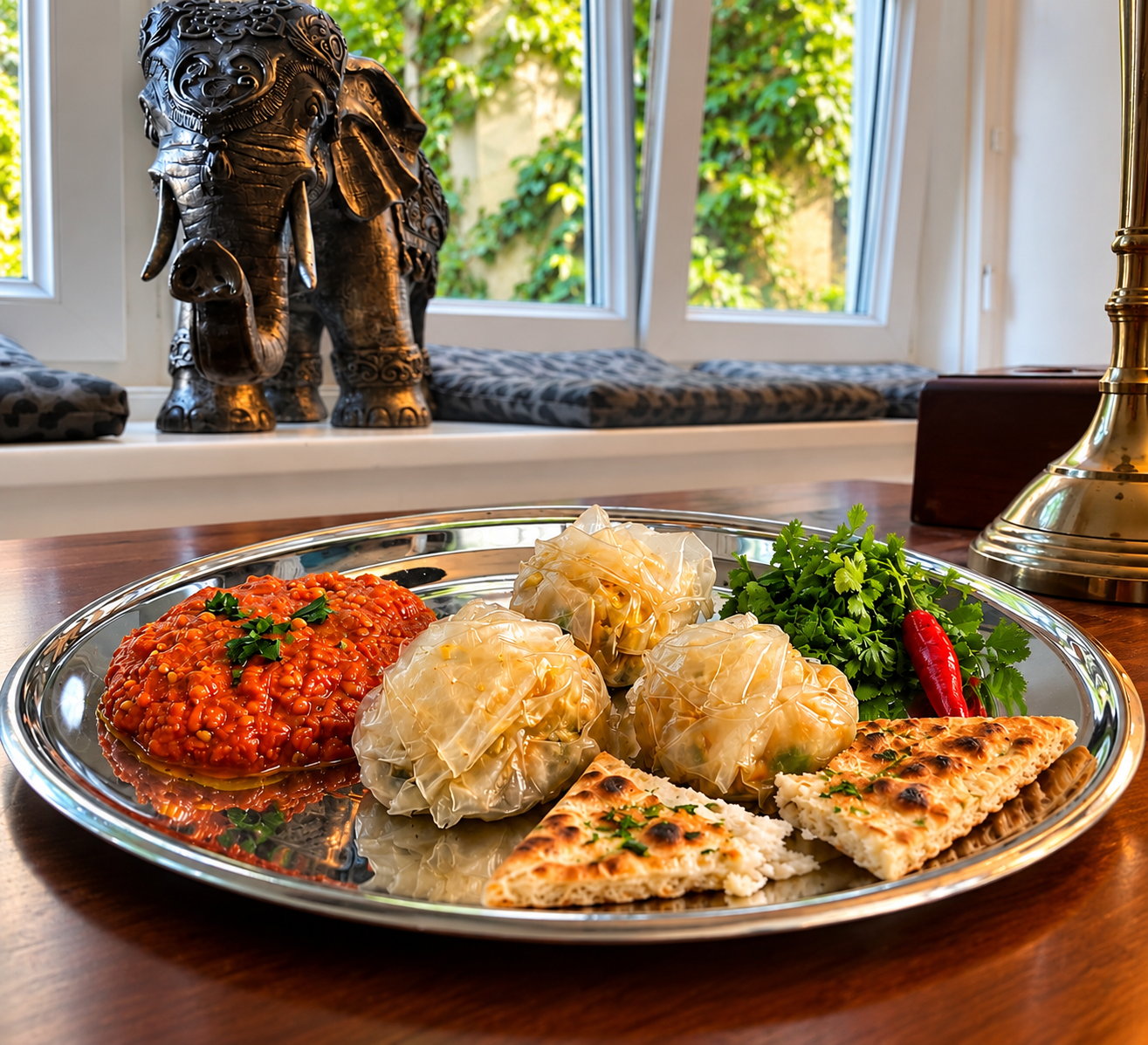
Nepalese Vegan Momos – Handmade Vegetable Dumplings with Spicy Tomato Sesame Achar
You may also like
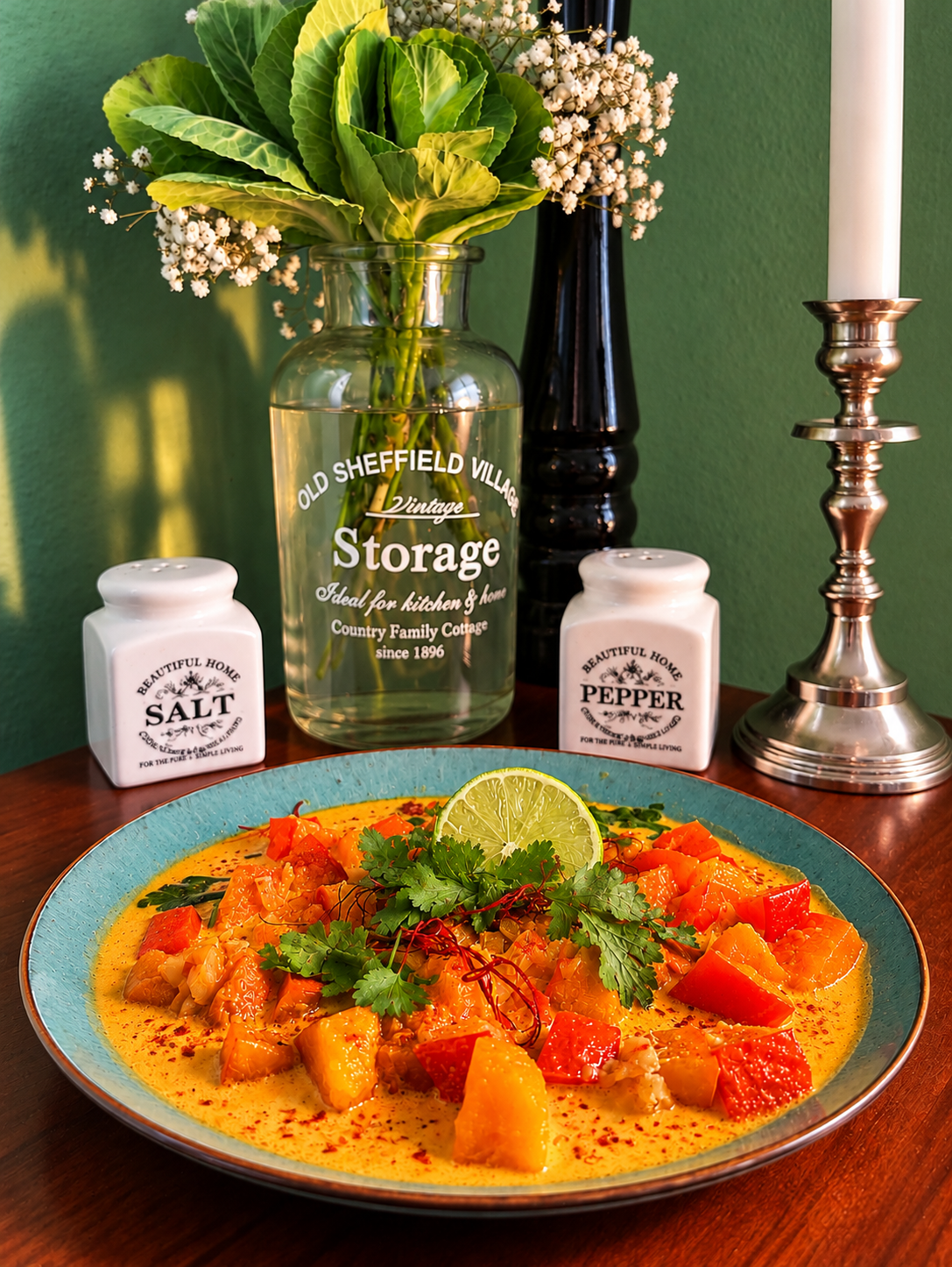
Khmer Pumpkin Curry with Coconut Milk
You may also like