From my kitchen to your plate.
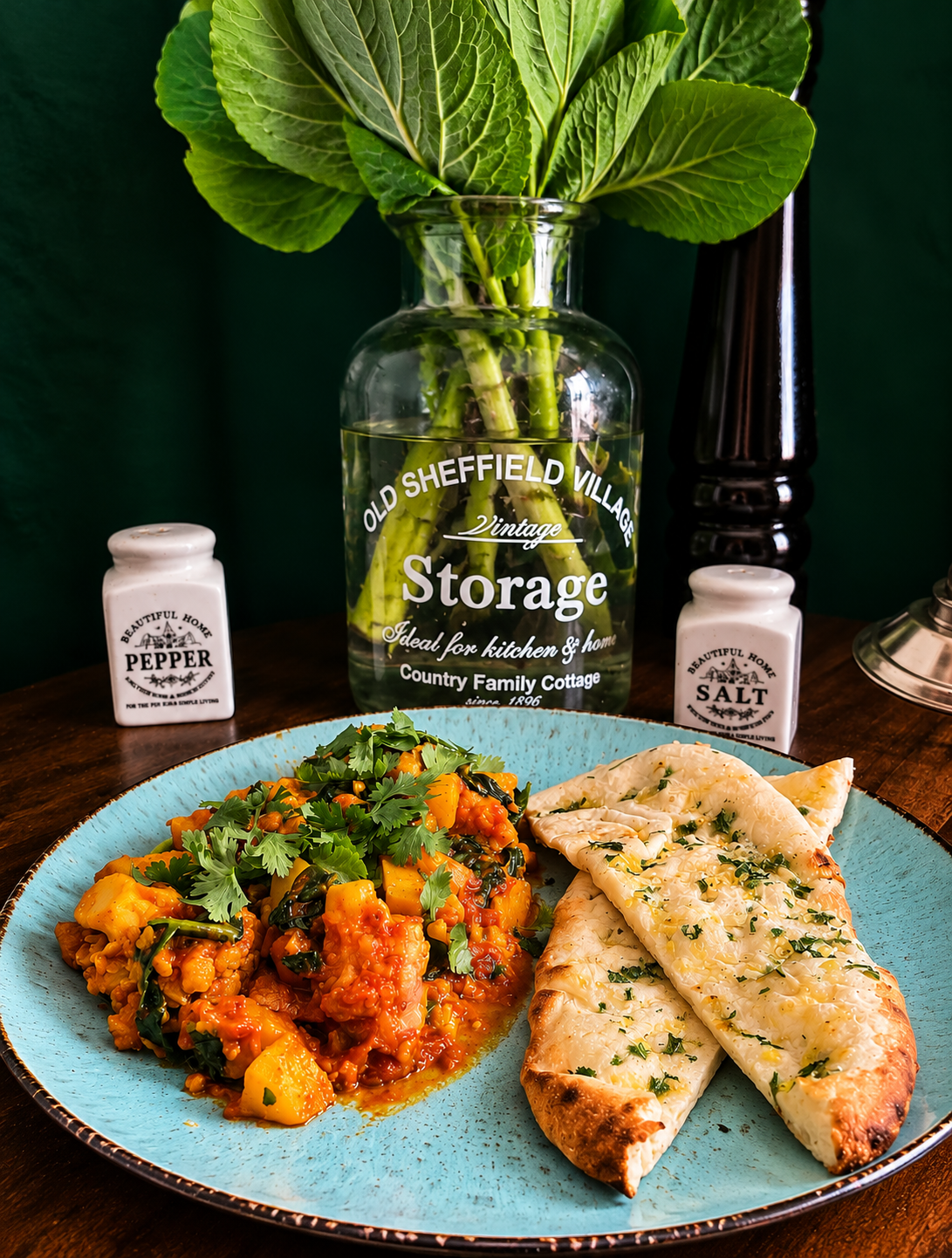
Pakistan – A Rich Tradition of Aromatic Home CookingPakistan's diverse culinary traditions feature fragrant spices, fresh vegetables, lentils, breads and richly seasoned curries. Everyday dishes often combine simple ingredients with carefully developed layers of flavour. Potatoes, cauliflower and spinach are familiar ingredients in Pakistani home cooking, while flatbreads such as naan and roti are popular accompaniments to vegetable curries.
What Is Aloo Gobi Palak?The name describes the three main ingredients: aloo means potato, gobi means cauliflower and palak means spinach. Aloo Gobi and Aloo Palak are both familiar vegetable preparations across Pakistan and the wider Indian subcontinent. This Via Veggie Vegan recipe combines all three vegetables in a fragrant tomato-based masala with cumin, coriander, turmeric, ginger, garlic and chilli. Homemade Garlic Naan, brushed with vegan butter and fresh garlic, completes this comforting plant-based interpretation.
From my kitchen to your plate.
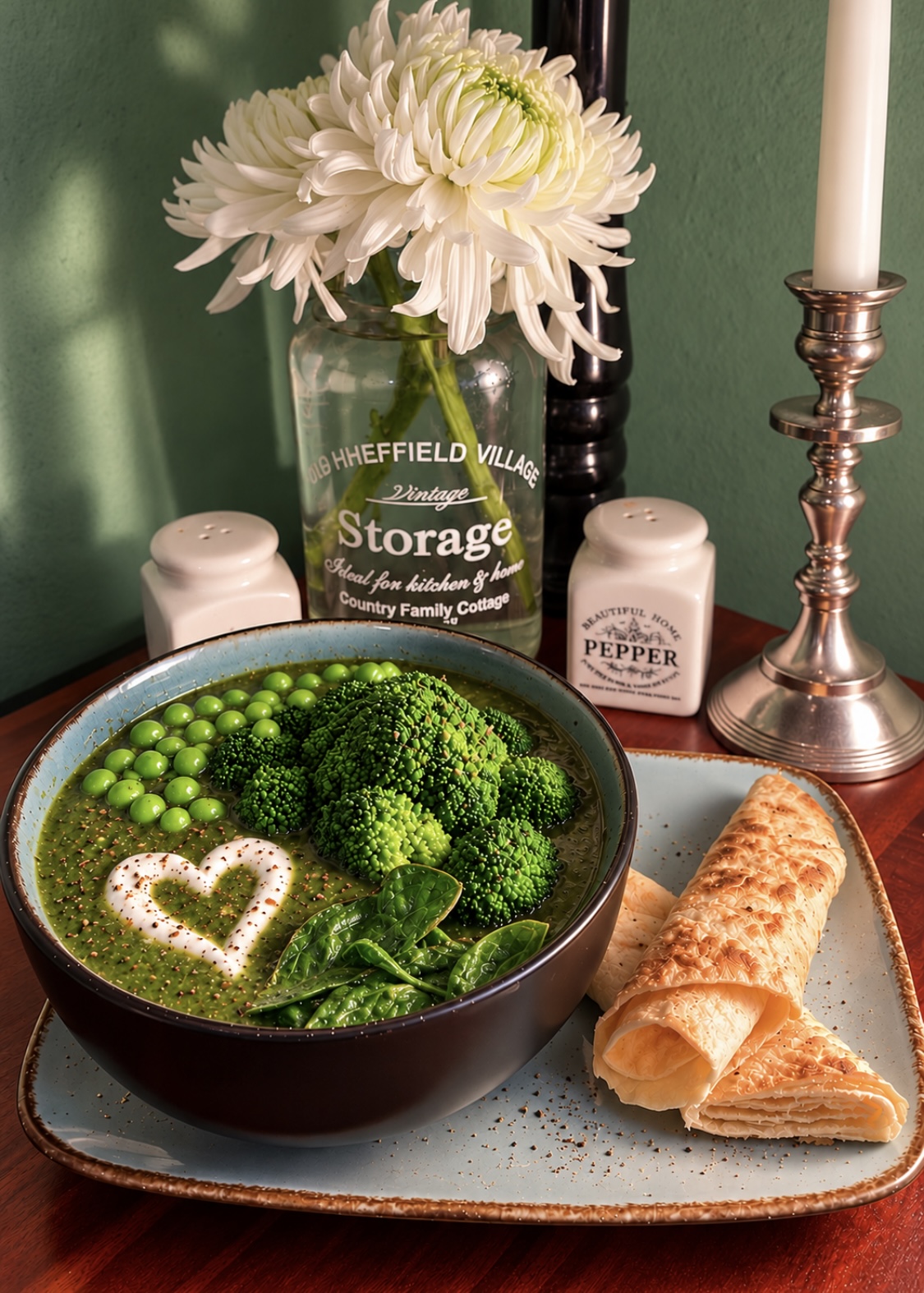
Dominica – The Nature Island of the CaribbeanDominica is a mountainous Caribbean island known for its lush rainforests, fertile volcanic landscapes and rich culinary heritage. Local cooking draws on fresh vegetables, tropical produce, herbs, root crops and traditional Caribbean seasonings. Callaloo is an important part of Dominican food culture, with recipes varying between families and households.
What Is Callaloo?Callaloo is a traditional Caribbean dish prepared with leafy greens and aromatic ingredients. In Dominica, dasheen leaves are traditionally associated with callaloo soup, although spinach can be used as an alternative. Okra contributes a characteristic texture, while coconut milk, thyme, onion, garlic and chilli create a fragrant, comforting combination. My Via Veggie Vegan version uses fresh spinach instead of dasheen leaves and adds broccoli, green peas, potato and a lighter coconut milk base. Crispy spinach leaves, two coconut cream hearts and optional rolled flatbread complete this colourful, fully plant-based interpretation.
From my kitchen to your plate.
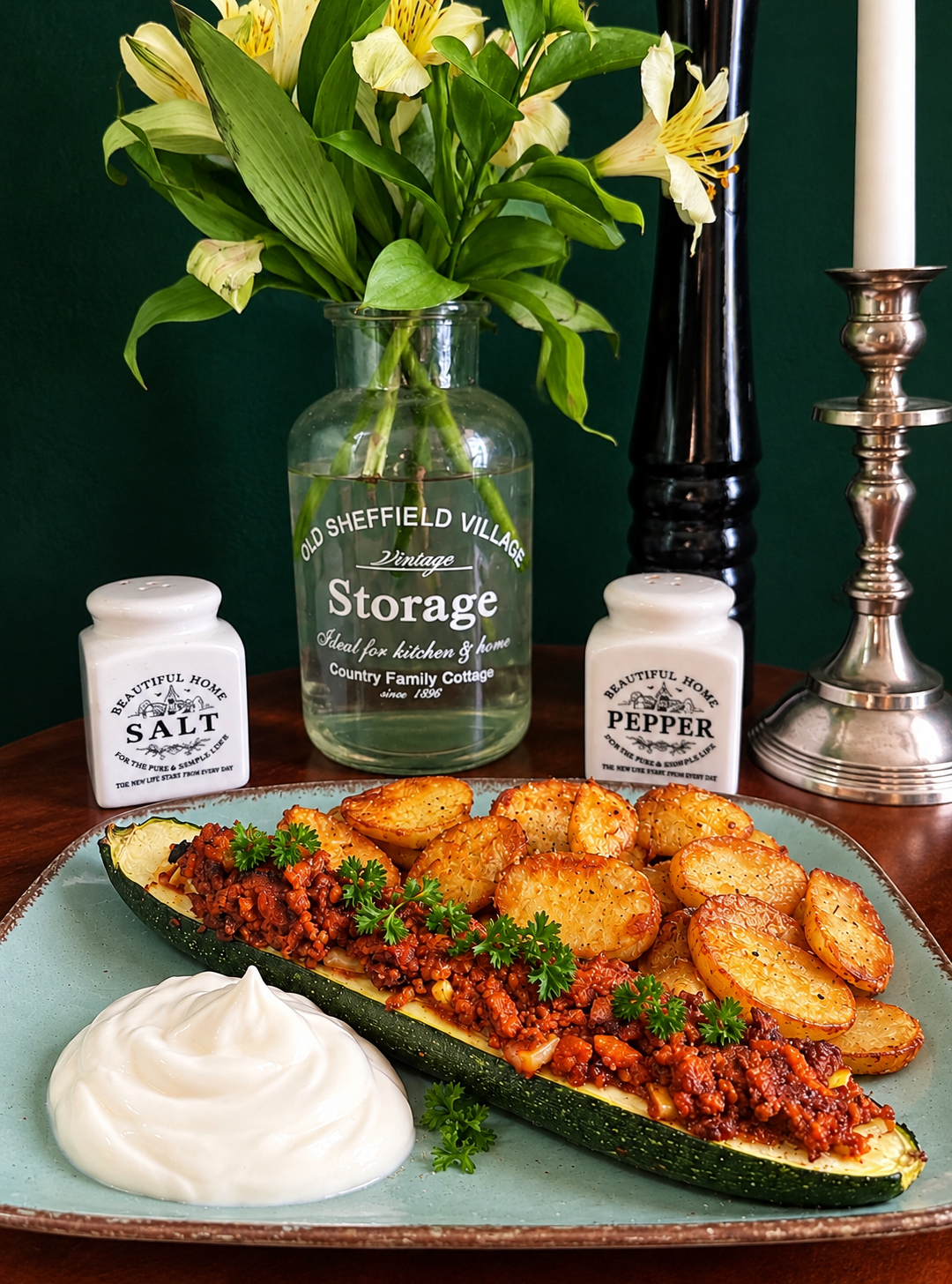
Bosnia & Herzegovina – A Country of Rich Balkan Food TraditionsBosnia & Herzegovina lies in southeastern Europe on the Balkan Peninsula. Its cuisine reflects a long history of cultural exchange, including Ottoman, Central European and Mediterranean influences. Traditional home cooking often features vegetables, grains, legumes, aromatic seasonings and slow-cooked dishes. Stuffed vegetables are particularly characteristic of the region, with peppers, cabbage leaves, onions and zucchini frequently used as edible containers for savory fillings. These dishes are closely associated with family kitchens, hospitality and comforting meals shared around the table.
What Are Punjene Tikvice or Dolma od Tikvica?Punjene Tikvice literally means stuffed zucchini, while Dolma od Tikvica refers to zucchini prepared in the wider tradition of stuffed vegetables known as dolma. Bosnian versions are commonly filled with minced meat, rice, onion and spices, then gently cooked in a tomato-based sauce. Some preparations use thick, hollowed-out zucchini cylinders, while others use zucchini halves or boats. My Via Veggie Vegan version follows the latter approach: the zucchini are halved lengthwise and filled with soy mince instead of beef. The traditional rice is omitted, and crispy oven-roasted potato slices provide a delicious accompaniment. Vegan sour cream replaces the dairy-based topping, creating a completely plant-based interpretation of this comforting Balkan favorite.
From my kitchen to your plate.
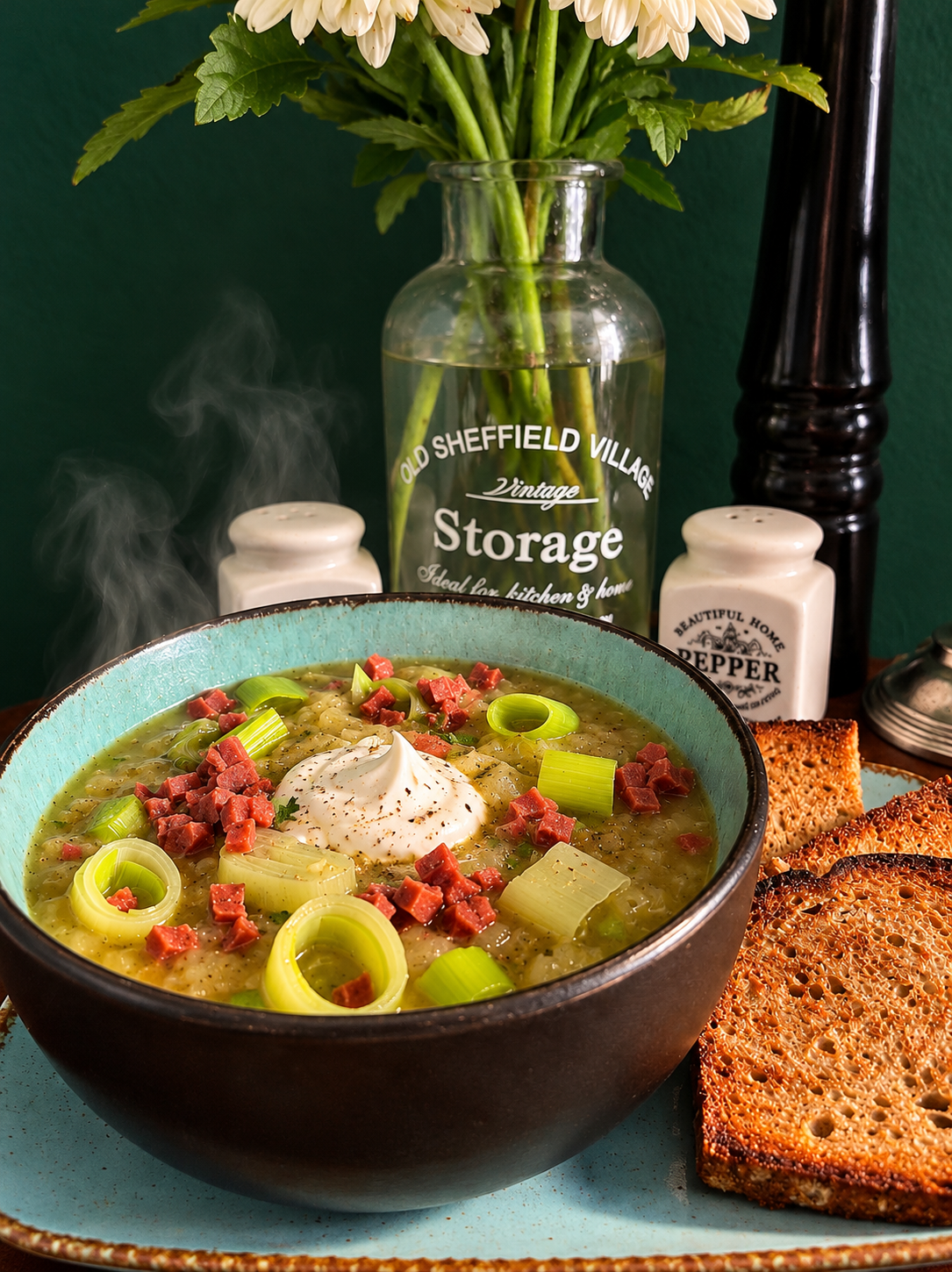
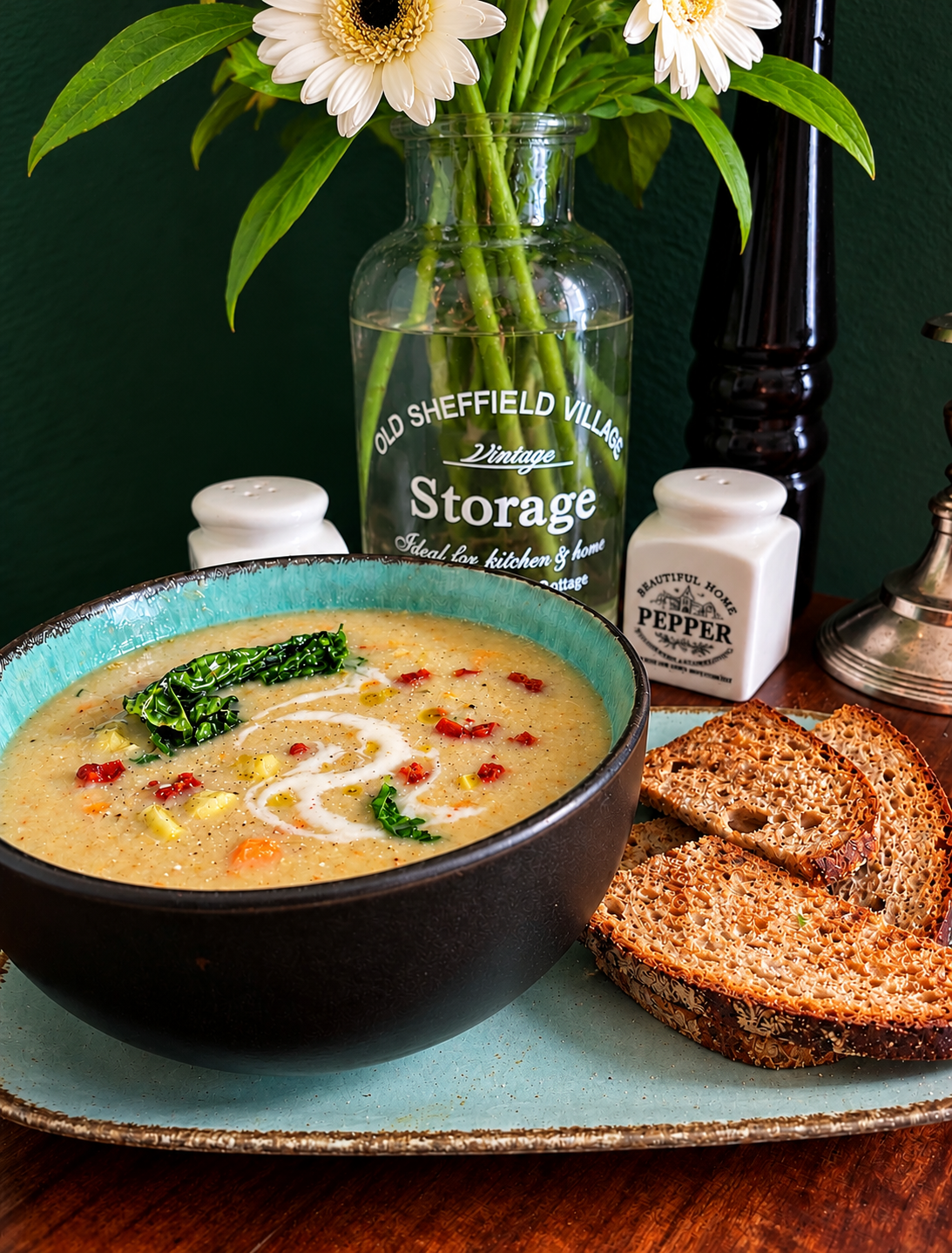
The Netherlands – A Country of Hearty, Practical Home CookingDutch cuisine has traditionally made excellent use of affordable, locally grown vegetables, especially potatoes, leeks, carrots, onions and cabbage. The Netherlands has a long agricultural history, and simple, nourishing dishes have been part of everyday family cooking for generations. From hearty stamppot to warming vegetable soups, Dutch comfort food is all about making the most of seasonal ingredients and transforming them into satisfying meals.
Aardappel-preisoep – Traditional Dutch Potato Leek SoupAardappel-preisoep literally translates to potato leek soup. This familiar Dutch home-style dish combines potatoes and leeks in a warming, gently flavoured soup. Some versions are blended until completely smooth, while others retain chunks of vegetables for a more rustic consistency. My Via Veggie Vegan interpretation combines both textures and adds plant-based cooking cream, nutritional yeast, crispy vegan bacon and a spoonful of vegan sour cream for an extra comforting finish.
From my kitchen to your plate.
Poland – A Country of Hearty Traditions and Regional CuisinePoland is a Central European country with a rich culinary heritage shaped by regional traditions, seasonal produce and generations of home cooking. Polish cuisine is particularly well known for its comforting soups, potato dishes, cabbage preparations, dumplings and hearty stews. Vegetables such as carrots, potatoes, onions, beetroot and kohlrabi have long played an important role in everyday meals. From the Baltic coast to the mountainous south, Polish cooking celebrates familiar ingredients transformed into satisfying dishes that bring families together around the table.
Silesian Oberiba – A Traditional Kohlrabi SoupOberiba is a regional name associated with kohlrabi in Silesian culinary traditions. Kohlrabi soup, known more generally in Polish as zupa z kalarepy, is a rustic vegetable preparation that can feature tender kohlrabi, potatoes, carrots, broth and cream. In traditional versions, meat-based broth may provide additional depth, while the tender young kohlrabi leaves can be cooked alongside the vegetables. My Via Veggie Vegan interpretation replaces animal-based ingredients with homemade vegetable broth, oat cream and vegan ham cubes. Crispy kohlrabi leaves and a little vegan sour cream give this comforting Silesian-inspired soup a delicious finishing touch.
From my kitchen to your plate.
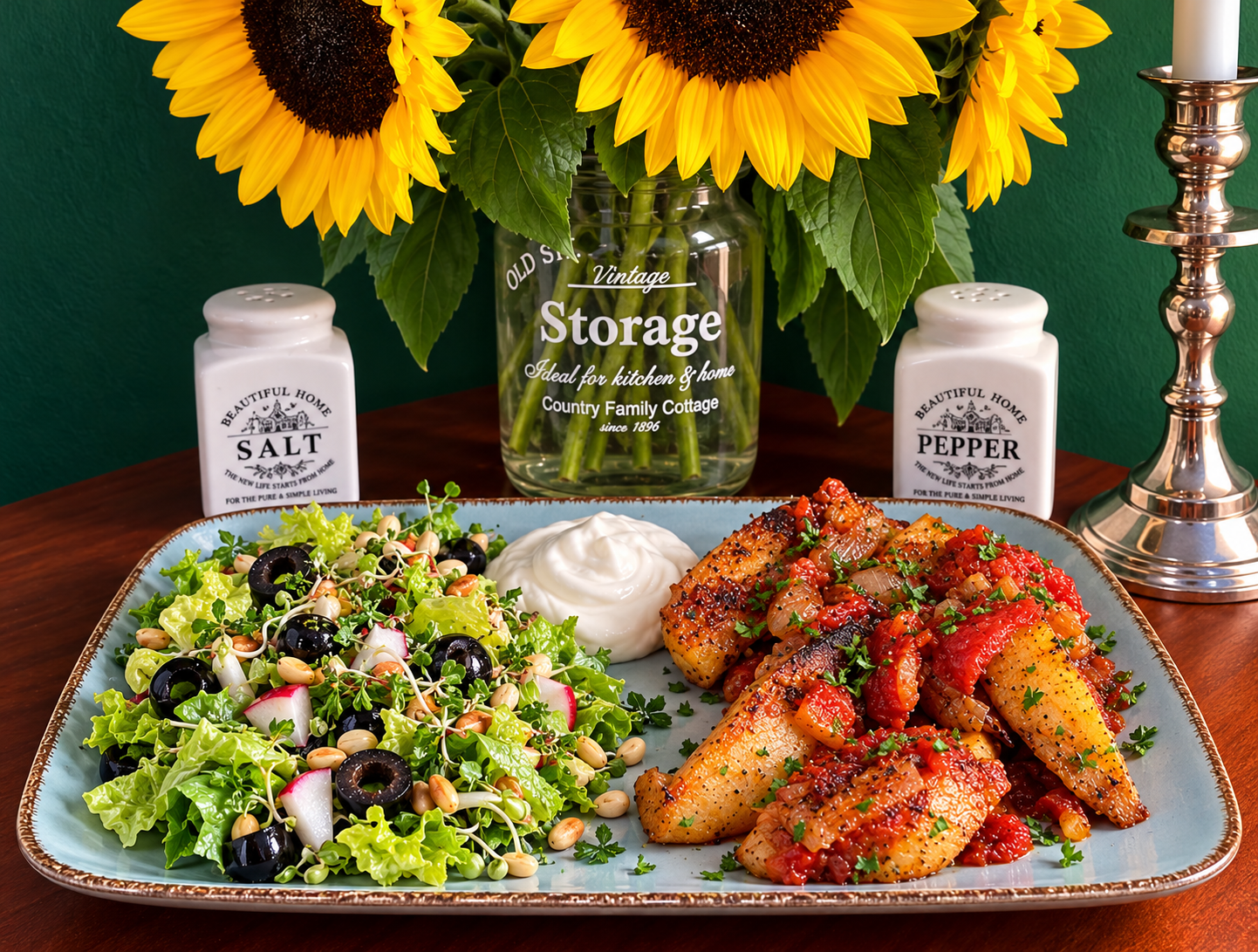
Cyprus – An Island of Mediterranean Flavours
Located in the eastern Mediterranean, Cyprus has a rich culinary heritage shaped by its geography, agricultural traditions and centuries of cultural exchange. Fresh vegetables, olive oil, herbs, citrus fruits and legumes are essential ingredients in everyday cooking. Family meals often celebrate seasonal produce and dishes designed to be shared around the table.
Patates tou Fournou – Traditional Cypriot Oven Potatoes
Patates tou Fournou (Πατάτες του Φούρνου) literally means oven potatoes. Unlike ordinary roasted potatoes, this traditional Cypriot speciality is slowly cooked with olive oil, aromatic oregano, tomatoes, onions and a little liquid. The potatoes first become tender through gentle steaming and braising before developing beautifully golden edges during the final uncovered roasting stage. A wonderfully rustic Mediterranean dish that is naturally vegan when prepared with vegetable stock.
From my kitchen to your plate.
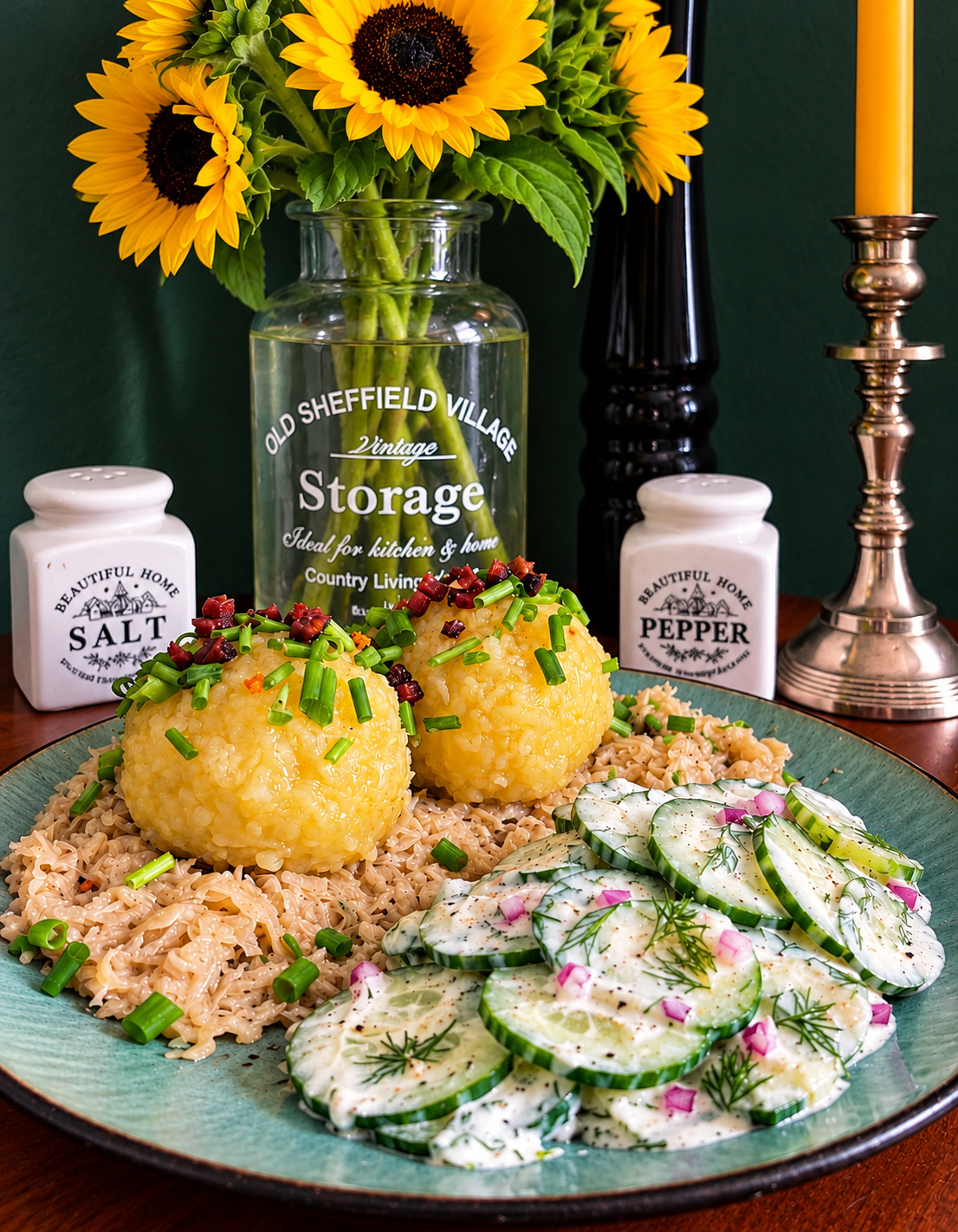
Austria – Alpine Landscapes and a Rich Culinary HeritageAustria is a landlocked country in Central Europe, famous for its spectacular Alpine landscapes, historic cities and diverse regional food traditions. Its cuisine reflects centuries of cultural exchange within the former Habsburg monarchy and neighbouring countries. Hearty dumplings, potato dishes, seasonal vegetables and traditional pastries play an important role in Austrian cooking. From Tyrolean mountain specialities to Viennese classics and the rustic cuisine of Upper Austria, the country's culinary heritage is wonderfully varied.
What Are Grammelknödel?Grammelknödel are traditional Austrian dumplings particularly associated with Upper Austria. The name combines Grammeln, meaning crispy pork cracklings, with Knödel, the German word for dumplings. Traditionally, a soft potato dough is filled with seasoned cracklings, onions and marjoram, then gently cooked and commonly served with sauerkraut. My Via Veggie Vegan interpretation replaces the traditional pork filling with savoury plant-based ham cubes and uses a completely vegan potato dough. Served with creamy sauerkraut and a refreshing cucumber-dill salad, this hearty Austrian classic becomes a delicious plant-based comfort meal.
From my kitchen to your plate.
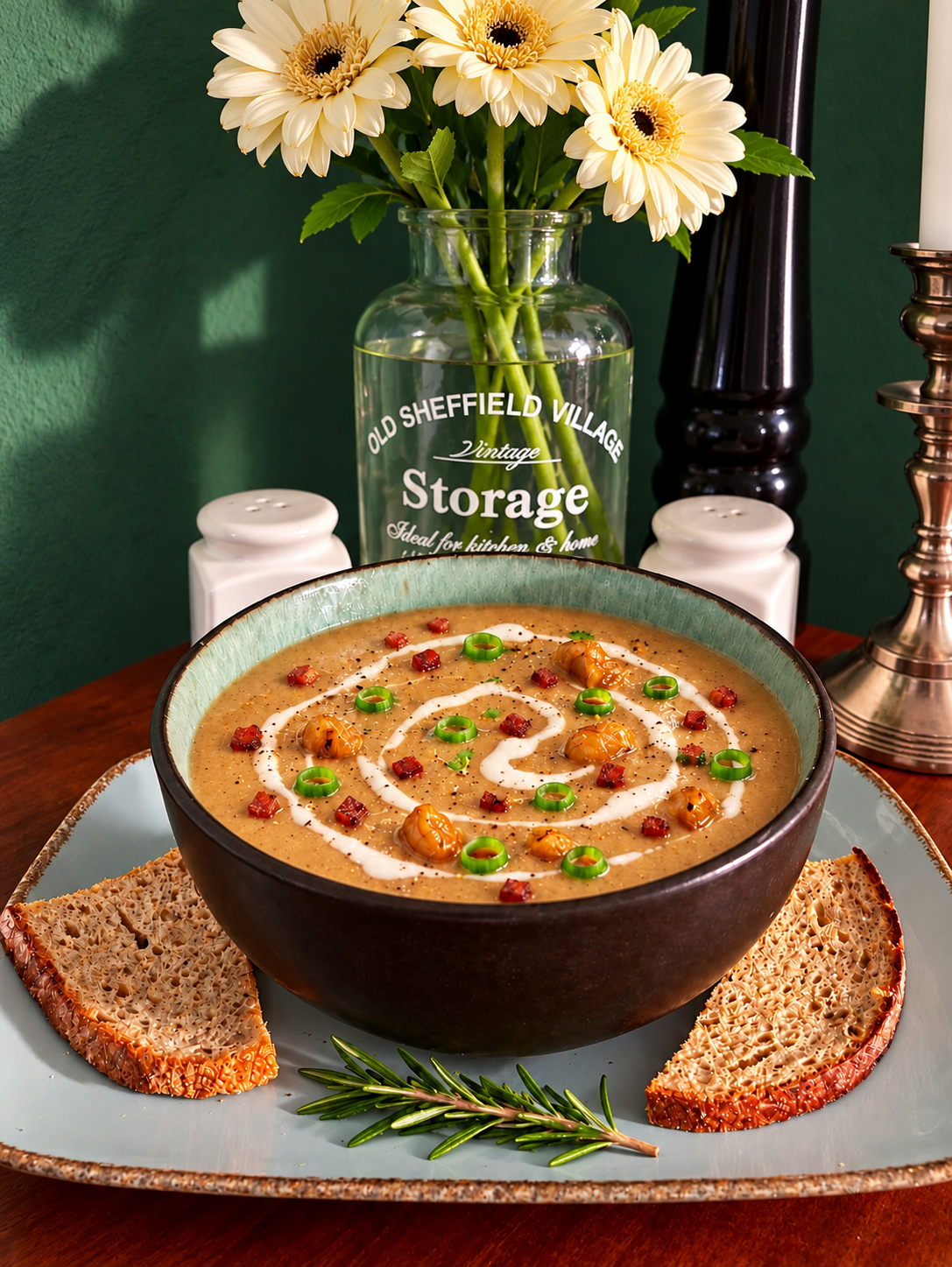
Albania – Mountains, Forests and Mediterranean Traditions
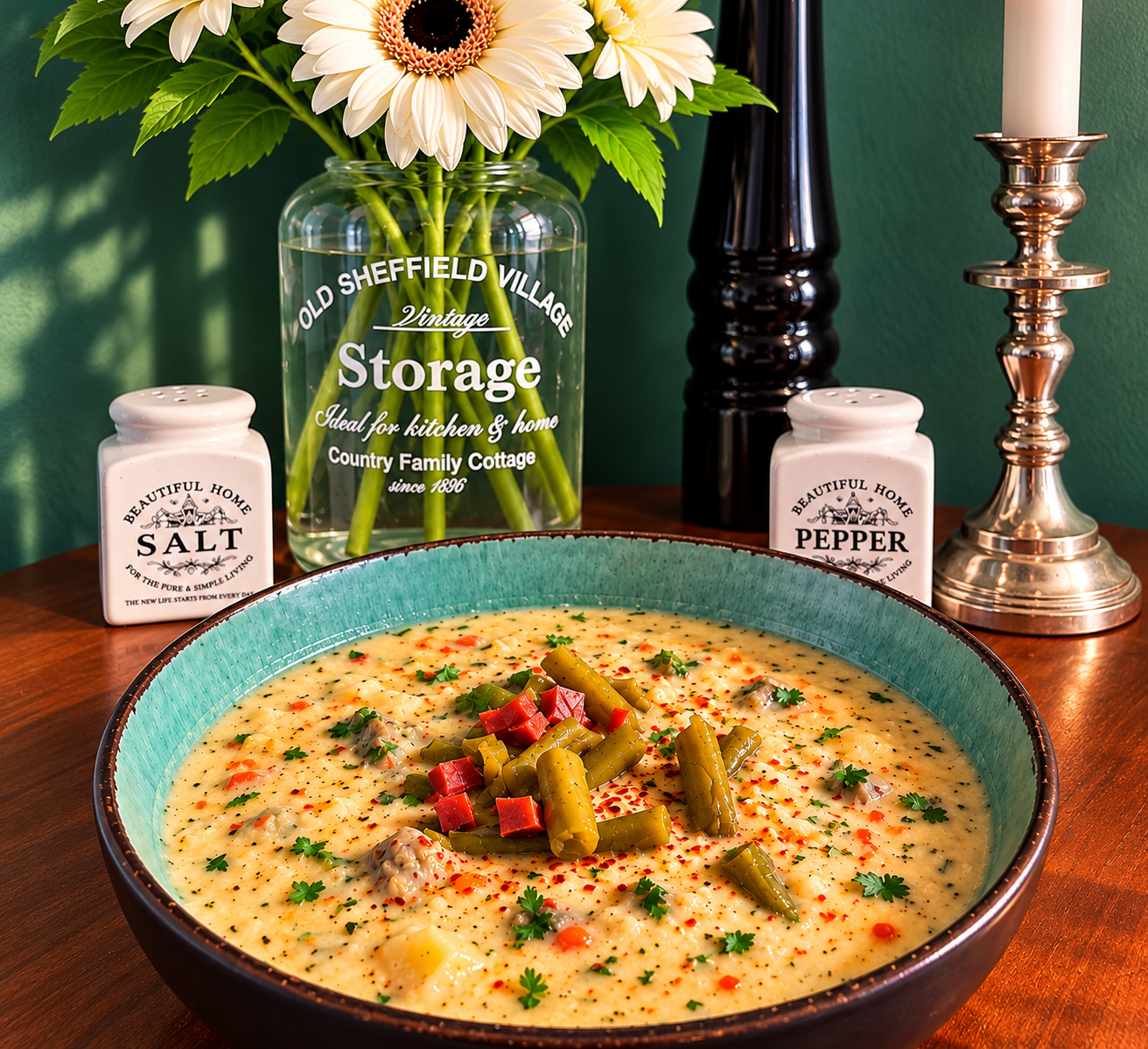
Albania is a country in southeastern Europe, bordered by the Adriatic and Ionian Seas and characterized by dramatic mountains, fertile valleys and diverse regional food traditions. Its cuisine reflects Mediterranean and Balkan influences, with olive oil, vegetables, herbs, legumes and seasonal produce playing important roles. Chestnuts grow in several forested regions, including northern Albania and areas around Lake Ohrid, where they have long been valued as a seasonal food.
What Is Supa me Gështenja?
Supa me gështenja simply means chestnut soup in Albanian. This recipe is a rustic, Albanian-inspired preparation rather than a single standardized national dish. Cooked chestnuts are combined with leeks, potatoes, garlic and vegetable stock to create a naturally creamy texture. A little olive oil adds richness, while nutmeg complements the chestnuts' mild sweetness. For my Via Veggie Vegan version, crispy plant-based bacon replaces the optional traditional meat topping, bringing a smoky, savory contrast to the smooth soup.
From my kitchen to your plate.
Luxembourg – A Small Country with a Rich Culinary Heritage
Luxembourg is a small landlocked country in Western Europe, bordered by Belgium, Germany and France. Its cuisine reflects influences from all three neighboring countries while maintaining its own distinctive traditions. Hearty soups, potatoes, legumes, regional vegetables and rustic meat dishes have long played important roles in Luxembourgish home cooking. The country's landscape ranges from the wooded hills of the Ardennes in the north to the fertile agricultural regions and vineyards of the Moselle Valley in the southeast.
What Is Bouneschlupp?
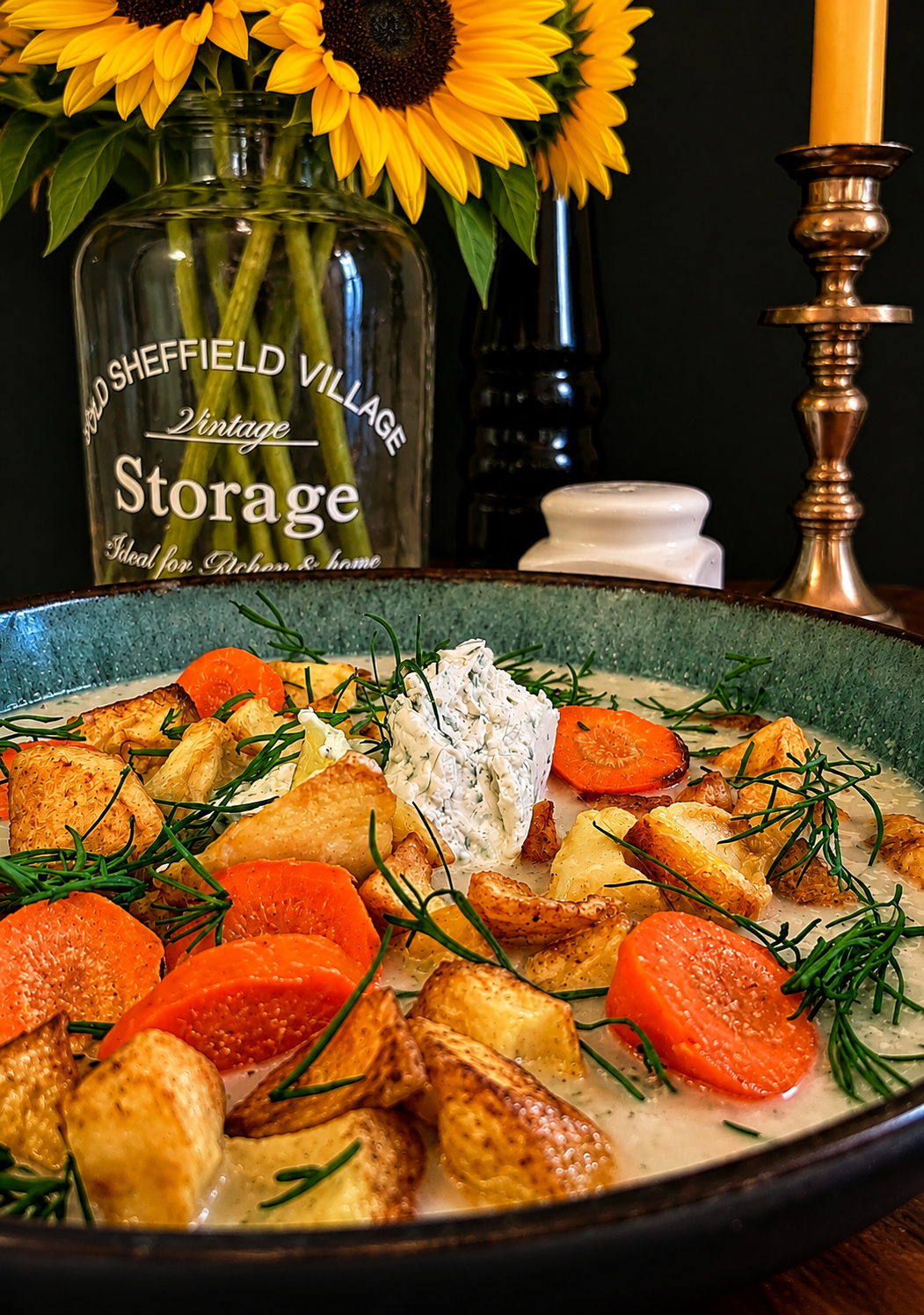
Bouneschlupp is one of Luxembourg's best-known traditional soups, prepared primarily with green beans and potatoes. Depending on the household and regional tradition, it may also contain onions, bacon, sausage, cream and aromatic herbs such as savory. The soup is particularly associated with simple, satisfying home cooking. This Via Veggie Vegan version keeps the green beans and potatoes at the heart of the dish while replacing traditional meat products with vegan beef-style pieces and crispy plant-based bacon. Vegan cooking cream creates a rich, comforting broth without dairy.
From my kitchen to your plate.
Lithuania – A Baltic Country of Forests, Lakes and Culinary Traditions
Lithuania is one of the three Baltic states, situated along the southeastern coast of the Baltic Sea. Its landscapes are characterized by forests, lakes, rivers, wetlands and gently rolling countryside. Agriculture and seasonal ingredients have shaped Lithuanian food culture for centuries. Potatoes, rye, cabbage, beets, mushrooms and root vegetables are important elements of traditional cooking, particularly in hearty dishes designed to provide warmth and nourishment during the colder seasons.
What Is Ropių Sriuba?
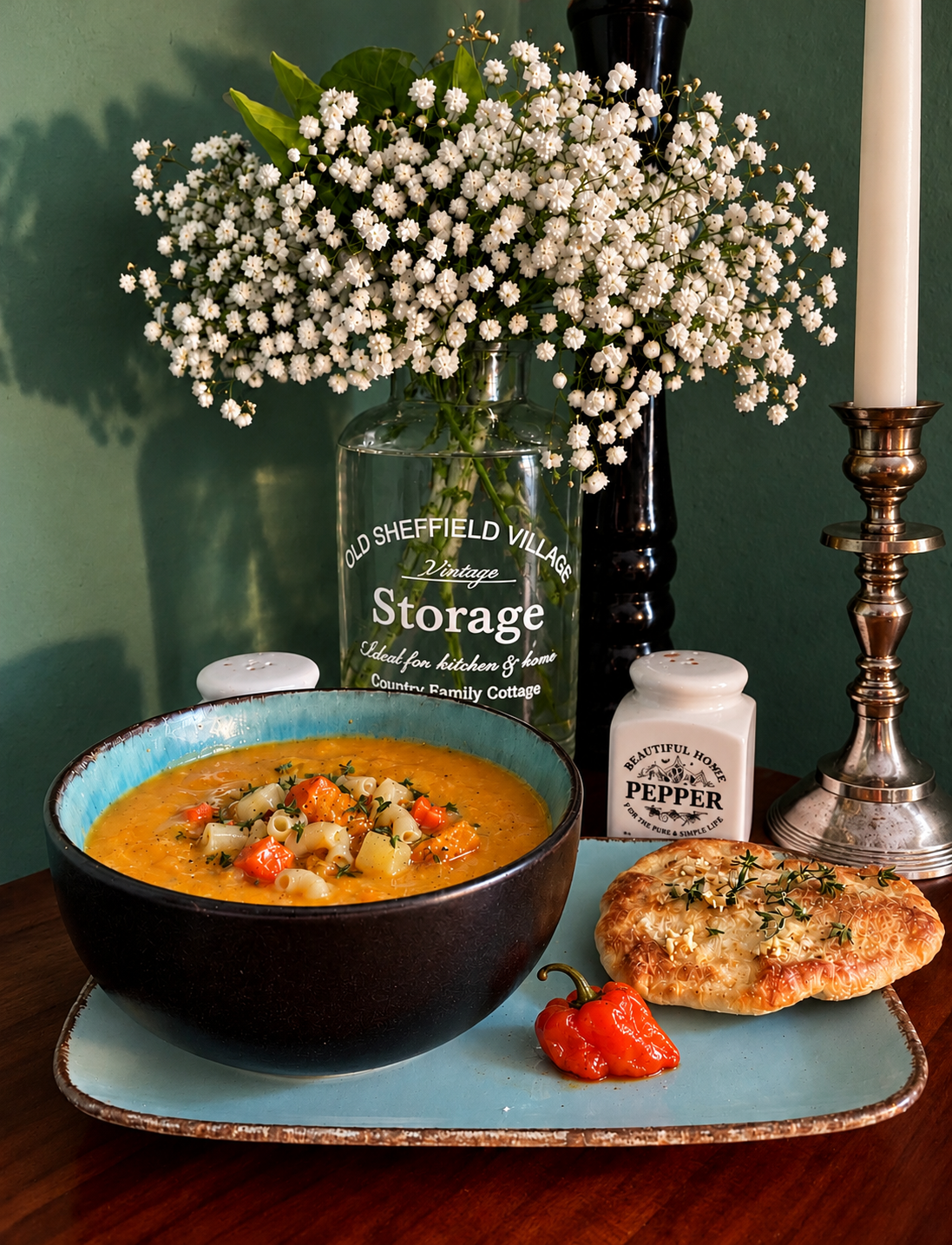
Ropių Sriuba literally means turnip soup in Lithuanian. Rather than referring to one strictly standardized national recipe, the name describes a traditional style of vegetable soup built around turnips and other seasonal ingredients. Turnips were cultivated in the Baltic region long before potatoes became a dominant staple. Combined with potatoes, carrots, leek and aromatic herbs, they create a satisfying rustic soup. This Via Veggie Vegan interpretation uses vegetable broth and vegan sour cream for a completely plant-based version of this comforting dish.
From my kitchen to your plate.
Haiti – The Caribbean Nation That Fought for FreedomHaiti occupies the western part of the Caribbean island of Hispaniola, which it shares with the Dominican Republic. Its culture reflects a rich heritage shaped by African traditions, Indigenous history, French colonial influence and the extraordinary struggle for independence. On 1 January 1804, Haiti declared its independence after a successful revolution against French colonial rule, becoming the first independent Black republic and the first state established through a successful revolt by enslaved people. Haitian cuisine is known for its vibrant seasonings, aromatic herbs, vegetables, rice, beans and deeply flavorful dishes. Food plays an important role in family gatherings, cultural identity and the preservation of traditions.
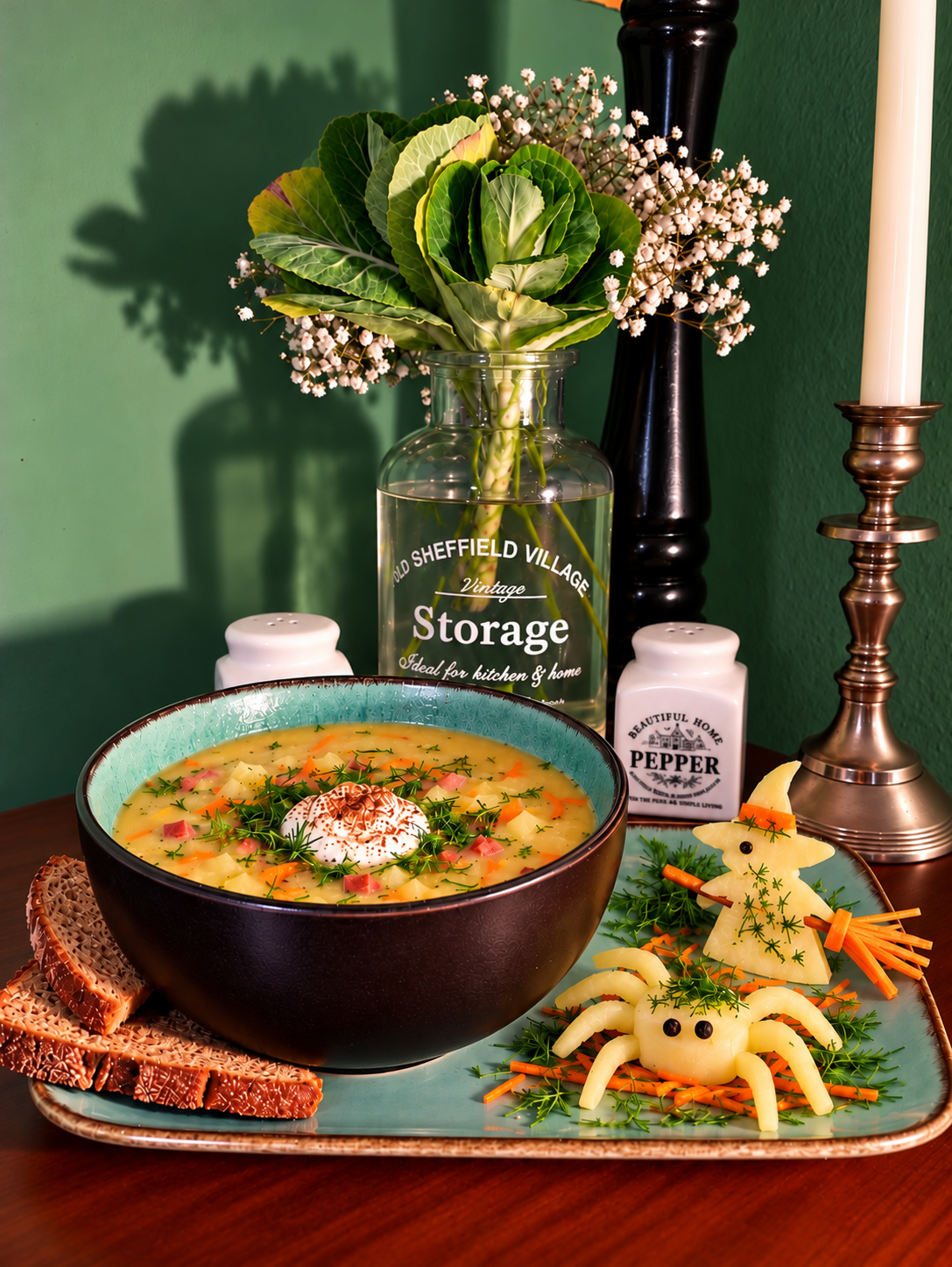
Soup Joumou – Haiti's Freedom Soup, Traditionally Eaten on 1 JanuarySoup Joumou is a traditional Haitian squash soup with profound historical and cultural significance. According to Haitian tradition, during French colonial rule, the richly prepared soup was associated with the colonial elite and denied to enslaved Haitians. Following independence on 1 January 1804, preparing and enjoying Soup Joumou became a powerful symbol of liberation, dignity and the freedom to enjoy what had previously been forbidden. Today, Haitian families and communities in Haiti and around the world traditionally prepare and share the soup on New Year's Day, which is also Haiti's Independence Day. Soup Joumou is often described as a soup of freedom, unity and peace. In 2021, UNESCO inscribed the knowledge and practices surrounding Joumou soup on its Representative List of the Intangible Cultural Heritage of Humanity. Traditional versions often contain meat, while this Via Veggie Vegan interpretation celebrates the dish with butternut squash, vegetables, pasta, homemade Haitian epis and vegetable broth.
From my kitchen to your plate.
Estonia – Seasonal Comfort Food from the Baltic RegionEstonia is a Northern European country on the Baltic Sea, known for its forests, islands and strong connection to seasonal ingredients. Traditional Estonian cuisine features potatoes, cabbage, root vegetables, rye bread and fresh herbs. Dill is particularly popular in soups, potato dishes and salads, while sour cream is a familiar accompaniment to many savory meals. Simple, warming dishes have long played an important role in everyday Estonian home cooking, especially during the colder months.
Estonian Kohlrabi Soup – A Creamy Vegan InterpretationThis Estonian-inspired Kohlrabisupp draws on the region's love of seasonal vegetables, potatoes and fresh dill rather than reproducing a specific traditional national dish. Kohlrabi and potatoes are simmered in vegetable stock and blended with soy cooking cream to create a smooth, comforting soup. Finely grated carrots provide a delicate texture, while nutritional yeast, crispy vegan bacon-style cubes and plant-based sour cream add savory richness. For Halloween, cooked kohlrabi is transformed into a handmade witch and spider, bringing a playful Via Veggie Vegan twist to this Baltic-inspired autumn recipe.
From my kitchen to your plate.
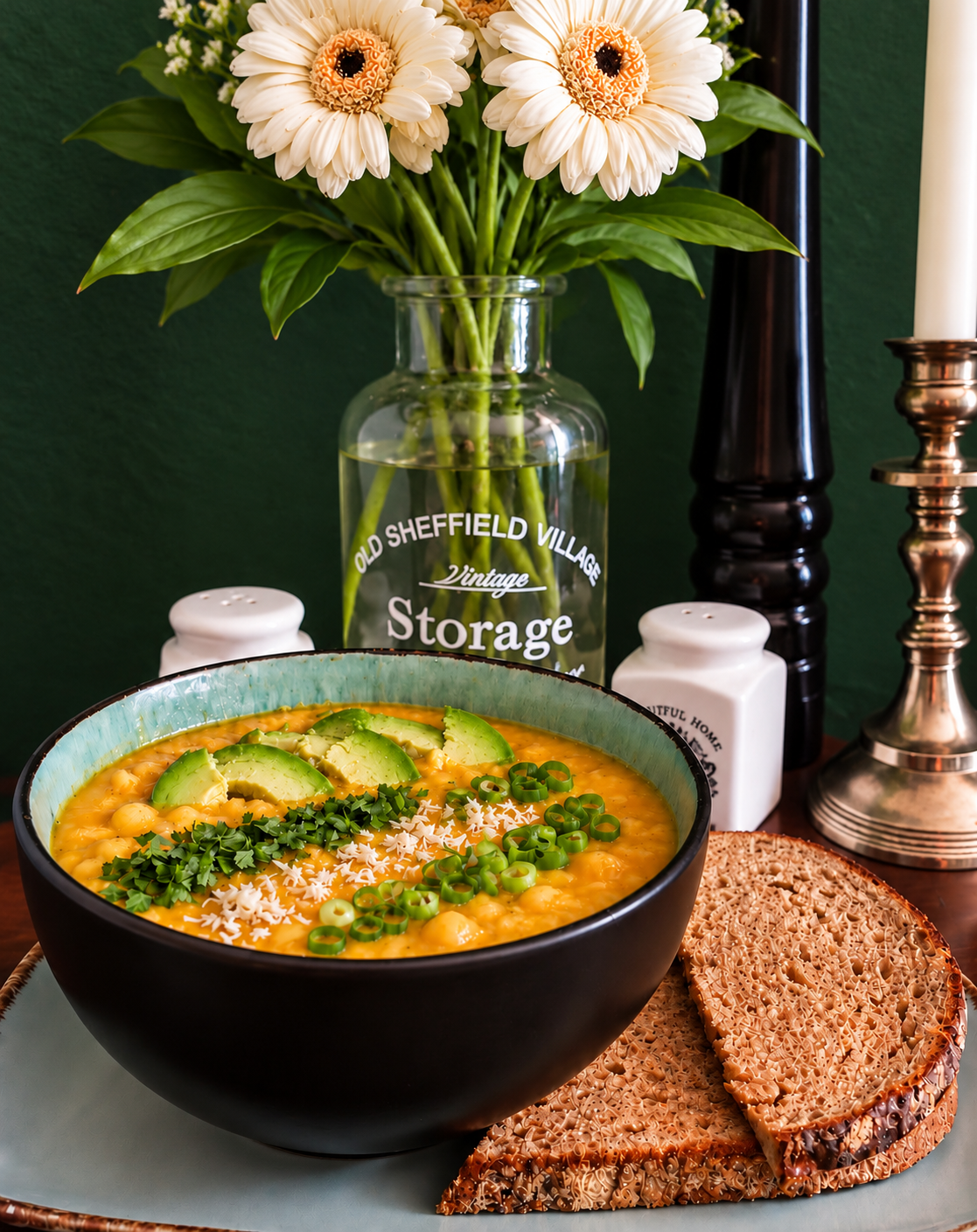
Ecuador – From the Andes to the PacificEcuador is a South American country with an extraordinarily diverse landscape, stretching from the Pacific coast through the Andes to the Amazon rainforest. Its cuisine reflects these different regions and their agricultural traditions. In the Andean highlands, potatoes, corn, legumes and other locally cultivated ingredients have shaped everyday cooking for centuries. Ecuador is also home to the Galápagos Islands, famous for their remarkable biodiversity.
What Is Locro de Papa?Locro de Papa is one of Ecuador's best-known traditional potato soups, particularly associated with the Andean highlands. It is usually prepared with potatoes, onions, garlic, cumin, milk and fresh cheese, and is often served with avocado. The potatoes give the soup its characteristic thick, comforting texture. My vegan interpretation replaces dairy products with a vegan butter alternative, unsweetened plant-based drink and vegan cheddar. Nutritional yeast adds savory depth, while fresh coriander, spring onions and avocado complete the dish.
From my kitchen to your plate.
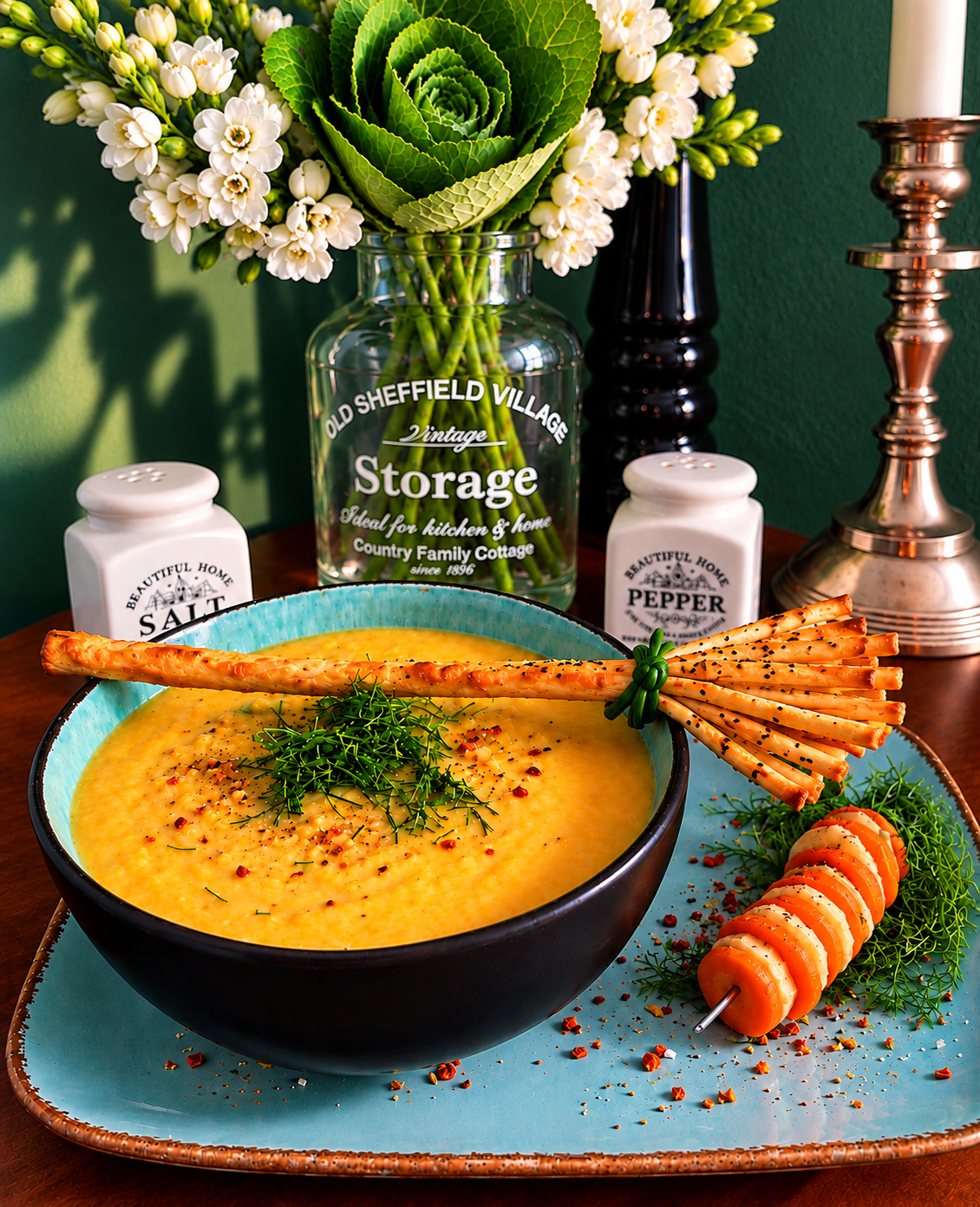
Finland – Nordic Nature and Comforting CuisineFinland is a Nordic country famous for its forests, thousands of lakes, long winters and strong connection to nature. Finnish cuisine makes excellent use of seasonal ingredients, particularly potatoes, carrots, parsnips and other root vegetables that can be stored throughout the colder months. Simple, nourishing soups are an important part of everyday home cooking, offering warmth and comfort when temperatures drop.
What Is Porkkana-Palsternakkasosekeitto?The Finnish name describes the dish perfectly: "porkkana" means carrot, "palsternakka" means parsnip and "sosekeitto" means puréed soup. This creamy vegetable soup combines the natural sweetness of carrots with the earthy, aromatic flavor of parsnips. A small potato provides body, while plant-based cream creates a smooth texture. My vegan version is finished with fresh dill and given a spooky Halloween makeover with a homemade pizza dough witch's broom and decorative vegetable skewers.
From my kitchen to your plate.
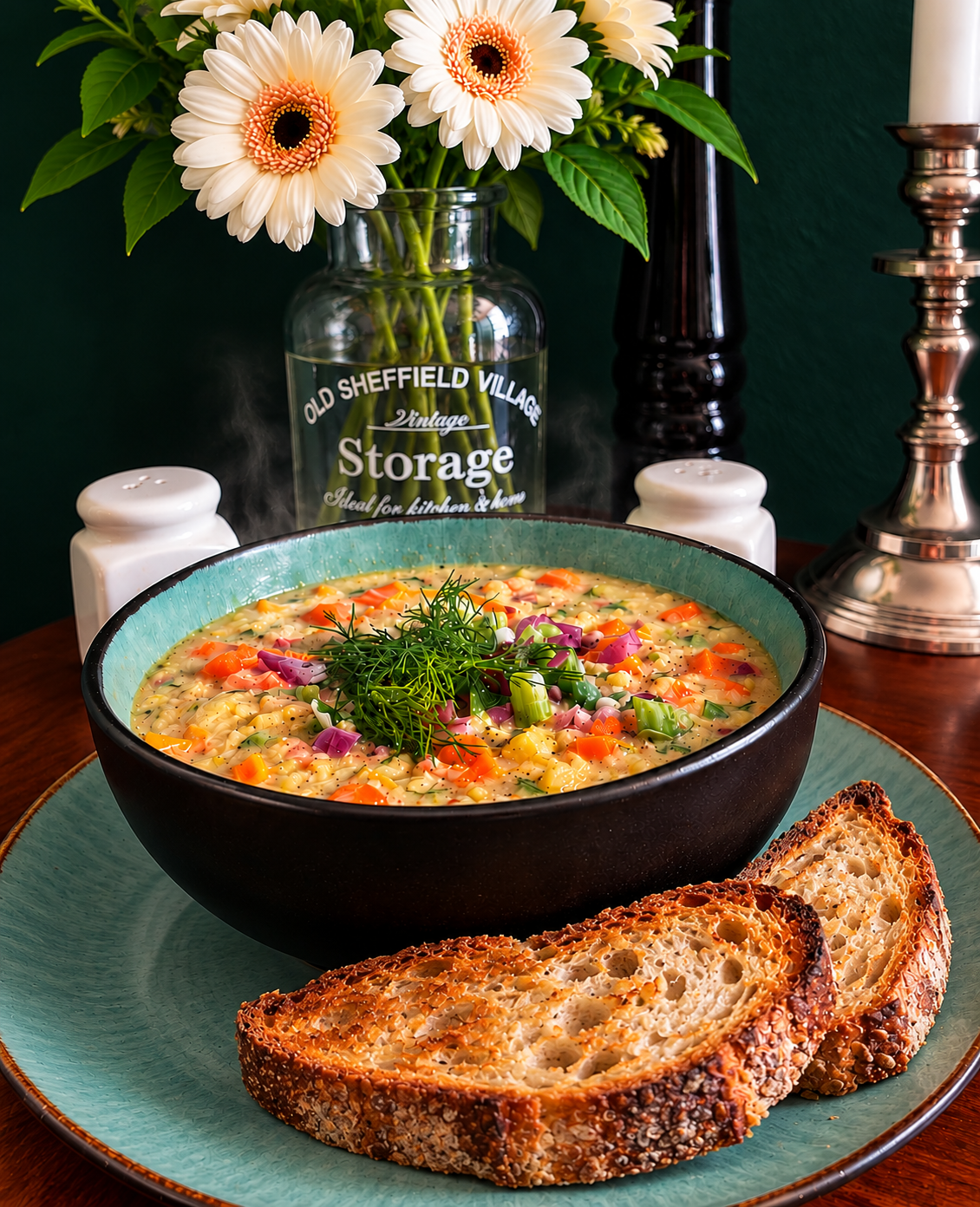
Finland – The Land of a Thousand LakesFinland is a Nordic country known for its forests, countless lakes, long winters and strong connection to nature. Its traditional cuisine reflects the country's geography and climate, with potatoes, root vegetables, rye bread, berries, mushrooms and fish playing important roles. Simple, warming soups are particularly popular, and fresh herbs such as dill bring characteristic Nordic flavors to many dishes.
What Is Lohikeitto?Lohikeitto is a traditional Finnish salmon soup made with fresh salmon, potatoes, leek, often carrots, cream and fresh dill. The name comes from the Finnish words "lohi" (salmon) and "keitto" (soup). My vegan interpretation replaces the salmon with homemade carrot lox, marinated in nori, soy sauce, lemon and liquid smoke. Oat cream and unsweetened oat drink create a rich, comforting broth without dairy, while the classic combination of potatoes, vegetables and dill remains.
From my kitchen to your plate.
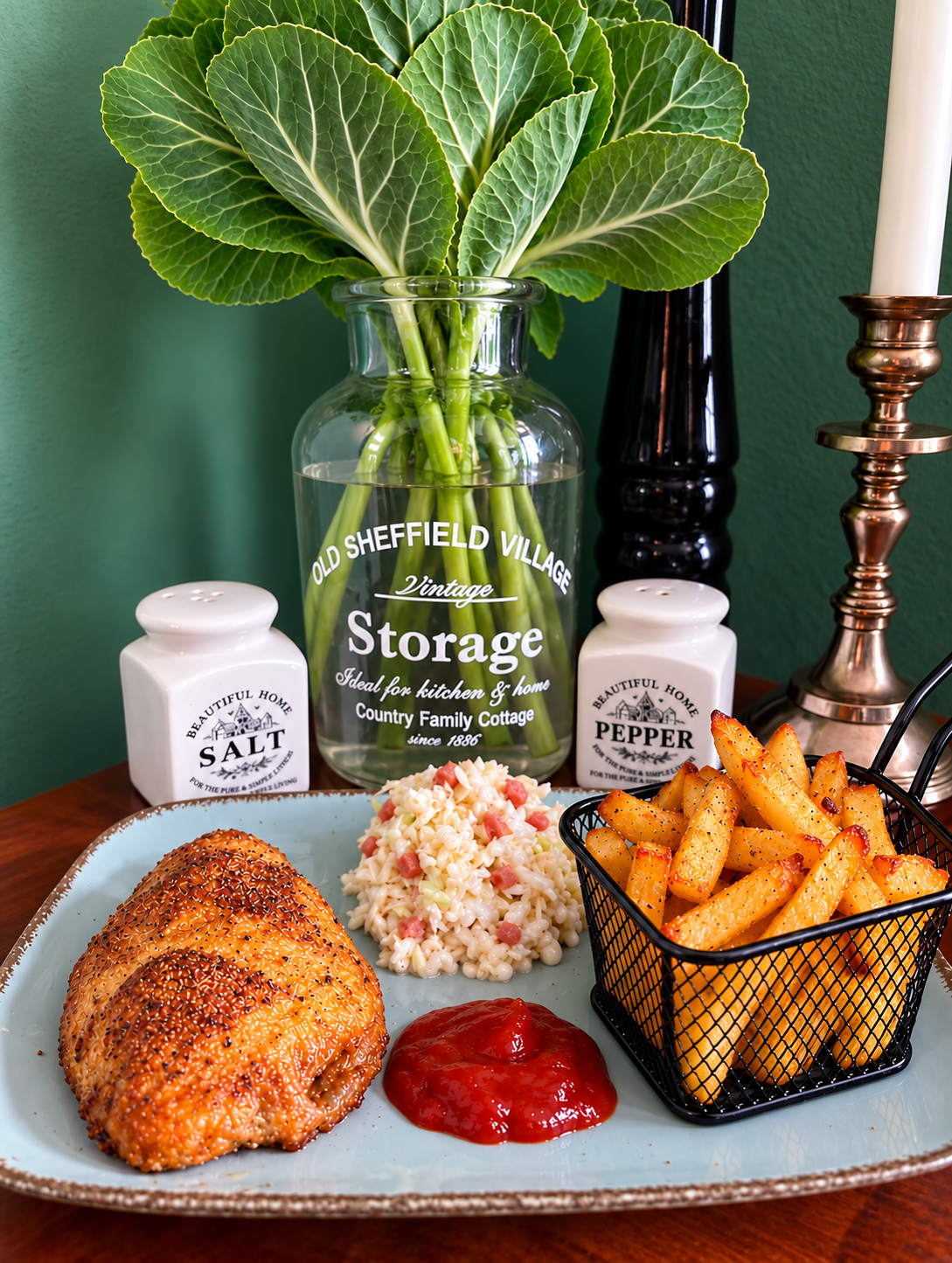
Germany – Where the Broiler Became an East German IconGermany's regional food culture reflects a fascinating mix of traditions and historical influences. During the years of the German Democratic Republic (DDR), the word Broiler became an everyday term for roast chicken. Borrowed from English, where broiling refers to cooking with intense direct heat and broiler also describes a chicken raised for meat, the term became firmly established in East German food culture. Goldbroiler restaurants and takeaway counters helped turn the dish into a familiar DDR favorite.
What Is a Goldbroiler?A Goldbroiler is a seasoned roast chicken with a characteristic golden-brown skin. Its popularity grew in the DDR during the 1960s, when poultry production and dedicated chicken restaurants expanded. My vegan version replaces the chicken with a plant-based alternative and recreates the crispy skin using seasoned rice paper. Homemade fries, white cabbage coleslaw and espresso ketchup complete this nostalgic East German-inspired meal.
From my kitchen to your plate.
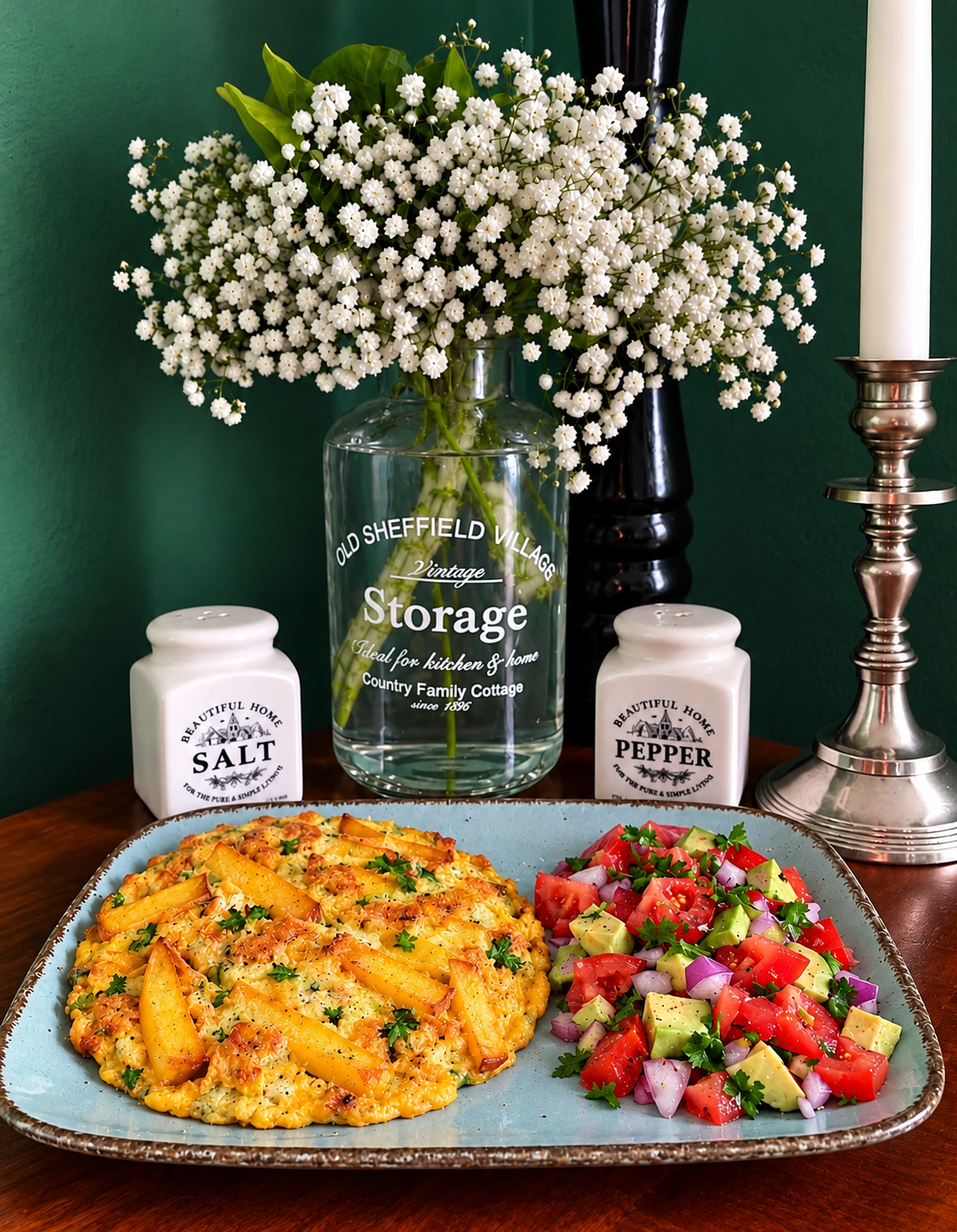
Tanzania – A Country of Vibrant Street Food Tanzania is an East African country known for its diverse landscapes, rich cultural heritage and lively food culture. From bustling city markets to roadside food stalls, affordable and satisfying street food plays an important role in everyday life.
What Is Chipsi Mayai? Chipsi Mayai is a popular Tanzanian street food made by cooking French fries directly into beaten eggs. The name combines the Swahili words for fries and eggs. Traditionally pan-fried and often served with fresh salad or chili sauce, this simple dish becomes a vegan oven-baked version with chickpea flour, soy yogurt and Kala Namak.
From my kitchen to your plate.
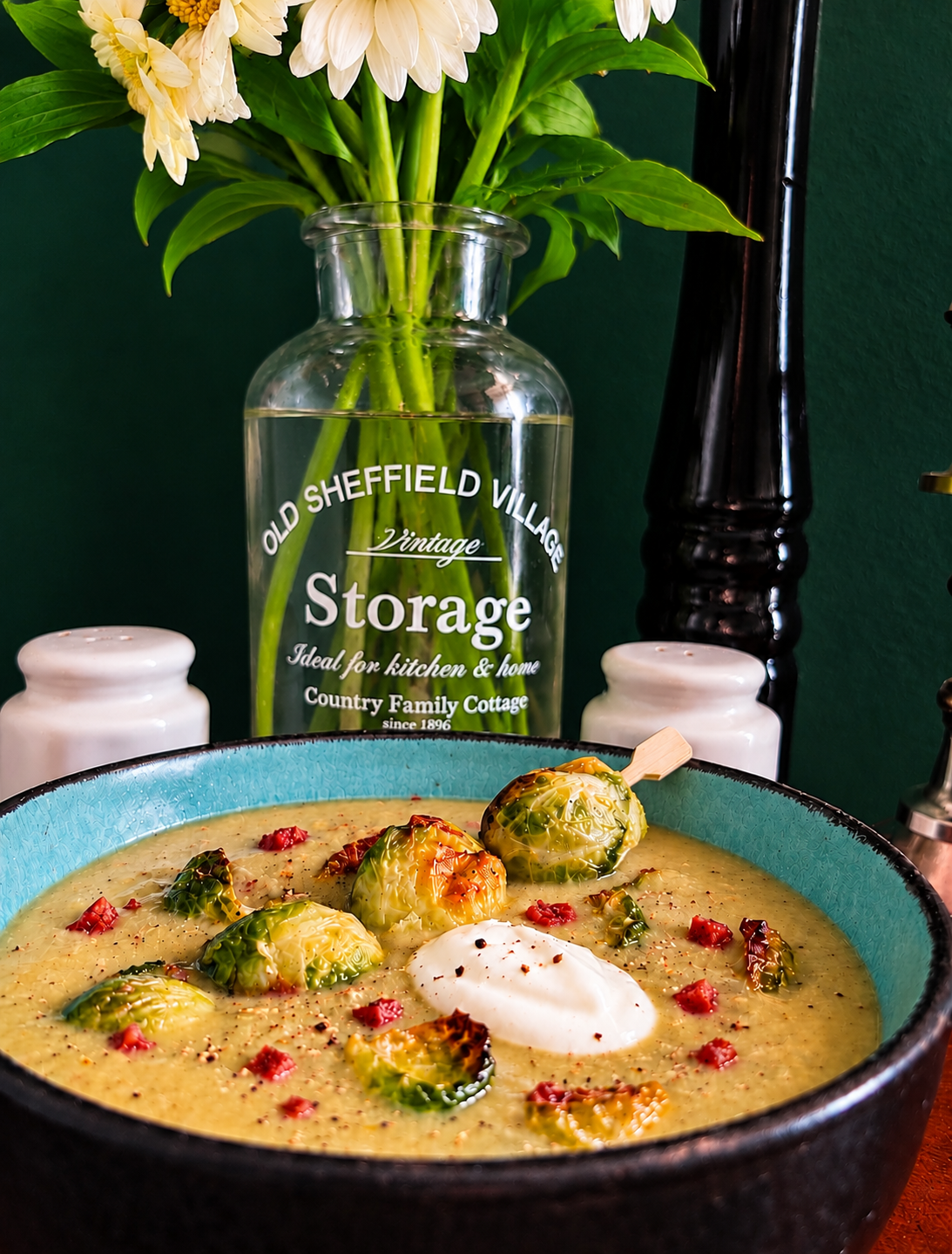
Belgium – A Country of Culinary Comfort Belgium may be famous for its waffles, chocolate and fries, but its culinary traditions also include hearty vegetable dishes, warming soups and comforting home cooking. Brussels sprouts have a particularly close historical connection with the region around Brussels, where they have been cultivated for centuries. These little green cabbages eventually became known internationally by the name of the Belgian capital.
What Is Spruitjessoep? Spruitjessoep simply means Brussels sprout soup in Dutch, one of Belgium's official languages. There is no single definitive recipe: variations may include potatoes, onions, stock and cream. My Belgian-inspired version combines a silky Brussels sprout and potato soup with oat cream, nutritional yeast, crispy vegan ham and roasted sprouts. Maple-glazed Brussels sprout skewers add a slightly sweet, caramelized finishing touch.

From my kitchen to your plate.
Potatoes, My One True LoveSome people fall in love with chocolate. Others can't live without pasta. Me? Potatoes! Absolutely, completely, unapologetically potatoes. Boiled, fried, roasted, baked, mashed or Hasselback-style – I love them all. Give me a potato and I'll find a way to turn it into something delicious. So when my culinary journey brought me to Belarus and its famous Draniki, I knew this was going to be a match made in potato heaven. After all, if there's one vegetable that deserves a little extra love, it's definitely the humble potato!
Love Is in the Shape of a PotatoTraditional Belarusian Draniki are usually round, but why settle for ordinary potato pancakes when you can turn them into little hearts? Exactly! I finely grated the potatoes and onion, added plenty of garlic, nutritional yeast and a pinch of nutmeg, then shaped the mixture into adorable potato hearts. A quick trip to the frying pan, a little finishing time in the oven, and there they were: golden, crispy on the outside and beautifully tender inside. Naturally, a generous spoonful of vegan sour cream and a shower of fresh chives had to join the party. Because even true love deserves a little seasoning. Team Garlic certainly approves!
There Is One Exception, Though...Now, I've said that I love potatoes in practically every possible form. Well, almost every form. Because there's one potato product I can happily live without: vodka! Since I don't drink alcohol, I'll gladly leave the potato spirits to somebody else. I'd much rather enjoy my potatoes golden, crispy and shaped like little hearts. No complicated ingredients, no fancy techniques – just potatoes, a little patience and a whole lot of love. Belarus, you've certainly found the way to my heart. Through my stomach, obviously! Via Veggie Vegan – A Culinary Journey Around the World.
From my kitchen to your plate.
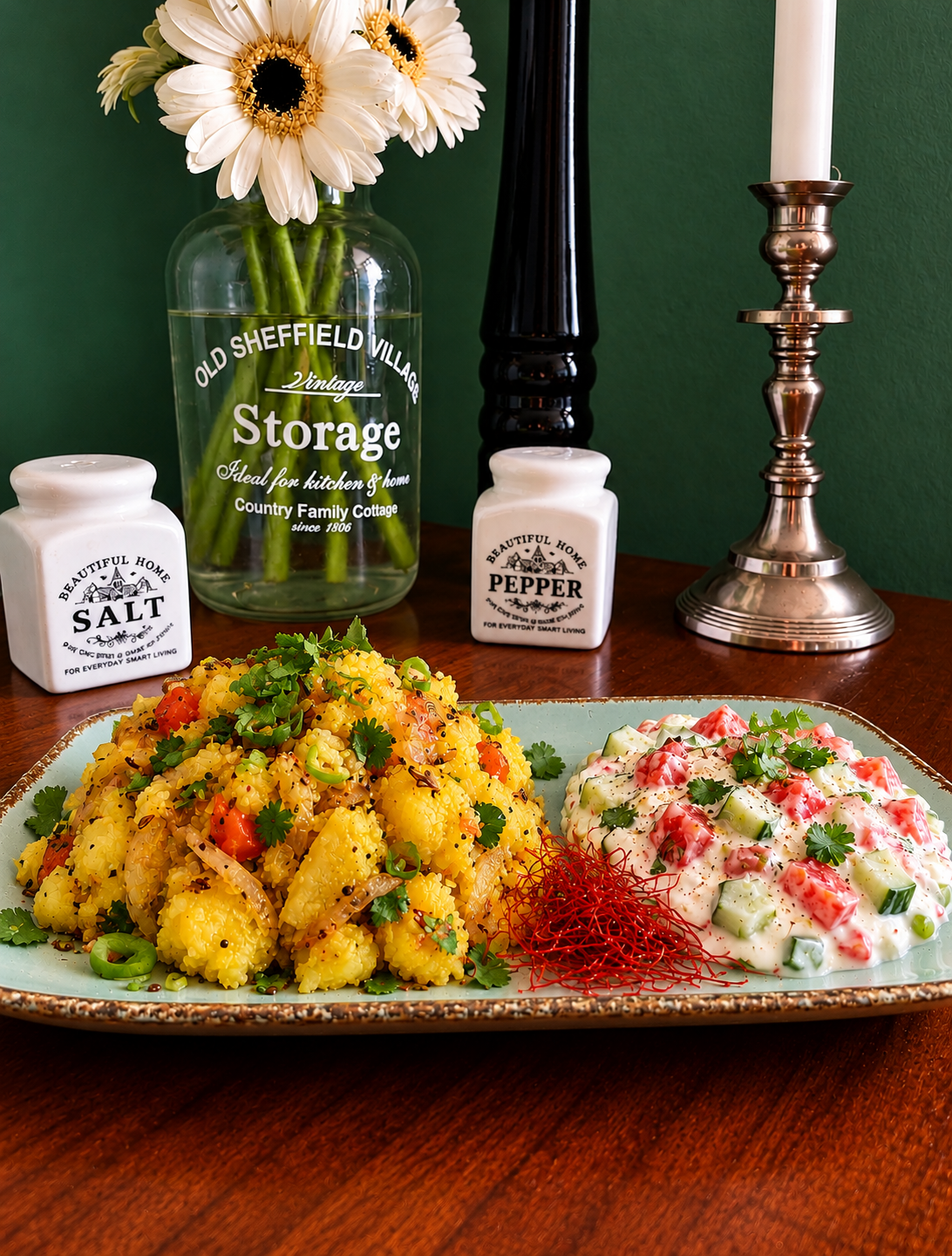
Bangladesh – A Country of Rivers and Rich Culinary TraditionsBangladesh lies in South Asia, where the mighty Ganges, Brahmaputra and Meghna river systems have shaped the landscape, agriculture and food culture for centuries. Rice, lentils, vegetables, mustard oil and aromatic spices are important ingredients in everyday Bangladeshi cooking.
What Is Aloo Bharta?Aloo Bharta, more commonly known as Alu Bhorta in Bangladesh, is a traditional mashed potato preparation. The word alu means potato, while bhorta refers to a family of mashed or crushed dishes mixed with seasonings.
From my kitchen to your plate.
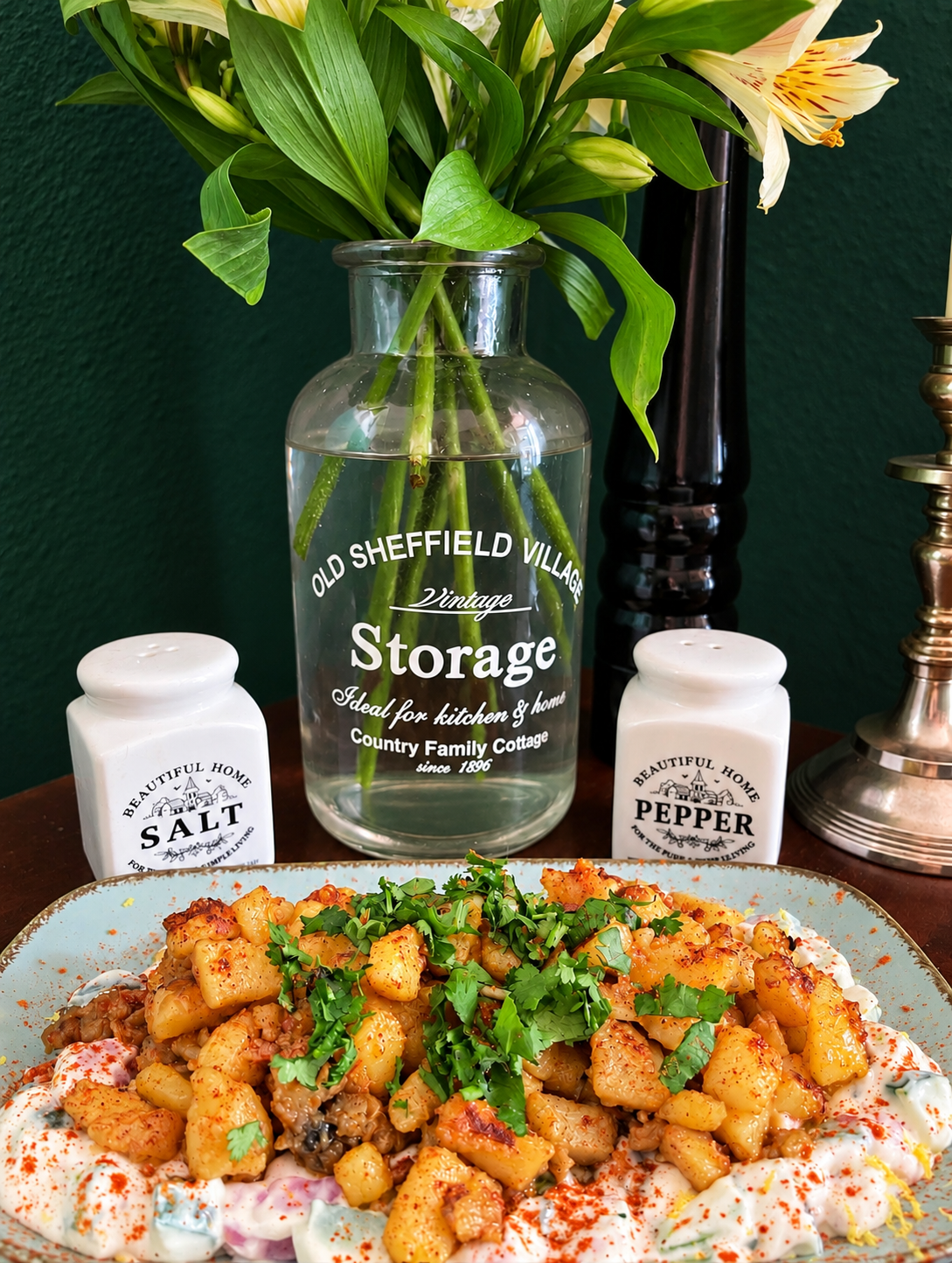
Algeria – A Culinary Journey Through the MaghrebAlgeria is the largest country in Africa, stretching from the Mediterranean coast across the Atlas Mountains and deep into the Sahara Desert. Its cuisine reflects a rich combination of Amazigh, Arab, Mediterranean and other regional influences. Vegetables, legumes, aromatic herbs and warming spices play important roles in Algerian home cooking. Potatoes are particularly versatile and appear in numerous comforting everyday dishes.
What Is Batata Mchermla?Batata Mchermla is an Algerian potato preparation in which potatoes are coated in a fragrant mixture of garlic, herbs and spices. The name refers to potatoes seasoned with chermoula, a North African preparation that varies considerably between regions and households. My Via Veggie Vegan version combines golden, crispy potatoes with garlic, cumin, paprika, harissa and fresh coriander, served on a cooling bed of unsweetened soy yogurt with cucumber, tomato and lemon zest. This creamy accompaniment is my personal plant-based interpretation rather than a traditional requirement of Batata Mchermla.
From my kitchen to your plate.
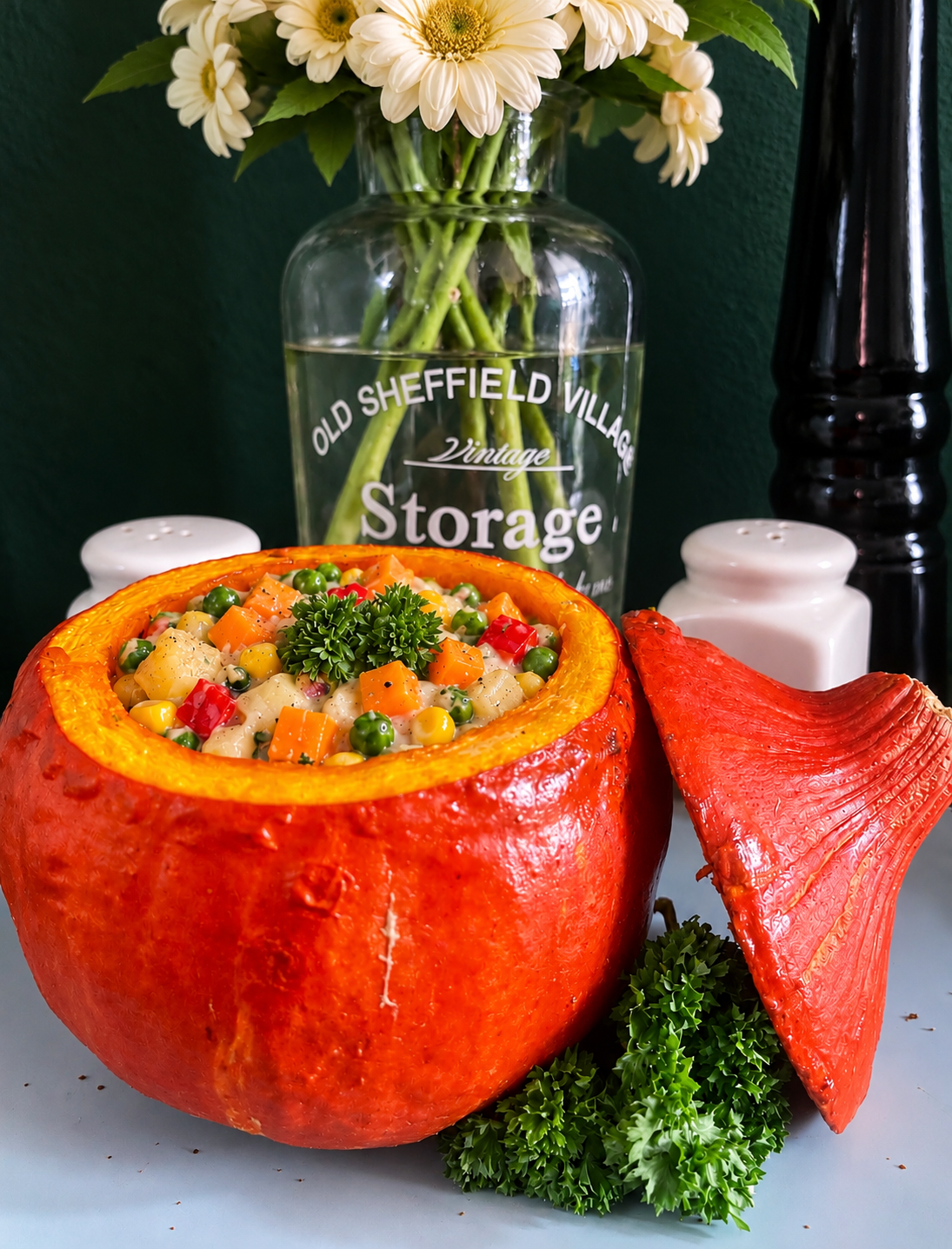
Bolivia – Andean Traditions and the Love of PumpkinBolivia is a landlocked country in South America, known for its spectacular Andean landscapes, rich Indigenous heritage and diverse regional food traditions. Potatoes, corn, legumes and squash have played an important role in local cooking for generations. In southern Bolivia, particularly around Tarija, hearty vegetable preparations reflect the region's culinary traditions. Pumpkin, known as zapallo in Spanish, is a popular ingredient in comforting dishes that combine seasonal vegetables, aromatic spices and locally available produce.
What Is Carbonada de Zapallo?Carbonada de Zapallo is a pumpkin-based stew associated with Bolivian and broader South American culinary traditions. Related dishes, including Locro de Zapallo, combine pumpkin with ingredients such as potatoes, corn, peas and other vegetables, although recipes vary considerably between regions and households. My Via Veggie Vegan interpretation transforms this hearty vegetable stew into a colourful plant-based main course served inside two roasted Hokkaido pumpkins. Brushed with chili oil and filled with potatoes, corn, peas, aromatic vegetables, cumin, oregano and melted vegan cheese, the pumpkins become edible serving bowls. Their naturally sweet flesh and tender skin complement the savoury, spicy filling, creating a delicious zero-waste dish inspired by Bolivia.
From my kitchen to your plate.
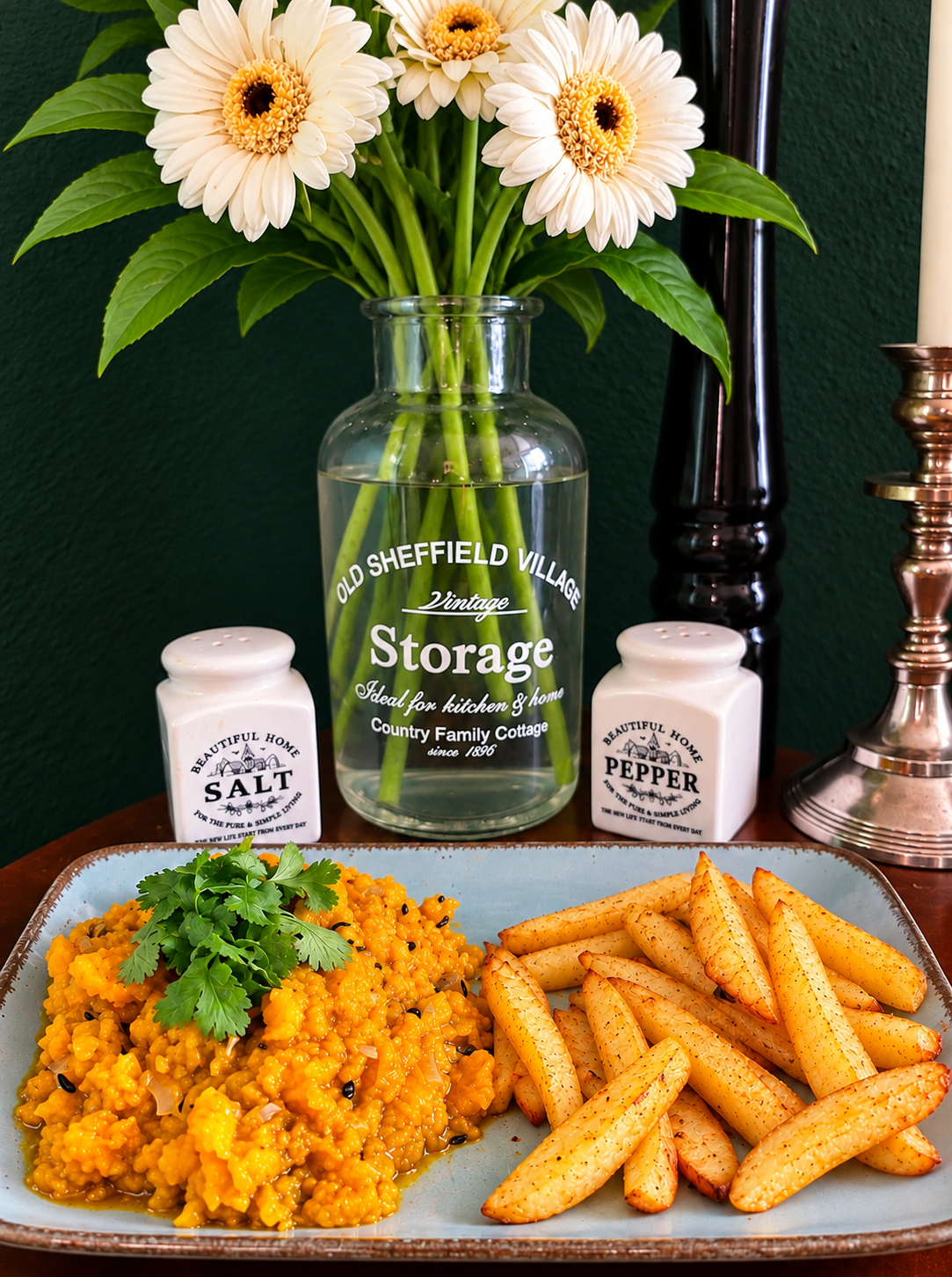
What Is Cari Giraumon?
Cari Giraumon is a pumpkin curry associated with Mauritian home cooking.
The name combines cari, the Mauritian Creole word for curry, with giraumon, a term used for pumpkin or squash.
Mauritian cuisine reflects a rich mixture of culinary influences, particularly from India, Africa, Europe and China.
Curries are an important part of the island's food culture, with recipes varying between families and communities.
What Makes This Pumpkin Curry Different?
Unlike coconut-based curries, this version relies on the natural moisture and starches of the pumpkin.
As the pumpkin cooks, some pieces soften and partially break down.
This naturally thickens the cooking liquid, creating a rich sauce without cream, coconut milk or additional thickeners.
The result is a curry that tastes intensely of pumpkin, supported by garlic, ginger, chili and fragrant herbs.
What Is Giraumon?
Giraumon refers to pumpkin or squash.
Different varieties can be used depending on availability.
A firm, flavorful pumpkin with relatively dense flesh works particularly well.
Butternut squash or other suitable cooking pumpkins can also be used if Sombra pumpkin is unavailable.
Why Use Curry Leaves?
Curry leaves have a distinctive aromatic flavor with citrusy, herbal and slightly nutty notes.
They are commonly used in Indian Ocean cuisines, including Mauritian cooking.
They are not the same as curry powder.
Fresh curry leaves are particularly fragrant, although frozen leaves can also work well.
Why Add Thyme?
Thyme is used in many Mauritian savory dishes.
It adds an earthy, herbal character that complements the sweetness of pumpkin and the warmth of ginger.
Cooking the whole sprig with the curry allows its flavor to infuse the sauce.
Remove the woody stem before serving.
What Is Traditionally Served with Cari Giraumon?
Mauritian curries are often enjoyed with flatbreads such as farata or roti, or with rice.
Farata is a layered Mauritian flatbread related to Indian paratha.
For this Via Veggie Vegan presentation, crispy potato wedges replace the more traditional accompaniment.
From my kitchen to your plate.
Latvia – Baltic Traditions and Seasonal Cuisine
Latvia is a Baltic country in northeastern Europe, known for its extensive forests, beautiful coastline and strong connection to nature. Latvian cuisine is shaped by the changing seasons, with potatoes, cabbage, rye bread, mushrooms and root vegetables playing important roles. Beetroot is especially popular and appears in both warming winter dishes and refreshing summer soups.
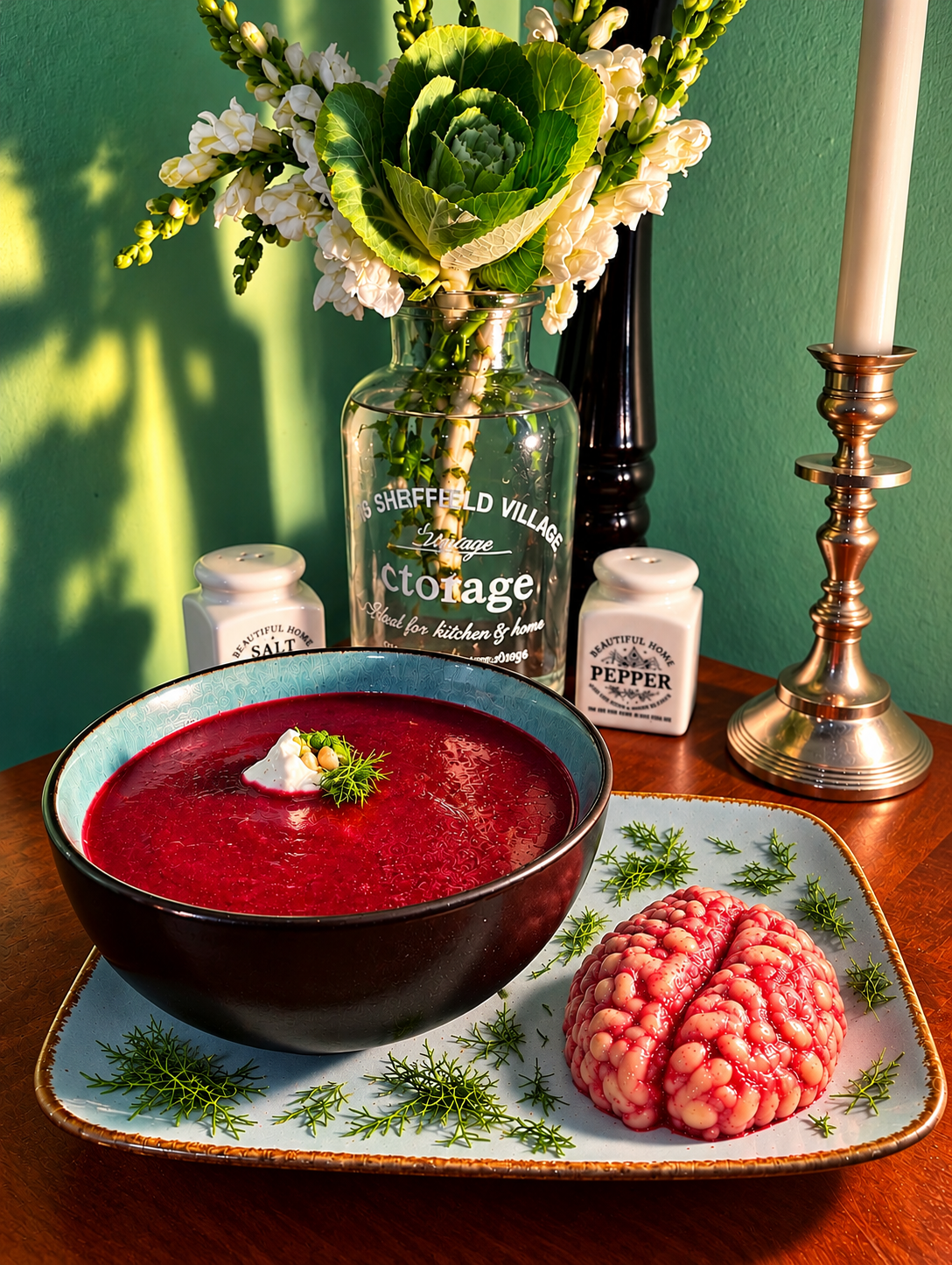
What Is Biešu Zupa?
Biešu Zupa simply means beetroot soup in Latvian. This traditional-style soup combines earthy beetroot with potatoes, carrots, cabbage and aromatic spices to create a comforting, colorful meal. While Latvian beetroot soups vary from household to household, this vegan version uses vegetable broth and plant-based sour cream. For Halloween, I've added my own slightly spooky twist: homemade tofu and pine nut brains with a vivid pink beetroot glaze.
